One of you wants to have sex again. The other doesn't. Or one of you is ready tomorrow and the other needs three months. This isn't a small gap. This is a rupture that lives in your body and your calendar, and it feels like a betrayal on both sides no matter who wants what.
Here's the thing that nobody tells you: this mismatch doesn't mean your relationship is broken. It means you're both recovering at the speed your nervous system allows. And a lemon vibrator, used thoughtfully, isn't about forcing alignment. It's about creating a middle path so neither of you feels stranded.
Trauma, illness, infidelity, burnout, a major life transition. The reasons vary wildly, but the pattern is the same. One person's brain is ready to reconnect long before their body catches up. Or their body is ready but their trust isn't. Meanwhile, their partner has already moved through that phase and is standing on the other side, hand outstretched, wondering why nobody's taking it.
Neither of you is wrong. Neither of you is being difficult. You're just operating on different timelines, and the gap between them can feel crushing.
A 2023 study on couples recovery found that when partners experience intimacy differently, the one moving faster often internalizes rejection while the one moving slower internalizes pressure. Both of these are toxic. Both of them make the slower partner want to withdraw further and the faster partner want to push harder. It's a spiral.
Let's separate two conversations that usually get tangled together: your recovery with your partner and your recovery with yourself.
When you're navigating mismatched timelines, solo pleasure isn't selfish. It's maintenance. Using a lemon vibrator alone isn't replacing your partner. It's telling your nervous system that pleasure is still possible for you, that your body is still yours, and that you haven't disappeared just because intimacy has temporarily paused.
For the partner who's ready sooner: a lemon clitoral vibrator becomes proof that you can feel good without waiting for permission. This matters more than it sounds. Resentment builds in silence. Solo pleasure breaks that silence.
For the partner who's moving slower: watching your partner care for themselves sexually can actually help. It removes the weight of being responsible for their pleasure. It says, "You don't have to fix this yet. I'm taking care of myself while we figure this out together."
The conversation matters more than the vibrator. Here's what I recommend telling your partner:
"I'm going to start taking some time for myself sexually, with a lemon vibrator. This isn't about you. It's about me staying connected to my own body while we're rebuilding ours together. I wanted you to know so there's no mystery."
Notice what's not in that sentence: pressure, timeline demands, guilt-tripping, or false reassurance. You're stating a fact and inviting honesty.
Then set a rhythm that feels sustainable. Once a week. Twice a week. Whatever you can actually stick with. Use the lemon vibrator at a time your partner knows about but doesn't have to witness. Some couples find that one partner is more comfortable knowing the other is in a separate room. Others prefer full transparency. There's no universal right answer.
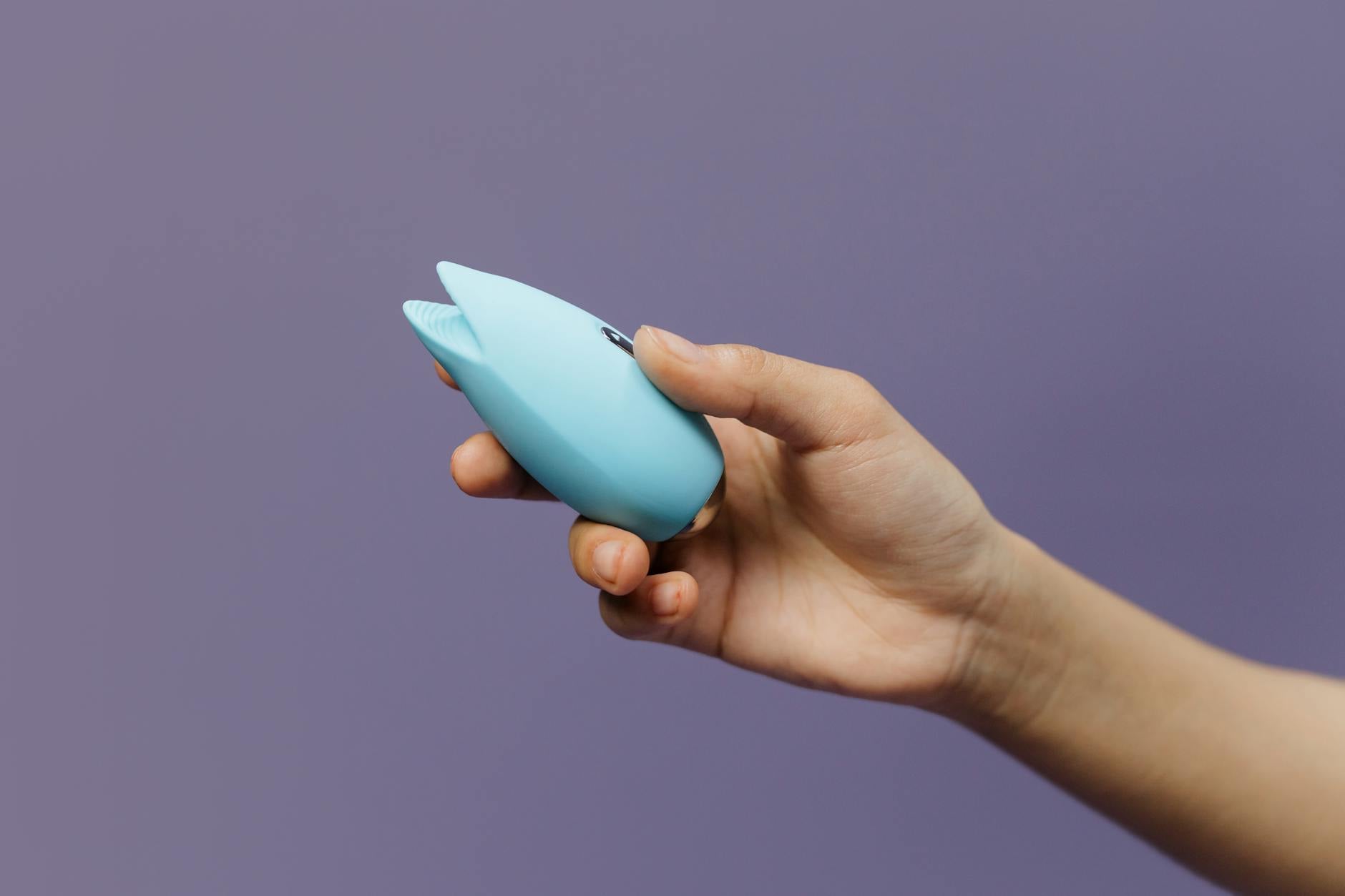
The Lem is particularly useful here because it's intuitive. You don't need a long warm-up period or complicated technique. You can spend five minutes or thirty. The suction-based design means you can move at your own speed without worrying about friction or pressure.
This is the harder direction. Your partner wants to reconnect and you genuinely don't know if you can yet.
First: solo pleasure won't make you "ready" faster. Don't use a lemon vibrator as a fix for something that isn't broken. Your timeline is your timeline.
What a lemon clitoral vibrator can do is create small moments of reconnection with sensation without the weight of partnered expectation. You're not working toward anything. You're just touching yourself and noticing what feels okay.
When your partner asks, "Are you getting close to being ready?" you can actually answer from a place of data instead of guilt. "I'm noticing pleasure is still possible for me," is different than "I don't know, I'm broken." The lemon vibrator gives you that information.
And here's the part that matters: keep telling your partner what you're noticing. "I used it yesterday and my body responded better than I expected." Or "I'm still not feeling like partnered sex yet, but I'm glad I can feel something." This keeps the conversation alive without pressure.
There's no universal readiness indicator. But I notice that couples transition better when two things happen at the same time.
First, the person moving slower stops apologizing. "I'm sorry I'm not ready yet" becomes "I'm still not ready, and I'm being patient with myself." This sounds small but it's enormous. Apology implies obligation. Patience implies trust.
Second, the person moving faster stops asking, "Are you ready yet?" and starts asking, "What does reconnection look like for you right now?" These are different questions. One demands a yes or no. The other invites exploration.
When both of those shifts happen, a lemon vibrator can become a bridge tool. Maybe you use it together while your partner watches. Maybe you use it on yourself while they're close by, not touching. Maybe it becomes part of foreplay that's gentler and lower-pressure than traditional sex.
Let me be direct: a lemon vibrator is not a therapist. If the mismatch in your timelines is caused by infidelity, untreated mental health issues, or fundamental incompatibility, you need an actual therapist, not better toys.
What the lemon clitoral vibrator can do is create space for conversation. It takes the weight off. It says, "We don't have to figure this out right now. We can both take care of ourselves while we rebuild." But the conversation still has to happen. You still have to talk about what broke and whether it can be fixed.
Once you're both more settled, some couples find that a lemon vibrator becomes a tool for synchronized pleasure even when you're on different recovery timelines. You can both be present and aroused without the pressure of intercourse.
This is especially useful when one partner is still nervous about penetration or when full sex still feels too vulnerable. A lemon vibrator offers intensity without that kind of exposure. You're both receiving pleasure. You're both in control. You're both clothed if you want to be.
Start small. Maybe you sit next to each other and each do your own thing. Maybe you progress to watching. Maybe eventually you incorporate it into partnered sex. But there's no finish line. This isn't a staging ground toward "normal" sex. This is just intimacy that works for you right now.
Sometimes the mismatch doesn't fix itself. Sometimes one partner stays ready and the other keeps retreating. This is the conversation you need to have honestly.
It's possible you're compatible but not right now. It's possible you need more support than a vibrator and a conversation. It's possible one of you has changed in a way that the relationship can't accommodate. None of these are failures. They're just information.
A lemon vibrator won't solve that problem. But it will buy you time to have the hard conversation from a place of self-care instead of desperation. And that's actually valuable.
Completely normal. After trauma, illness, life stress, or major relationship ruptures, recovery is not synchronized. One partner might be ready for sex again in weeks while the other needs months or years. Neither timeline is wrong. The problem isn't the difference itself. It's usually that couples don't talk about it explicitly, so resentment builds quietly.
Not necessarily. Solo pleasure might help you remember that your body can feel good, which can reduce anxiety. But it's not a speedway to readiness. Your nervous system recovers at its own pace. Using a lemon clitoral vibrator is about maintaining your own connection to pleasure while you heal, not forcing the timeline.
Yes. It can trigger feelings of inadequacy or rejection, even though the vibrator has nothing to do with your attractiveness or your relationship. This is worth talking about directly. Sometimes couples feel better when they create a shared understanding of solo pleasure as part of individual recovery, not a replacement for partnership.
Only if you both want to. Some couples find it connects them. Others find it's too vulnerable. There's no rule. The key is that you decide together, not one person surprising the other.
There's no indicator light that turns on. But usually it's when both partners feel less desperate and more curious. When the faster partner stops pressuring and the slower partner stops apologizing. When you can talk about pleasure without it becoming a referendum on the relationship. A lemon vibrator can be part of that transition if you both want it to be.
Then the mismatch probably needs professional support. A therapist, especially one trained in trauma or couples work, can help you understand what's really driving the gap. The vibrator is infrastructure. The actual repair work is relational and emotional.
Honestly, it's not the lemon vibrator. It's the decision to stop pretending you're on the same timeline and instead figure out how to move forward anyway.
A lemon clitoral vibrator just makes that decision easier to live with. It says, "You're allowed to have pleasure while we're rebuilding. Both of you. At your own pace." That permission, more than anything else, is what creates space for actual recovery.
If you're navigating this with your partner right now, be patient with both of you. This gets better. It just doesn't get better on a schedule.