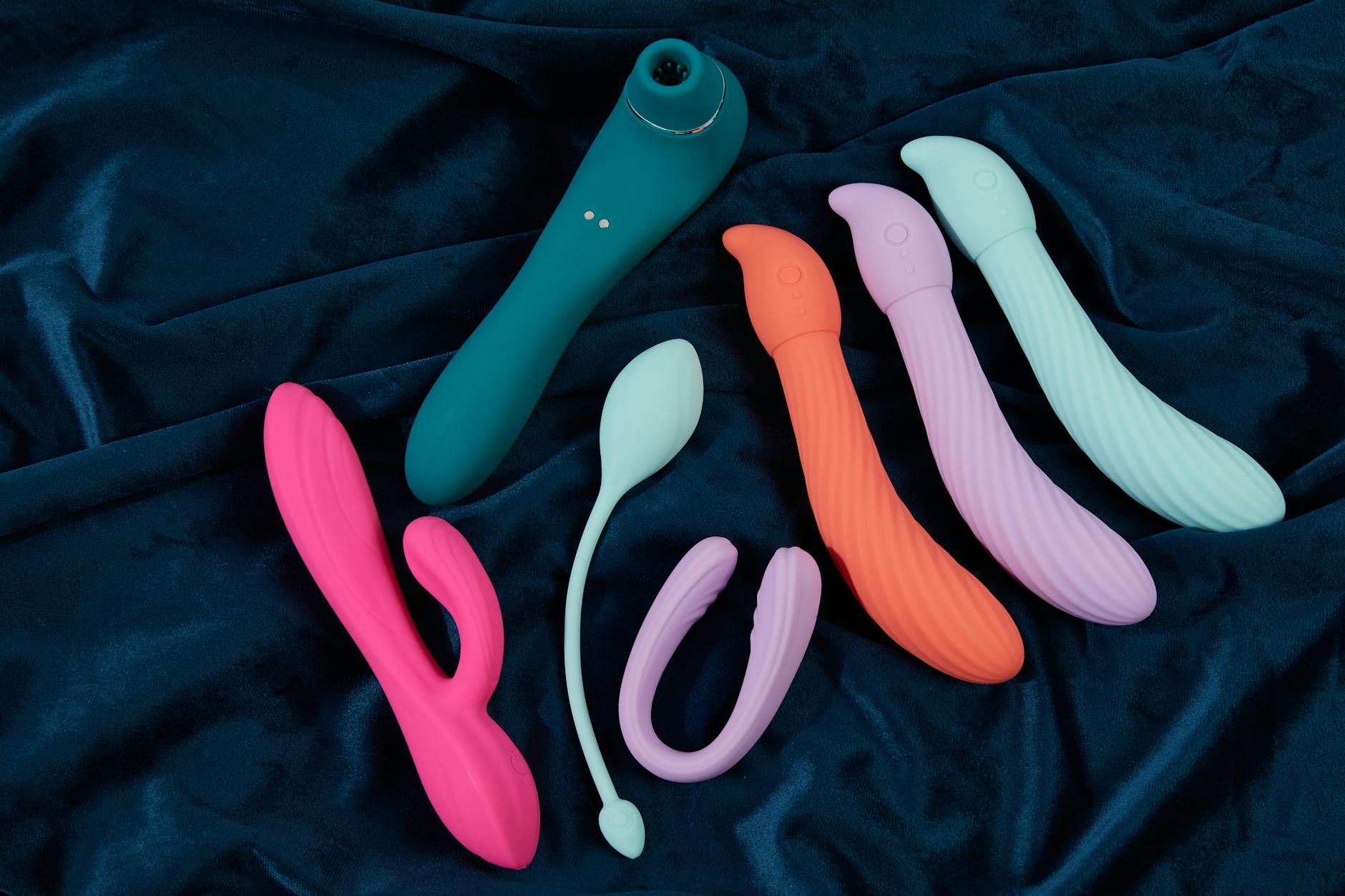
Which Lemon Vibrator Intensity Setting Works Best for You
Let's be real: "intensity" gets tossed around like it just means "go harder." But when you're holding a lemon clitoral vibrator with five or seven different patterns, intensity isn't one thing. It's rhythm, speed, pressure point, and mental state all tangled together.
Here's what I've learned from working with clients navigating pleasure: the best intensity setting is the one that lets your body actually feel what's happening, not the one that leaves you gasping for air.
How lemon vibrators actually work at each level
Lemon sucker vibrators use air-pulse technology, which means they're not buzzing against tissue the way a traditional vibrator does. Instead, they create gentle suction and release cycles. This changes everything about how you experience intensity.
When you move from pattern 1 to pattern 3 on a lemon vibrator, you're not just turning up the volume. You're changing the rhythm of the pulse, the width of the suction cup contact, and sometimes the peak intensity within each cycle. A pattern that feels like a slow heartbeat at low speed might feel like a jackhammer at high speed, even though it's technically the same pattern.
Most lemon adult toys have between five and nine preset patterns. They usually stack like this: patterns 1 to 3 are steady rhythms that build gradually. Patterns 4 to 6 introduce variation (longer pulses, shorter breaks, stuttering rhythms). Patterns 7 and beyond are the chaos patterns: rapid fire, syncopated, designed to feel completely different from what came before.
The key thing to understand is that every pattern can be used at low speed. You can start at pattern 5 but keep the device on speed level 1 or 2. This is where most people miss the real flexibility of a lemon vibrator.
Finding your baseline
Start slow. I know this sounds obvious, but most people skip this step entirely and wonder why they feel numb after five minutes.
Begin with pattern 1 at speed 1. This should feel like a gentle, rhythmic tapping or soft suction. If it feels like nothing, you might have positioned the suction cup off-center. Adjust slightly until you feel a clear pulse. This takes thirty seconds of exploration, and it's the most important thirty seconds you'll spend.
Once you've felt pattern 1 at speed 1, you have a baseline. Everything else is a comparison point. Pattern 2 at the same speed will feel different because the rhythm is different, not because it's stronger. Pattern 1 at speed 3 will feel stronger because you've actually increased the intensity, not because the pattern changed.
This distinction matters because it helps you understand what's actually turning you on. Some people are pattern people (they want variation and rhythm changes). Other people are speed people (they want the same rhythm but amped up). Most people need both, but in different ratios on different days.
The strategy for first-time exploration
If you're new to lemon clitoral vibrators, here's the roadmap.
Days 1-3: pattern 1, speeds 1-3 only. Get comfortable with how the device feels on your body. Notice when you feel most sensation (it's rarely where you expect). This is not about orgasm. This is about data.
Days 4-5: add pattern 2 and 3. Stay at speeds 1-2. You're learning what rhythm changes feel like without the intensity overwhelming you.
Day 6 onward: now you can actually experiment. Try a few combinations, notice what builds arousal, what sustains it, what pushes you toward orgasm. Your body will start telling you what works.
The reason for this slow rollout is simple: your nerve endings and your brain need time to learn what this device feels like. Jumping straight to pattern 7 at speed 5 is like walking into a dark room and flipping every light switch at once. You won't learn anything except that you're overwhelmed.
Intensity strategies for different moments
Steady arousal builds require a different approach than approaching orgasm.
When you're in the early stages of arousal and want to stay there, choose a pattern that feels pleasurable but not urgent. This is usually patterns 1 to 3 at a steady speed. The rhythm should complement your breathing, not fight it. You should be able to maintain this pattern for 10 to 20 minutes without fatigue. If you're clenching your pelvic floor hard or holding your breath, the intensity is too high.
As arousal builds and you feel yourself approaching the point of no return, patterns with more variation become useful. The stuttering rhythms (patterns 5-7 on most lemon vibrators) can push you over an edge that steady patterns alone won't reach. But use these as a bridge, not the whole journey. Start with steady patterns to build, shift to variation patterns to intensify, then settle into whatever pattern lets you actually orgasm.
The final approach to orgasm is deeply personal. Some people need to stick with one pattern and intensity level and let their body crest naturally. Others need to keep increasing intensity up until the moment of release. Neither is wrong. Your job is to notice which one is you.
When to increase, when to stay steady
There's a temptation to constantly chase stronger and stronger sensation. This is where people damage their sensitivity.
If you find yourself reaching for intensity level 5 after two weeks of use, you're not discovering your preference. You're developing tolerance. This is the same reason you shouldn't jump straight to the hardest intensity on day one.
Instead, think of intensity like a seasoning. A little bit of heat makes a dish better. A lot of heat makes it inedible. You want to use intensity as a tool to create contrast, not as a permanent destination.
Mix your sessions. Use patterns 1-2 for half your sessions. Use patterns 4-6 for others. Save the chaos patterns for once a week, or less. This maintains your sensitivity and keeps pleasure from flattening out into a numb sensation.
If you notice you need constant increases to feel anything, take a break. Two to three days with no device use will reset your nerve sensitivity. This isn't failure. This is smart maintenance.
The role of lube and positioning
Intensity isn't just about the device. It's also about what's touching it.
Without proper lubrication, even a low intensity setting can feel uncomfortable or numb. Saliva dries up. Tissue contact changes. What felt perfect at intensity 2 might now feel scratchy. Adding a little water-based lubricant might make that same intensity feel rich and responsive again.
Positioning matters too. The angle of the suction cup against your body changes how the air pulse distributes across tissue. A slight shift left or right can make intensity feel completely different. You're not looking for the hardest possible feeling. You're looking for the most pleasurable feeling for that specific moment.
This is where a lot of people give up on lemon vibrators. They assume "this isn't working" when really they just haven't found the right angle. Spend time adjusting. Small movements matter.
Dealing with overstimulation
If you get numb or uncomfortable, you've likely hit overstimulation. This can happen even at low intensities if you've been going for too long.
The fix is simple: stop. Seriously. Turn it off, take a breath, step away for five minutes. When you come back, start at pattern 1, speed 1, and remember that pleasure is not a sprint. You can restart as many times as you want.
If you're consistently hitting overstimulation, lower your baseline intensity and extend the time instead. More time at lower intensity often creates better results than less time at higher intensity. This is counterintuitive, but it's true.
The pleasure paradox
Here's the thing nobody tells you: the "best" intensity setting is usually not the strongest one you can tolerate. It's the one that makes you feel most alive, most present, most connected to your body.
Sometimes that's a gentle rhythm that you could use for an hour. Sometimes it's a wild pattern that you can only handle for two minutes. Both are valid. The goal is not to push yourself harder or go faster. The goal is to understand your own body's language and listen when it speaks.
Your pleasure matters. Treating it with intention and time, not rushing through settings hunting for the ultimate sensation, is how you actually find what works. The lemon vibrator is just the tool. Your attention and curiosity are what make it powerful.
Frequently asked questions
What if none of the patterns feel like anything?
Three things to check: First, make sure the suction cup has full contact with the area. Even a tiny air gap changes everything. Second, add water-based lubricant. Dry tissue doesn't transmit sensation as well. Third, you might be on too high an intensity level too soon. Drop to speed 1 and pattern 1 and wait two minutes. Sometimes sensation builds slowly.
Can I damage my sensitivity by using high intensity settings regularly?
Yes, but not from one session. Repeated high-intensity use over weeks and months can lead to desensitization. The fix is variation. Mix up your patterns, speeds, and session lengths. Use lower settings most of the time. Save high intensity for occasionally. Your nerve endings will stay responsive.
Do I need to use the highest intensity to have an orgasm?
No. Most people orgasm at medium intensity with the right pattern and positioning. Going harder doesn't always mean better. Sometimes it just means uncomfortable. Experiment across the full range and notice what actually works for your body.
How long should each session last?
There's no magic number. Some people prefer five to ten minute sessions focused and intentional. Others like twenty to thirty minutes of slower exploration. What matters is that you're not grinding away at high intensity for an hour because you're chasing sensation. That leads to numbness, not pleasure.
Is it normal to prefer one pattern over all the others?
Completely normal. Some people try every pattern and come back to pattern 2 every time. That's fine. You don't need to use all of them. You need to find the one that works and use it well. Experiment once, then commit to what feels good.
What's the difference between a lemon vibrator and other clitoral toys?
Lemon clitoral vibrators use suction and pulsing, not traditional buzzing. This means the sensation feels gentler and more focused, even at higher intensities. The intensity settings work differently too. With a lemon sucker, you can go higher in intensity without the numbing effect you might get from a buzzing vibrator. If you're exploring clitoral vibrators for the first time, air-pulse devices are often easier to learn because there's more range between "too gentle" and "too much." Check out our guide to how lemon vibrators compare to other clitoral toys for more detail.
Where to start
If you're ready to explore intensity patterns with intention, begin exactly where I've mapped it out: pattern 1, speed 1, and curiosity. Give yourself permission to spend a few sessions just learning what the device feels like without chasing an outcome.
Pleasure is not a race. Your body knows how to feel good. A lemon vibrator just gives it another language to speak. Learn that language slowly, and you'll find settings that feel better than you expected.
Still curious about getting started? Read our guide to using a lemon vibrator for the first time to walk through the whole process step by step.
Your pleasure deserves this kind of attention. Give it the time it's asking for.