
Let's talk about the medication nobody wants to discuss
You start an SSRI because you need it. Depression lifts. Anxiety becomes manageable. Your brain chemistry stabilizes. And then somewhere between week two and week six, you notice that sex feels like you're experiencing it through a pane of glass. Sensation is muted. Orgasm takes twice as long, if it arrives at all. You're not broken. Your medication is working exactly as designed—it's also dampening the neurotransmitters responsible for sexual response.
This is real, and it's not something you need to white-knuckle through alone.
What antidepressants actually do to pleasure
SSRI medications (selective serotonin reuptake inhibitors) work by increasing available serotonin in your nervous system. That's the point. But serotonin plays a role in sexual arousal, and it also regulates dopamine and norepinephrine, the neurotransmitters that fire during sexual pleasure. The result is predictable: delayed orgasm, reduced sensation, lower desire, difficulty with arousal.
Here's the thing that gets misunderstood: this isn't emotional. You're not suddenly less interested because you're sad or because something is wrong with your relationship. Your nerve endings are literally receiving a dampened signal. Stimulation that used to create an immediate response now requires more intensity, more time, more consistency.
About 40-60% of people on SSRIs experience some degree of sexual side effect. That's not a small number. That's "you're not alone and your doctor should have mentioned this" territory.
Why a lemon vibrator helps differently than traditional toys
Most vibrators use direct vibration. If your nerve endings are already muted by medication, a standard vibrator becomes less effective. You end up chasing stronger and stronger vibration, which gets exhausting and can eventually lead to desensitization in the opposite direction.
A lemon clitoral vibrator like the Lem works through air-suction technology. Instead of vibration, it creates rhythmic waves of gentle suction that stimulate a larger surface area of the clitoris at once. This is mechanically different from vibration, which means it can bypass some of the numbness that SSRIs create.
Think of it this way: if vibration is like knocking on a door, suction is like the door opening before you knock. Your nervous system recognizes it as a distinct sensation, which means the medication's dampening effect has less power over it.
Clients I work with who've switched from traditional vibrators to a lemon sucker often report that sensation returns faster and more reliably. It's not magic. It's physics and neurology working together.
The practical steps that actually work
Three changes make the biggest difference:
Start at the lowest setting and stay there longer. With a lemon vibrator, you have multiple intensity patterns. Most people with SSRI-induced numbness make the mistake of jumping straight to pattern 5 or 6. Start with pattern 1. Spend 10-15 minutes there. Your nervous system needs time to recognize and build on the sensation. Patience now saves frustration later.
Use it during arousal, not to create arousal. Take time to build desire first. Read, think about something that turns you on, let your body warm up. Then introduce the lemon clitoral vibrator. The combination of mental arousal plus a new type of stimulation is more effective than expecting the toy alone to spark desire through numbness.
Combine it with something else. If you have a partner, use the lemon vibrator while they touch you elsewhere. If you're solo, alternate between the toy and your hands. This variety keeps your nervous system engaged and prevents the kind of habituation that makes sensation disappear even faster.
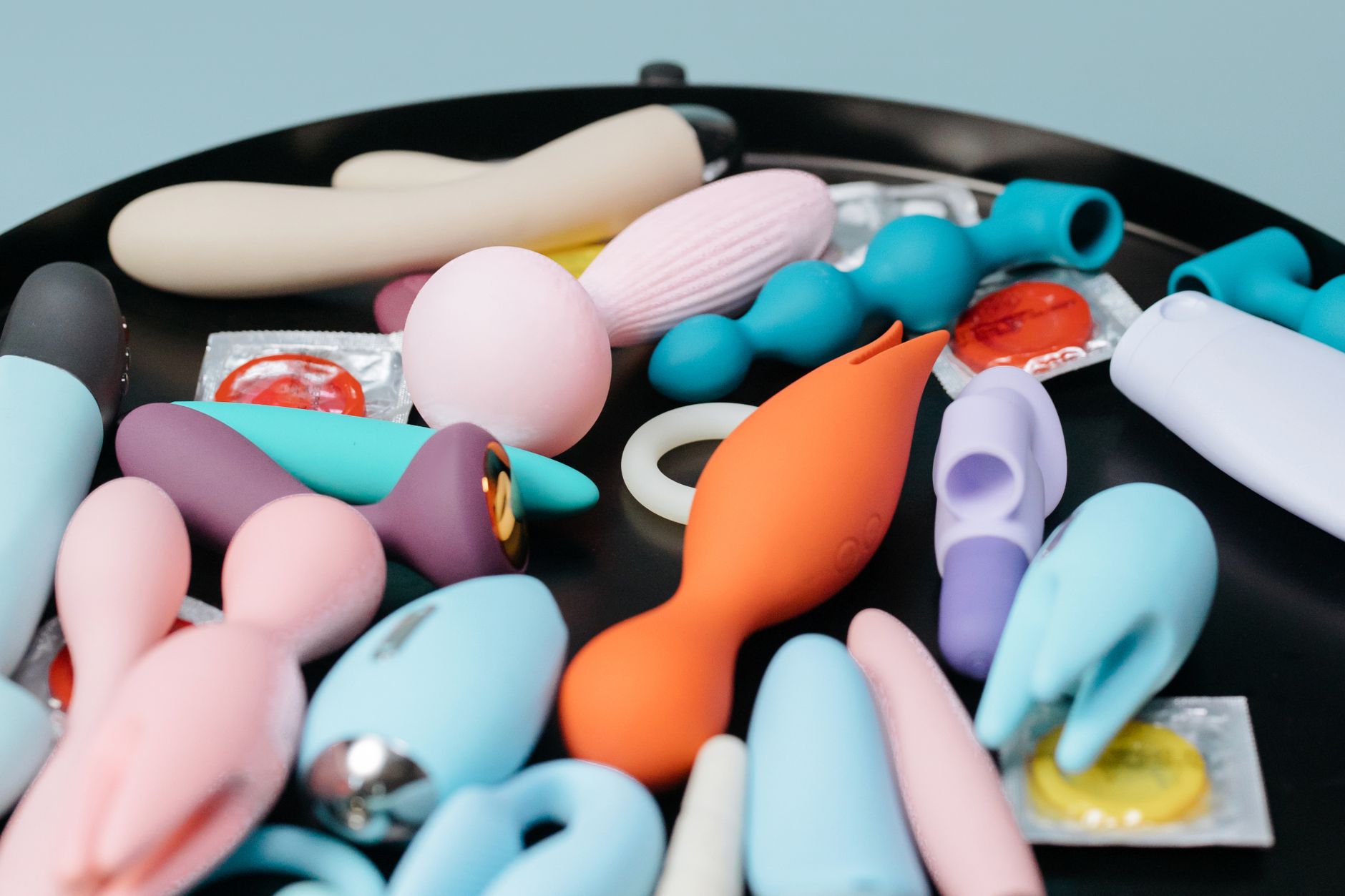 Photo by cottonbro studio on Pexels
When to talk to your doctor
Here's what you shouldn't do: silently accept numbness and assume it's permanent. You have options that don't involve stopping your medication.
First conversation: "I'm experiencing sexual side effects. Can we try a different SSRI?" Some SSRIs—like sertraline and paroxetine—are more likely to cause sexual side effects than others. Bupropion, which works on dopamine and norepinephrine, actually improves sexual function in many people. Switching might be possible.
Second conversation: "Can we try adding something to manage sexual side effects?" Bupropion is sometimes added to SSRIs specifically to counteract numbness. Buspirone, sildenafil, and other medications can help restore arousal and orgasm. This is standard practice. Your doctor has prescribed this combination before.
Third conversation: "I'd like to try a tool designed for this." Show your doctor (or just tell them) that you're using a clitoral vibrator designed for sensation enhancement. A good doctor will support this. They might have specific guidance about safety based on your medication profile. Listen to it.
Don't wait months hoping sensation returns on its own. Sometimes it does. Often it doesn't without intervention. Your pleasure matters enough to ask for help.
The timeline and what to expect
If you're switching SSRIs or adding a medication to counteract sexual side effects, sensation usually begins returning within 2-4 weeks. In that window, a lemon vibrator becomes your best friend because even partial sensation improvement combines with the toy's design to create real pleasure.
If you're staying on your current SSRI and using a lemon clitoral vibrator alone, most people notice improvement within 1-2 weeks of consistent use. You'll probably feel sensation return to your clitoris first, then experience faster arousal, then easier orgasms. It's not always a straight line. Some days are better than others depending on stress, hormones, and how long you've been on the medication.
One more thing: if a lemon sucker isn't working after three weeks of regular use, that's information. It means you might benefit from a medical intervention alongside the tool. Different bodies respond differently. There's no shame in needing both.
When SSRIs save your life and pleasure feels less important
Let me be direct about the calculus here. If an antidepressant keeps you alive and functional, numbness is a reasonable trade. Your mental health comes first. Always.
But you don't have to choose between mental health and pleasure. These things aren't in conflict. Restoring sexual sensation doesn't undermine your treatment. A lemon vibrator isn't a replacement for your medication. It's a tool that helps you stay on medication that works while recovering part of your life that matters.
If your doctor says the numbness will pass with time, ask for specifics. Six months? A year? Forever? Some people's bodies adjust and sensation returns naturally. Others don't see improvement without intervention. There's no need to suffer through months of guessing.
Your pleasure is not a luxury feature of recovery. It's part of being alive. Treat it that way.
FAQ: Questions people ask (and deserve answers for)
Can I use a lemon vibrator safely if I'm on an SSRI?
Yes. A lemon clitoral vibrator is a mechanical device with no drug interactions. It won't interfere with your medication or its effects. Your SSRI won't make the toy unsafe to use. The only caution is individual: if you have pelvic pain, recent surgery, or blood clotting issues, check with your doctor first. Otherwise, you're clear.
Will a lemon vibrator help if I can't orgasm at all on my SSRI?
Often, yes. The suction mechanism reaches nerves in a different way than vibration, so some people find orgasm possible with a lemon sucker even when it's completely absent with other tools. But if you truly can't orgasm after six weeks of consistent use, that points to a need for medical adjustment rather than a different toy.
How long does it take for sensation to come back after starting a lemon vibrator?
Most people feel something shift within 1-2 weeks. Full sensation return, including easier arousal and orgasm, usually takes 3-4 weeks of regular use. Some people see improvement much faster. Others need longer. Consistency matters more than frequency. Three times a week for four weeks beats daily for two weeks.
Should I tell my partner I'm using a vibrator because of medication side effects?
That's your choice, and it depends on your relationship. If you have a partner and you're having sex together, transparency helps. Something simple: "My medication is making sensation harder to access. I'm trying something that helps." Most partners appreciate knowing it's not about them or desire, it's about reclaiming something medication took. It can actually deepen intimacy if you frame it as working together on a solution.
Can switching SSRIs solve this without a vibrator?
Possibly. Different SSRIs have different side effect profiles. But switching takes time and carries risk of withdrawal. In the meantime, a lemon vibrator helps. Some people switch medications AND use a vibrator. Both approaches can coexist.
Is there an age limit for using a lemon vibrator while on antidepressants?
No. People in their 20s experience SSRI numbness. People over 50 do too. Body anatomy doesn't change the physics of suction technology or medication side effects. A lemon clitoral vibrator works across ages. If you're on an SSRI and pleasure feels muted, this tool is available to you regardless of how old you are.
The bottom line
Antidepressants save lives. They also sometimes make pleasure harder to access. That's a real trade-off that deserves real solutions. A lemon vibrator isn't a miracle. It's a tool designed specifically for people whose nerve endings need a different kind of stimulus to wake up. Combined with open conversations with your doctor and your partner, it helps you stay on medication that works while recovering sensation that matters.
Your mental health and your pleasure aren't in competition. You get to have both. Start the conversation.