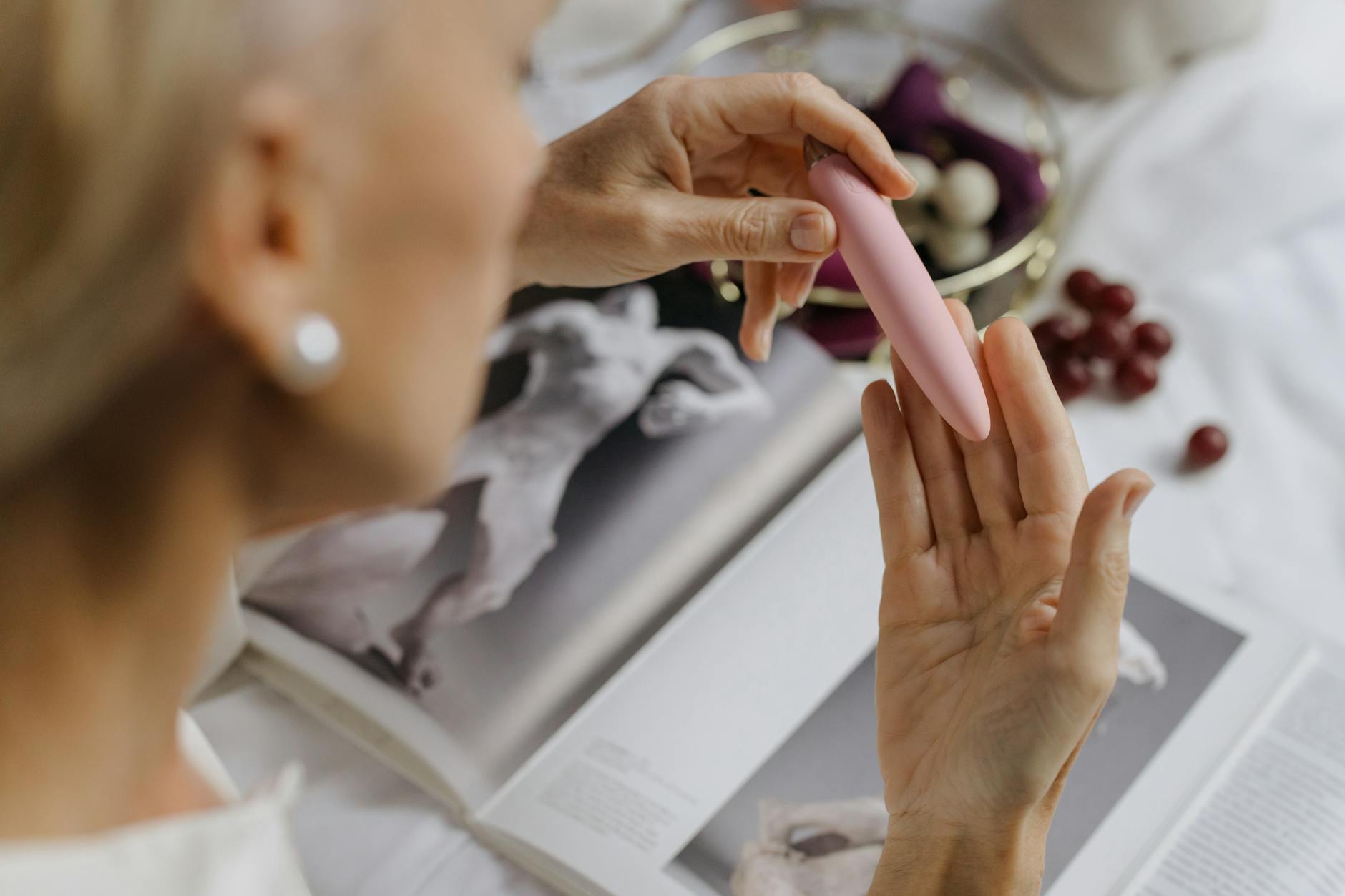
Let's talk about the thing you've been thinking about
You want to introduce a toy. Maybe you've been thinking about it for months. Maybe you know exactly which clitoral vibrator you want, or maybe you just know that something's missing and you're not sure how to ask. Either way, you're worried your partner will feel threatened, rejected, or like you're saying what you're already doing together isn't enough.
Here's the truth: most partners who react badly to that conversation are reacting to the way you brought it up, not the idea itself. And most of the time, that bad reaction is actually fear dressed up as defensiveness. The good news is that fear is fixable with information, reassurance, and a plan that feels safe to both of you.
Why this conversation matters more than you think
Introducing a lemon vibrator or any clitoral vibrator isn't really about the toy. It's about permission. It's about saying out loud that your pleasure is a conversation you're having together, not something you're managing alone or hiding. It's about shifting from "I'm embarrassed to ask" to "we're figuring this out." That shift changes everything in a partnership, especially if you've spent years filtering your desires.
Most couples who use toys together report higher satisfaction and more open communication overall. This isn't because the toy is magic. It's because the conversation forced you to get honest about what you actually want.
How to start the conversation without it feeling like a referendum
Timing matters. You want a moment when you're both relaxed, fed, and not stressed about work or kids or whatever else. Not right before bed, not in the middle of a conflict, not while you're both distracted. Think Sunday morning coffee, a walk, a car ride. Somewhere neutral.
Start with context, not the ask. "I've been thinking about something I want to explore, and I want to talk to you about it because it's important to me and I want your opinion." That opener signals that this is a real conversation, not a criticism. Then breathe and say it: "I want to use a clitoral vibrator, and I'd like to try it together. I think it could feel really good for both of us."
If your partner looks scared or says "Why aren't I enough?" don't defend yourself. Instead, name what you're hearing: "I get that you might feel that way. That's not what this is about. I want more pleasure, and I want it with you. A tool doesn't replace what we do. It changes what's possible." That distinction matters more than anything else you'll say.
When your partner feels threatened (and why they probably don't)
Most hesitation comes from one of three places: they think you're unhappy, they think a toy means they're failing, or they're genuinely uncomfortable with the idea of sex toys because they weren't raised around that idea.
For the first two, clarity works. "I'm happy. I also want more sensation. Those two things are true at the same time." For the third, you need patience and normalcy. Show them research. Talk about how common it is. Let them know that Hello Nancy's Savo makes tools specifically designed for couples to use together. Sometimes the thing that shifts someone's mind isn't logic, it's knowing that thousands of other people are doing this boring, regular thing.
If your partner is genuinely not interested and won't budge, that's a different conversation. But most people, when they feel safe and informed, are curious.
The actual first time you use a lemon vibrator together
Communication is everything here. You're not just using a toy. You're testing the waters on vulnerability and pleasure talk, which is a skill you're both learning.
Start slow. If you've got a Lem or another lemon clitoral vibrator, keep it on low settings. The point isn't intensity right now, it's novelty and shared focus. You can explore strength later, once you both feel comfortable.
One of you should be in control of the toy at first. Don't hand it to your partner and hope they know what to do. Either guide their hand, or try it on yourself first so they can see what feels good. Narration helps. "That feels amazing on the left side" or "I like it here, a little lower." You're giving your partner information and permission to watch and learn.
If it feels weird or awkward, that's completely normal. Say so. "This feels a bit strange, but I like it. Let's do this again." Normalizing the weirdness removes the shame from it.
What to do if something goes wrong (and why it probably won't)
Sometimes people come to sex toys with anxieties they didn't know they had. If your partner suddenly feels strange about it, stop. Don't push. Instead, ask what's happening. Are they feeling left out? Worried they're not part of the pleasure? Uncomfortable with the physical sensation of something new? The answer changes what you do next.
If they felt left out, hand them control. If they were worried about not being involved, remind them that this is something you're doing together. If it's just physical discomfort with the sensation itself, you can ease into it more slowly. There's no deadline here.
After the first time: how to integrate it into your regular life
Don't treat the toy like a special occasion. If it becomes something you only do when you're "in the mood" or on date nights, it stays in the realm of performance and novelty. Instead, let it become as normal as any other part of your intimate life. Some sessions you'll use it. Some you won't. Both are fine.
Keep talking. "What did you like about that?" "Do you want to try it differently next time?" "What did you notice about how that felt?" These small debriefs don't have to be clinical. They can be playful, whispered in the dark, completely casual. The point is that you're checking in on what's working.
And here's the thing that most people don't expect: using a lemon vibrator or any clitoral vibrator together often makes partners more curious about each other. You start paying more attention to what brings pleasure. You get less shy about asking. You realize that conversation about sex isn't actually dangerous. It's connecting.
FAQ: The questions nobody asks but everyone wonders
Should I ask permission, or should I just introduce the toy and let them discover it?
Asking permission is always better. Surprising your partner with a sex toy can feel like a violation of their consent, even if you meant it playfully. You want them to have agency in this decision. A short conversation upfront saves awkwardness and resentment later. Give them time to adjust to the idea before it's in your bedroom.
What if my partner says no and won't change their mind?
That's a real boundary, and you get to decide what to do with it. You could respect it completely and explore toys solo. You could ask if there's something specific they're uncomfortable with and see if that changes with time. Or you could recognize this as a fundamental incompatibility around pleasure and sexuality. Any of those responses is valid. But don't try to coerce or manipulate someone into comfort with toys. That never ends well.
Is it okay to use a toy if my partner isn't interested in using it themselves?
Yes. Not every partner wants to hold the toy or watch closely, and that's fine. Some people enjoy being the pleasure-receiver. Some like watching from a bit of distance. Some prefer to focus on other kinds of touch. The toy is a tool, not a relationship test. Use it however feels good for both of you.
Will using a lemon clitoral vibrator during partnered sex make me less sensitive to regular touch?
No. Clitoral vibrators work on a completely different stimulation pattern than fingers or a mouth. Using one doesn't rewire your sensitivity. If anything, exploring different sensations makes you more aware of what you like, which usually means better communication and more nuance in your intimate life.
How do I know if we're using it right?
There's no right way. If it feels good and you both want to keep doing it, you're doing it right. Some people use the Lem during partnered sex. Some prefer to use a clitoral vibrator solo and then have partnered sex afterward. Some use it as foreplay. None of these approaches is more correct than the others. The right way is whatever works for your bodies and your partnership.
What if the conversation goes great but then using the toy together feels disappointing?
Toys aren't magic. Sometimes the buildup is better than the reality, and that's okay. Give it a few more tries before you decide. But also let yourself be disappointed if it doesn't land. You can still enjoy clitoral vibrators solo, or you can decide they're just not for you. The goal isn't to love the toy. The goal is to expand what you know about pleasure together.
The bigger picture: why this conversation matters
Introducing a lemon vibrator to your partnership is really about building a culture where pleasure is something you discuss openly, without shame. It's practice for bigger conversations. It normalizes the idea that your body's needs matter. It signals that you trust your partner enough to be vulnerable about what you want.
That foundation changes things. Couples who can talk about pleasure can usually talk about other hard things too. You've proven to each other that vulnerability in this area isn't dangerous. That's powerful.
So yes, bring up the toy. Have the conversation. Use the clitoral vibrator together, or don't. But do the part that actually matters, which is deciding that pleasure is worth talking about. Everything else follows from that.