How to Use a Lemon Vibrator With a New Partner
Let's be real: the moment you're wondering whether to mention your vibrator to someone new is the moment you're already overthinking it. Most people expect it. Many have their own. The awkwardness lives almost entirely in your head.
Here's what I've learned from working with couples through this exact transition. The people who integrate a lemon clitoral vibrator smoothly into new intimacy aren't the ones with perfect communication skills. They're the ones who stop treating it like a confession and start treating it like a preference. "I enjoy this, and I think you will too" changes everything.
Why the timing of this conversation matters more than the content
Don't bring up your vibrator for the first time during sex. That's reactive and defensive. It signals you've been keeping something from them, and now they're finding out mid-moment.
Instead, mention it casualally before sex becomes inevitable. During drinks, in a text thread, while you're hanging out. Not "by the way, I have a vibrator," but something closer to your actual life: "I've been using this lemon vibrator lately and it's changed things for me," or "I'm really into this clitoral vibrator, and I'd love to use it with you."
The timing removes the stakes. You're not springing something on them. You're inviting them into something that's already part of your pleasure routine.

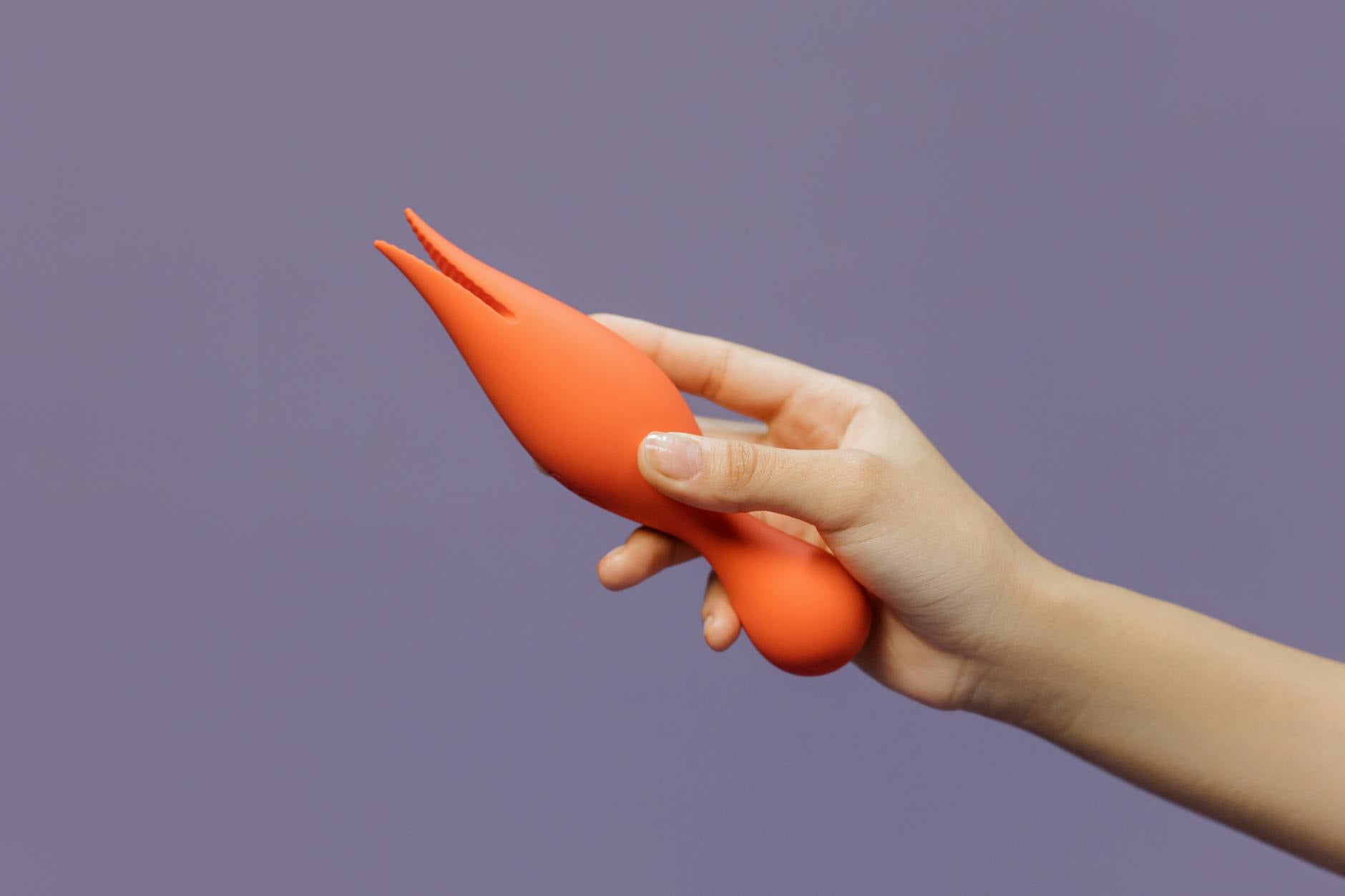
Photo by Ron Lach on Pexels
What to actually say (three framings that work)
Framing 1: the practical approach. "I've got this toy that I really enjoy. I'd love to use it with you sometime. It might feel different, but I think it would be hot." You're naming what it is, expressing desire, and acknowledging the newness. All clear.
Framing 2: the curiosity approach. "I'm curious what it feels like for you to be part of this. Would you want to try it together?" This invites their participation and frames it as exploration, not as something missing from them.
Framing 3: the direct approach. "Using my vibrator makes me feel amazing. I want to experience that with you in the room." You're centering your pleasure and your desire for shared intimacy. It's simple and honest.
Pick the one that sounds most like you. Authenticity matters more than the exact wording. If you sound uncomfortable, they'll mirror that discomfort. If you sound matter-of-fact, so will they.
What they might actually be thinking
Most new partners aren't threatened by a vibrator. They're relieved. Here's why: a lot of people worry they're not "enough," that they can't make their partner orgasm, that something's wrong if penetration alone doesn't finish the job. A lemon vibrator solves that equation. It's not competition. It's collaboration.
Some partners will be excited immediately. Others will need a minute to adjust to the idea. Both reactions are fine. What matters is you're not apologizing for it or making it seem shameful. You use it because it works. That's it.
Occasionally someone will balk because they think it means you don't want their touch anymore. This is the moment to be explicit: "This doesn't replace you. It works with you. When I'm with you, I want to use this." That reframe lands.
How to actually introduce it the first time together
Don't make a production of it. Don't light candles, make a speech, or build it up. Just have it with you when you're intimate together.
Start with foreplay. Let them touch you, let you touch them. Build some ease. Then, when you're approaching the point where you'd normally want direct clitoral stimulation, say something like: "I want to use this now. Is that okay?" Most people will say yes immediately. Some will ask questions. Answer them simply.
Show them how it feels. Let them hold it with you the first time. Not to control it, but so they're part of the sensation. This makes it collaborative and less like you're disappearing into your own world.
Start on a lower setting. There's something vulnerable about introducing a new sensation to someone for the first time, and lower intensity feels less jarring to both of you. You can always increase it.
The psychological shift that happens
Here's what surprises most couples. Using a lemon clitoral vibrator together doesn't make things more mechanical. It often makes them more intimate. You're more relaxed. Your orgasm comes more reliably. Your partner gets to watch you fully satisfied, without strain or performance anxiety on their part. They get to be a part of that.
Many people report that introducing a clitoral vibrator to shared intimacy actually deepens their connection with a new partner because it removes the pressure that was silently sitting between you. You both know what gets you there. There's honesty in that.
What happens if they say no
Sometimes they will. A new partner might feel intimidated, or uncertain, or just not into it. That's information. Not a referendum on your sexuality or your needs.
Honestly, someone who's threatened by your pleasure or unwilling to explore your sexuality with you is telling you something important about how they'll handle intimacy long-term. Pay attention to that.
You can absolutely use your vibrator alone and with them separately. But if they're uncomfortable with you deriving pleasure from it at all, that's a compatibility question worth exploring now.
Practical tips for the first few times
Use a water-based lubricant. Even if you're aroused, adding lube changes how the sensation feels and makes everything smoother. For a lemon vibrator specifically, lubrication helps the suction feel more consistent.
Keep it clean. Use toy cleaner or warm water before and after. This matters to both of you. If you're introducing someone to your vibrator, showing that you care for it carefully signals that you respect your own pleasure.
Let them watch. Some partners feel more connected watching you use it than being the one holding it. That's valid and actually really common in new relationships. You're showing them what gets you there.
Communicate during. "That feels good," "slower," "right there." Your partner isn't a mind reader, and sex is a conversation. They want to know what works.
Beyond the first time
After the first experience, it becomes normal. You'll have it out the way you'd have lube or condoms. It stops being a production and starts being a tool you both use toward pleasure.
Some couples find that one partner holds the vibrator while they're together. Some use it in position during partner sex. Some incorporate it into foreplay. Others find a rhythm where you use it solo and your partner is present. There's no one right way.
What matters is that you've moved past the introduction phase. You've normalized that your pleasure includes whatever gets you there, and your new partner knows that about you from the start. That baseline honesty shapes everything else.
What if you don't have a vibrator yet
If you're at the point where you're considering bringing a toy into new intimacy but you don't have one yet, this might be the moment to explore what works for you first. The Lem, our lemon clitoral vibrator, uses suction technology that feels fundamentally different from traditional vibration. Many people find it produces more intense, reliable orgasms. Understanding what you respond to makes it easier to share that with a partner.
You might want to reach out to us directly or browse our collection to find what resonates with you.
Common questions partners ask
Does this mean I'm not enough? No. It means your pleasure is multidimensional, and they get to be part of all of it. You're not replacing them. You're inviting them in.
Will it make me less sensitive to normal touch? No. Vibrators don't desensitize clitoral tissue with normal use. The opposite is often true. Using your vibrator regularly can increase your overall sexual sensitivity.
Should we use it every time? No. You'll develop a rhythm where sometimes it's part of sex and sometimes it's not. Both are fine.
Is it weird if my partner wants to use it on me? Not at all. Many couples find that a partner holding the vibrator feels more intimate than using it solo.
What if they want to use a vibrator too? Support that completely. If they introduce their own toy, you're both acknowledging that pleasure is personal and shared. That's healthy.
FAQ
How soon into dating should I mention my vibrator? Before sexual intimacy becomes inevitable. That's typically weeks in, not months. Early enough that it's casual, not so early that it feels like oversharing.
Is it normal to feel anxious about this conversation? Completely. You're being vulnerable. You're sharing something intimate and personal. That nervousness is totally normal and usually dissolves the moment you say it out loud.
What if we're long-distance and can't try it together right away? You can introduce it during video intimacy, or just mention it as part of your normal conversation. When you're eventually together, it becomes a new dimension to explore.
Can I use a lemon vibrator during sex with my new partner? Yes. Many people use the Lem or other clitoral vibrators during partner intercourse. It doesn't replace penetration. It adds to the experience.
What if my partner has their own vibrator? Excellent. You can use them together, take turns, or incorporate both into one experience. It's additive, not competitive.
How do I know if my new partner is actually okay with it, or just saying yes? Watch their energy. Are they curious? Do they ask questions? Are they engaged when you're using it together? Or do they seem shut down? Their behavior tells you more than their words ever will.
The real conversation
Introducing a vibrator to a new partnership isn't actually about the toy. It's about saying "my pleasure matters, and I want to share it with you." That's the conversation happening underneath all the logistics.
When you frame it that way, most of the awkwardness disappears. You're not asking permission. You're inviting them. There's a big difference.
Your sexuality isn't something to apologize for or ease someone into gradually. It's part of who you are. A partner who gets it and wants to explore it with you is someone worth keeping around. Everyone else is just sorting themselves out on their own timeline.
Start the conversation casually, be honest about what you enjoy, and let them respond. The rest will follow naturally.