Let's acknowledge the thing nobody says out loud
Being watched while you pleasure yourself is not the same as having sex with a partner. It's more vulnerable in some ways and less in others. Your brain doesn't know whether to feel exposed or powerful, and usually it feels both at once. That's completely normal.
When a partner asks to watch, they're asking for access to something deeply private. They're also, whether they realize it or not, asking you to perform a version of yourself. The good news: you don't actually have to perform anything. What you need is a clear conversation beforehand and a tool that lets you stay anchored in your own pleasure, not your partner's reaction.
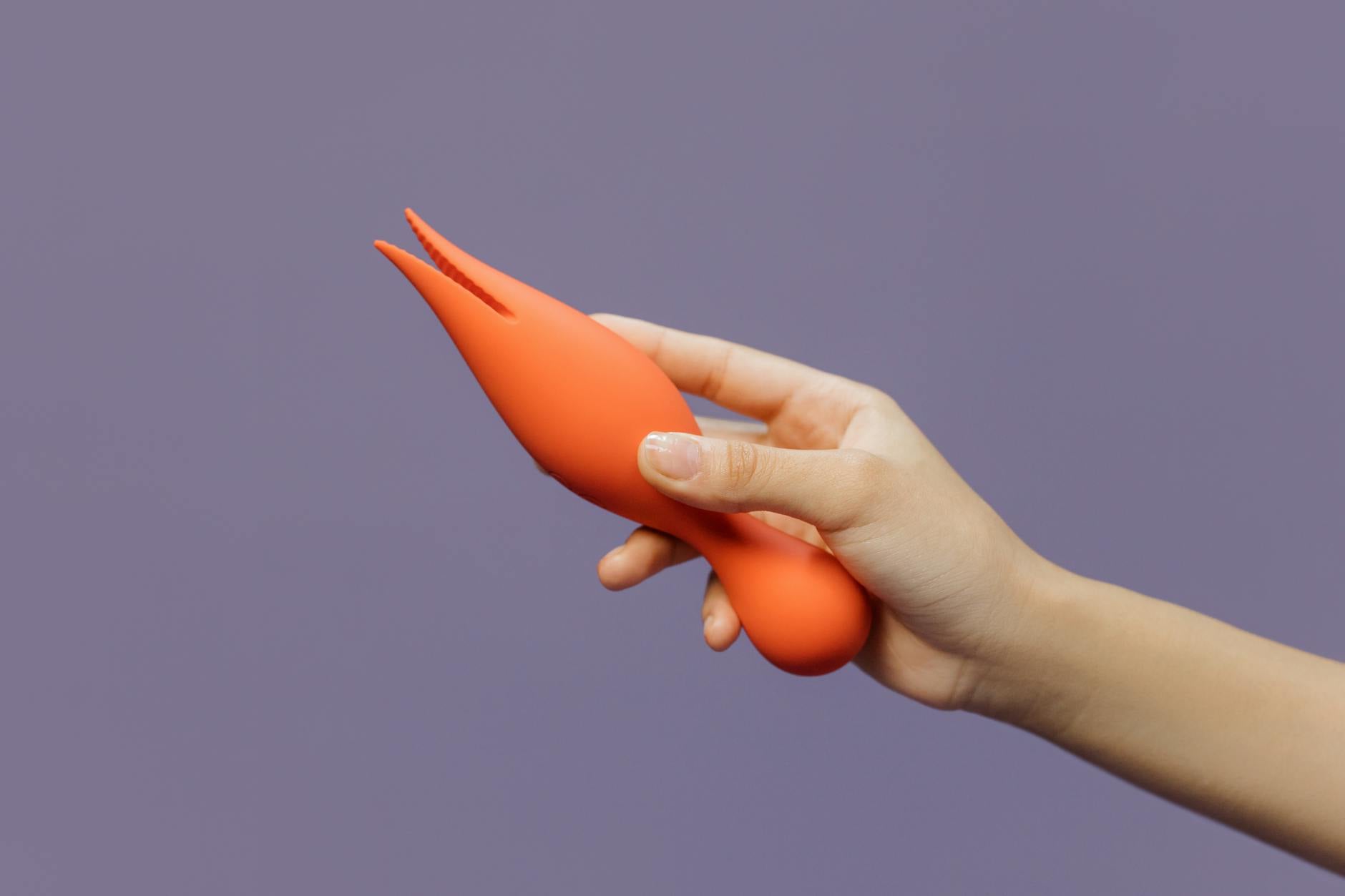
A lemon clitoral vibrator changes the equation here because it's designed for direct, focused sensation. It keeps your attention on what your body is doing, not on being watched.
Why this matters for couples
In couples therapy, I see this moment come up more often than people realize. One partner is curious; the other is terrified. The fear isn't usually about the act itself. It's about losing control of the narrative. When you masturbate alone, your pleasure is private property. When a partner watches, suddenly it belongs to a shared story.
That shift requires three things to work:
First, explicit permission. Not the kind where you agree in the moment and regret it later. The kind where you sit down beforehand, fully clothed, and say: "I'm willing to try this, and here's what I need." That might mean a specific time of day, a specific position, lighting you choose, or the ability to ask your partner to leave if you change your mind.
Second, a clear sense of what you're doing this for. Are you doing it because your partner is curious and you want to offer something? Are you doing it to build trust? Are you actually interested in the shared intimacy of being witnessed? Your answer changes everything about how you approach the experience.
Third, a tool that keeps you in your own body. This is where the lemon vibrator matters. Because it delivers concentrated stimulation without requiring much movement or effort, you can stay focused on sensation instead of wondering what your face looks like or whether you're taking too long. The lem vibrator's suction mechanism does the work; you don't have to perform effort. You just have to feel.
The setup conversation
Here's what I recommend you say, or something close to it: "I'm willing to do this, and here's what needs to be true. I want to pick the room. I want some privacy to get comfortable. I want to know if you're enjoying it, but I don't want a play-by-play. And if I need you to stop watching or leave, I'm going to say so, and we're not going to make it weird."
Then ask: "What are you hoping to experience?" The answer matters. If they want to feel closer to you, that's one conversation. If they're curious about arousal they've never seen, that's different. If they want to touch themselves while watching, that's something to agree on too.
The conversation is awkward. Do it anyway. The awkwardness is the setup cost for genuine comfort later.
One more detail: decide in advance whether you're going to make eye contact, look at them, or focus inward. None of these is wrong. But knowing your choice beforehand means you're not deciding in the moment while trying to manage both arousal and self-consciousness. That's too much load to carry at once.
The actual logistics
Lighting matters more than you'd think. Dim light that you choose (not complete darkness, not bright like an interrogation room) helps you feel less exposed without creating a staged feeling. If you have a blanket or sheet nearby, have it available. Not because you'll necessarily use it, but because knowing you have an escape hatch calms your nervous system.
Position yourself in a way that feels both comfortable and intentional. Don't contort yourself trying to be aesthetic. You're not in a film. You're in your own body. That might mean sitting against the headboard, lying back with a pillow under your hips, or perched on the edge of the bed. Whatever lets you breathe and move naturally.
Start the lemon vibrator on a lower setting before your partner even comes into the room. Give yourself 5-10 minutes alone to settle into sensation. This isn't time-wasting. It's you establishing your own arousal before bringing someone else into it. You're building your own momentum, which means their presence becomes something added to your pleasure, not the source of it.
When they come in, they should know to let you keep moving for at least another few minutes before any interaction. This isn't a performance that starts the moment they arrive. Your pleasure started before them. They're joining something already in motion.
What to do about your brain
Your brain will try to narrate. It will create a running commentary: "They're looking at me." "Am I taking too long?" "Do I look weird?" This is not a sign that something is wrong. This is what brains do when we're in unfamiliar territory.
When the narration starts, you have two moves. First, notice it without judgment. Don't try to silence it. Second, redirect attention back to sensation. The lemon clitoral vibrator helps with this because the physical sensation is intense enough to anchor you. When you notice you're in your head, press the vibrator slightly more firmly or shift the angle a little. Give your body a reason to demand your attention back.
If your partner is watching attentively, try to remember that attention is not judgment. Their curiosity about your pleasure is not the same as scrutiny. I know that's harder to believe than it sounds. But in my practice, most partners watching are thinking something much simpler: "I'm glad you're enjoying yourself" or "I love seeing you like this." They're not analyzing your technique or cataloging what you're doing wrong.
If you genuinely feel unsafe or overly exposed, stop. Your partner should understand that this isn't a rejection of them; it's a boundary your nervous system needs. You can try again another time with different conditions.
The aftermath matters
Don't disappear into the bathroom immediately after, if you can avoid it. Stay present for a few minutes. Let your partner touch you, or just sit close. This is the moment where the experience either becomes something you want to repeat or something you want to forget.
The next day, check in with your partner about how it felt. Not in a way that sounds like you're gathering feedback. More like: "What was that like for you?" Their answer might surprise you. They might have felt incredibly close to you. They might have felt something else entirely. Either way, their perspective helps you understand whether this is something you want to do again.
If you loved it, great. You've discovered something new about shared intimacy. If you hated it, also great. You've gotten clear information about a boundary you need to respect. Both outcomes are useful.
The psychological shift
Here's what I've noticed after years of couples therapy: the partners who report that watching their partner's solo pleasure deepened their connection are the ones who went into it with zero performance pressure. They focused on sensation, used the right tools (like a lemon sucker vibrator that keeps them anchored), and communicated clearly before and after.
The partners who felt awkward or disconnected were often the ones trying to be sexy while being watched. That's a much harder task. Your job isn't to be sexy. Your job is to feel good and let your partner witness that. The sexiness happens as a side effect of genuine pleasure, not as something you're performing.
If you've never done this before, remember that vulnerability is the whole point. You're not supposed to feel comfortable the first time. You're supposed to feel exposed and brave and maybe a little nervous. That's the actual intimacy.
FAQ
What if I can't orgasm while being watched?
Then you don't. Some people's nervous systems simply won't let them climax with someone observing, at least not the first time. Build pleasure for 15-20 minutes, let your partner see what arousal looks like on your body without needing it to end in orgasm. That's complete. Orgasm isn't the finish line here; connection is.
Should I tell my partner what feels good, or let them figure it out?
Tell them. This isn't a guessing game. Say things like "I like this pattern" or "A little slower." Narrating your own experience keeps you anchored in your body instead of in their perception of you. It also deepens their understanding of you.
What if my partner gets aroused and wants to join in?
Decide that beforehand. Are you okay with them touching themselves? With them touching you? With it becoming partnered sex? These are separate conversations, and having boundaries set removes in-the-moment pressure and guesswork.
How do I know if this is something I actually want, versus something I'm doing to please them?
Spend time with it alone first. Try using your lemon vibrator while knowing they'll watch, but do it without them present initially. Notice how your nervous system responds. Your body knows the difference between genuine desire and obligation. Listen to that.
Can we make this a regular thing?
Absolutely. Some couples find this becomes part of their intimacy routine. Others try it once or twice and move on. Neither pattern is more "right." What matters is that you're choosing it each time, not defaulting to it because you tried it once.
What if I feel self-conscious about my body?
Start with less light. Position yourself so you feel more comfortable. Use clothing if you want. Take your time. And remember: your partner asked to watch you experience pleasure. They're not evaluating your appearance. They're interested in your sensation and your trust.
The real conversation
This whole experience, when it works, isn't about performance or arousal or proving anything. It's about letting someone you care about see you in a state of unselfconscious pleasure. That's rare. Most of our lives, we're managing how we're perceived. This is permission to stop doing that, at least for a little while.
The lemon vibrator helps because it's a tool designed for your sensation, not for show. You can focus on what feels good without worrying about technique or endurance or whether you're doing it right. That focus, more than anything, is what makes this work.
If you're curious about trying this, have the conversation first. Then set up the space for yourself. Then invite your partner in. And remember: vulnerability is courage. You don't have to perform it. You just have to feel it.