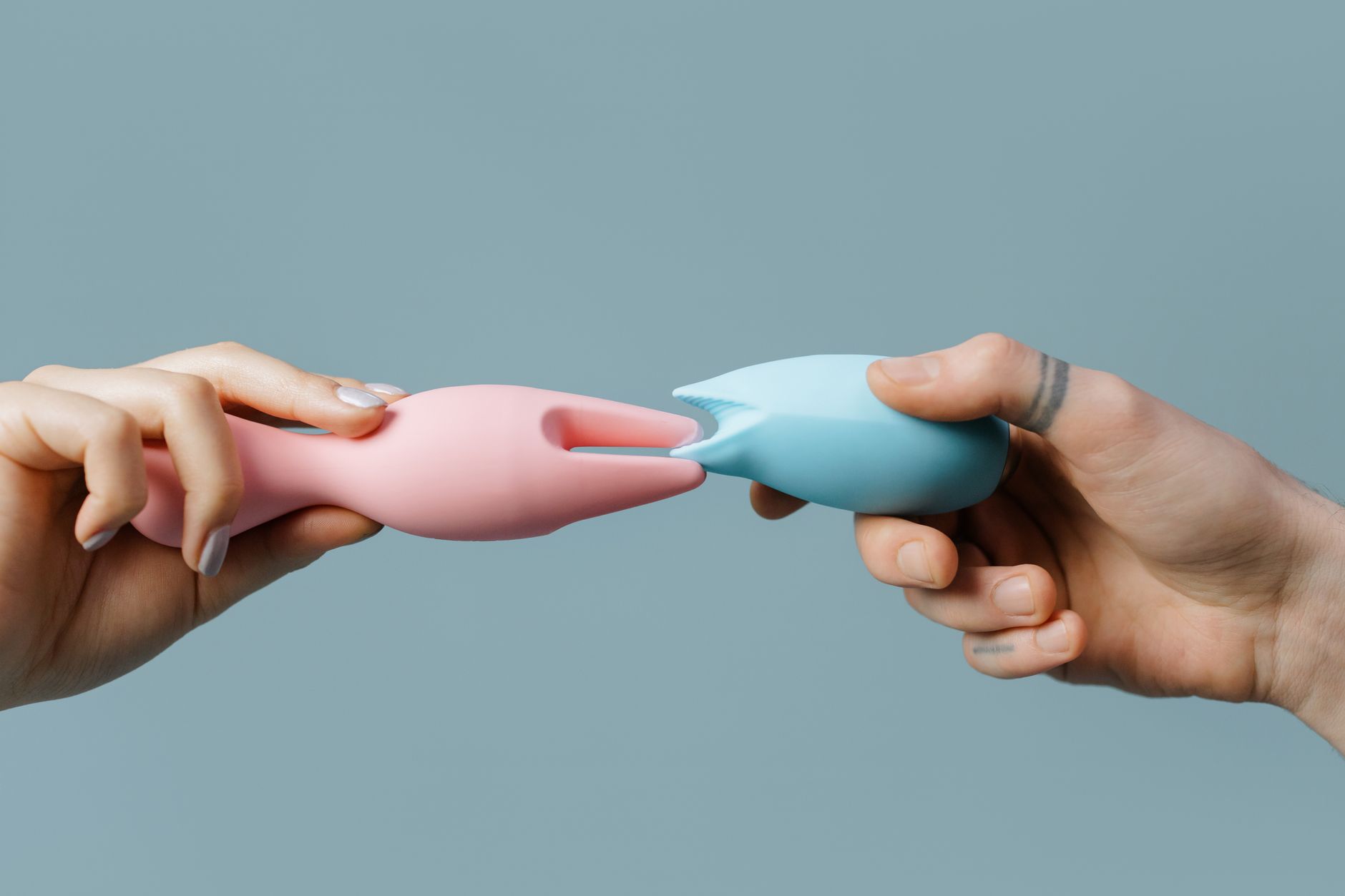
Let's be real about what changes when you're with someone new
Your body doesn't suddenly develop different sensitivity just because you're in a new relationship. But your nervous system? That absolutely does. New hands, new rhythm, new expectations, new pressure to perform. All of that stacks up. The lemon vibrator isn't magic, but it's the closest thing to removing the guesswork from a conversation that's often way harder to have out loud.
Why sensitivity shifts with a new partner
When you've been with someone for years, your body learns their touch. Muscle memory. Anticipation. You know what's coming next. With a new partner, everything is novel. Your nervous system is scanning, comparing, adjusting. That's not weakness. It's neurological.
Here's what happens physiologically. Arousal requires a certain baseline of comfort. Your parasympathetic nervous system (the one that handles pleasure responses) needs to feel safe enough to activate. New partner energy, even when it's exciting, can trigger low-level vigilance. You're mapping their body, their preferences, their rhythm. Your clitoris is paying attention too.
The other piece: different partners have different touch. One partner's pressure might feel perfect while another's feels too light or too heavy. Neither of you is wrong. You're just calibrated differently.
The conversation before bringing a lemon vibrator into the mix
Okay so here's the gap most people jump over. You can't effectively use a lemon vibrator together if you haven't already established that it's not a referendum on your partner's ability. The lem vibrator exists because clitoral orgasms are complex. Not because your partner has failed.
I recommend framing it like this. Not: "I need this to come." But rather: "I want us to figure out what works for my body. This helps me understand my own sensitivity so I can show you what I like."
The lemon vibrator becomes a tool for discovery, not a replacement. You're both students in the same class.
If your partner is insecure, that's a separate conversation. And it's worth having before you integrate toys into your sexual life, because avoidance makes everything worse. You're either building trust or you're building resentment dressed up as spontaneity.
Starting solo so you know your own map
Here's what I tell most clients who are new to using a lemon clitoral vibrator: explore it alone first. Not instead of partnered sex, but before it. Minimum three solo sessions.
Why? Because you need to know your own sensitivity gradient. Which intensity patterns feel good. How long your warmup actually takes. Whether you prefer direct stimulation or suction-based pressure. How you respond when you're stressed vs. relaxed.
Then when your partner is involved, you're not discovering two things at once. You're discovering how your body responds to them while you already know how your body responds to a lemon sucker vibrator.
During solo exploration, start at pattern 1 on the lem vibrator. Let it run for a full minute. Feel where on your clitoris the sensation is most intense. Try moving it slightly. Notice if you want consistent pressure or if you prefer it to build gradually. Write this down if you need to. Seriously.
The first time together
Set expectations beforehand. "I want to use this while we're together. I'll be in control of the vibrator. You can touch me everywhere else." Clear boundary. Clear invitation.
Lowkey anxiety kills arousal. So does performing. So does worrying that your partner is bored while you're figuring out your sensitivity. Name that out loud. "If you see my eyes closed, I'm not checking out. I'm focused. I like having you here."
Start with foreplay that doesn't involve the vibrator. Kissing, touching, whatever your baseline is. Get to about 70% aroused. That's when your clitoris is already engorged and responsive.
Then introduce the lem vibrator at a low pattern. Let your partner watch. Let them touch you elsewhere while the vibrator is on. This isn't separate from partnered sex. It's integrated into it.
If you orgasm, great. If you don't, also fine. The point of the first time is information, not performance.
When sensitivity feels imbalanced between you
Some people are highly sensitive. Some people prefer firmer, more consistent pressure. Some people take longer to respond. If you're new together and you have very different sensitivity levels, a lemon vibrator can either highlight that gap or bridge it.
The lemon clitoral vibrator delivers consistent suction-based stimulation without the pressure variability of a hand. So if your partner's touch is too unpredictable but a lemon vibrator at pattern 3 feels perfect, you're learning something crucial: you prefer consistent, rhythmic stimulation.
Your partner can then practice that. Or you can use the vibrator regularly and not worry about it. Both are valid.
One note: if you notice you can only orgasm with the lemon vibrator and not with your partner, that's not a problem yet. But it is information worth exploring over time. Sometimes it's about pressure. Sometimes it's about the mental load of trying to perform for someone else. Sometimes it's just that you haven't learned your partner's body well enough yet.
Communication patterns that actually work
Instead of "Can we try this?", try "I want to show you what I like." Different framing. Same ask.
During sex, if something shifts (the vibrator angle, your partner's pressure, your own arousal), name it in the moment if you can. Not a clinical description. Just: "That feels good," or "A little lighter," or "Keep doing that."
The lemon vibrator is your permission structure to stay present with your own pleasure instead of managing your partner's ego. Which is genuinely revolutionary for people who've spent years calibrating their bodies around someone else's insecurity.
Afterward, the debrief doesn't need to be awkward. "That was nice. I liked when..." Specific. Appreciative. Future-focused.
If it feels awkward or stalled
There's a difference between "we're both learning" awkward (normal, temporary) and "my partner isn't comfortable with this" awkward (worth addressing directly).
If your new partner seems reluctant about the lemon vibrator, ask directly. "What's coming up for you?" Listen without fixing. Insecurity, unfamiliarity, past experiences, cultural messaging. All of it is valid context.
Then decide if it's something you can work through together or whether it's a sign of incompatible sexual values. Both are legitimate outcomes.
The longer play
As you spend more time with a new partner, your body relaxes. Nervous system downregulates. You might find that you orgasm more easily without the vibrator, or that you prefer it differently than you did initially. That's normal.
The lemon sucker isn't a permanent fixture unless you want it to be. It's a tool that helps you understand your own sensitivity and communicate that to your partner. The more you use it consciously, the less you need it eventually.
Though some people find they just like it. Which is also completely fine. Your pleasure doesn't need a timeline or a graduation ceremony.
FAQ
How do I bring up using a lemon vibrator if my new partner seems traditional?
Frame it as curiosity about your own body, not criticism of theirs. "I'm interested in exploring what makes me feel good. Will you be part of that with me?" That's an invitation, not a complaint. Most partners respond well to genuine interest in pleasure as a shared project.
Will using a lemon clitoral vibrator make it harder to orgasm with my partner?
No. Actually the opposite. Getting comfortable with what feels good to your body makes you a better communicator about sensation. You know your own pleasure map, so you can actually guide your partner toward it instead of hoping they guess.
What if I orgasm with the vibrator but struggle without it?
That's information, not failure. It means your clitoris responds really well to consistent, suction-based stimulation. Which you can teach your partner to approximate with their hands, or you can just use the lemon vibrator regularly. Both work.
Is it weird to use a lem vibrator when I've only been with my new partner for a few months?
Not at all. The earlier you integrate pleasure tools into your relationship, the more normal they become. You're not signaling that something is wrong. You're signaling that pleasure matters.
How do I know if my partner is actually okay with the lemon vibrator or just pretending?
Watch their behavior during sex, not their words. Are they touching you while the vibrator is on? Are they engaged? Are they asking questions afterward? Or are they silent and distant? Your nervous system will pick up the difference. If something feels off, ask directly. Avoid "Is this weird for you?" (defensive). Try "I want to check in. How was that for you?" (curious).
What if my new partner wants to use the lemon vibrator but I'm not comfortable with that yet?
That's valid. "I'm not ready for that yet, but I want to get there. Let's take this at my pace." Then actually work toward it if you want to. If you don't want to, say so. Consent is bidirectional.
The bottom line
New partners mean new bodies, new rhythms, new learning curves. A lemon clitoral vibrator is a conversation starter dressed up as a sex toy. It gives you permission to ask for what you actually want instead of hoping your partner can read your body like a book.
Sensitivity shifts with new partners because connection takes time. The lemon vibrator doesn't replace that time. But it does make the time you spend together more intentional, more communicative, and way less pressured.
Your pleasure matters. From the first time together, not after you've earned it through years of loyalty. If you're ready to build that foundation with a new partner, start here.