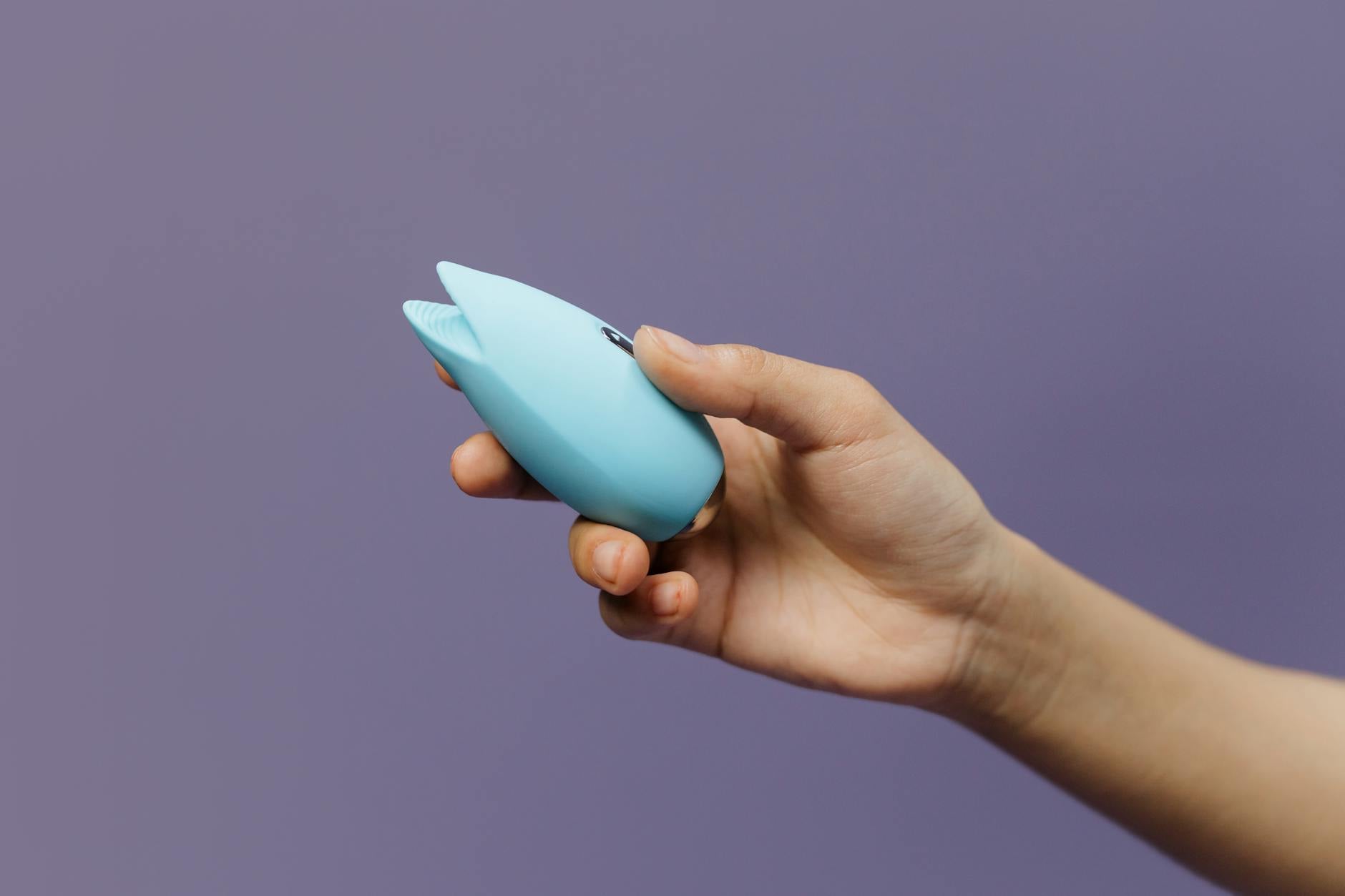
Making the leap from hands to a lemon vibrator
You know exactly how to touch yourself. Years of knowing. Hands know the pressure, the rhythm, the micro-adjustments that make everything work. So the thought of switching to a vibrator can feel risky. Like you're trading expertise for a machine that might feel alien or, worse, less effective.
Here's what I want you to know first: you're not replacing your hands. You're adding another tool to the same toolkit.
Why the transition feels different than you expect
Manual stimulation is active. Your brain is engaged in the micro-decisions of speed and pressure in real time. When you introduce a vibrator, that loop changes. The lemon clitoral vibrator takes over the repetitive movement, but you lose the continuous feedback adjustment.
That's not a flaw. It's a trade. You trade micro-control for consistency, and for the mental space to just feel instead of constantly managing. Most people find that trade deeply worth making.
The other thing that shifts: hand stimulation often builds through a specific progression you've learned through thousands of repetitions. That muscle memory is real. A vibrator, especially one like the Lem that uses suction rather than pure vibration, introduces a completely different sensation pattern. Your body reads it as new, which can feel weirdly vulnerable.
The actual transition process
Start with the vibrator off.
I'm serious. Hold it against your clitoris the way you'd hold your hand. Get used to the weight, the firmness, the shape. Spend a few minutes with it inactive. Let your body recognize it as a thing that can be present without it needing to do anything yet.
Turn it on at the lowest setting. Often that's pattern 1 or intensity level 1 on lemon sexual toys. The sensation will feel more intense than you expect because it's focused and consistent. You can't throttle it with subtle hand adjustments.
Here's the key move: use the vibrator the way you'd use your fingers as amplification, not replacement.
With manual stimulation, you probably use variable pressure and rhythm. Move it in small circles. Speed up, slow down. Try a few seconds of faster intensity, then back off. That pattern of building and easing is part of what gets you there.
When you introduce a lemon vibrator into that same rhythm, keep your hand involved. Place it against your skin so the vibrator is in contact, but your hand is directing where and how much pressure. You're still in control of the pacing. The vibrator is just amplifying the sensation your fingers are already managing.
After a few sessions like that, your nervous system stops treating the vibrator as a foreign object. It starts feeling like an extension of touch rather than a replacement for it.
Matching the vibrator to your existing preferences
If you prefer deep, broad pressure during manual stimulation, the suction-style lemon clitoral vibrator works well because it stimulates the whole clitoral network, not just the surface. You get width and intensity without the grinding sensation of traditional vibrators.
If you prefer direct, focused stimulation, start with a lower intensity setting. Let your body acclimate to the intensity level before you bump it up. The lemon vibrator on setting 2 or 3 often delivers the kind of focused sensation that feels closest to manual technique.
Timing matters too. If your manual routine takes 20 minutes to build, don't expect the vibrator to compress that into 5. Your arousal timeline is the boss here. The vibrator is faster, but not magic. Budget the same time you normally would, and let the extra intensity from the vibrator just accelerate the process you already know works.
The rhythm question: how to pace it
Manual stimulation lets you speed up gradually over 20 or 30 minutes, with micro-breaks and changes in pressure that keep everything interesting.
With a vibrator, you can't speed up the vibration itself. You can change patterns or intensity levels, but you can probably only make a few jumps before you're at the top setting. So think of pacing differently. Instead of building through more speed, build through more pressure or different positioning.
Try moving the vibrator in small circles at a constant intensity. Or hold it steady for 30 seconds, pull back, let sensation cool slightly, then bring it back. You're creating rhythm through contact and release, not through the vibrator ramping up. This actually feels much closer to manual technique than it does to "just turn it on and hold it still."
If you've worked with a partner before, or watched how your partner approaches stimulation, you've probably noticed they use the same rule. Hands don't just get faster. Hands move in patterns, pull back strategically, and build through variation rather than pure acceleration. A vibrator works the same way when you use it with intentionality.
Common snags and how to get past them
The vibrator makes you numb instead of more sensitive. This usually means the intensity is too high or you're holding it in contact for too long without breaks. Pull back to a lower setting and take 10-second breaks every minute or so. Your body will recalibrate.
It doesn't feel as good as your hands. Fair. Hands are incredibly nuanced. If this is the case, you might want to blend: use manual stimulation to build to maybe 60 or 70 percent, then introduce the vibrator for the final push. As you build confidence with the lemon adult toy, you'll likely shift toward using it for more of the session.
You feel self-conscious or weird about the noise. Most lemon vibrators are pretty quiet. The Lem, for example, is whisper-quiet compared to traditional vibrators. But if noise is an issue, focus on sensation instead. The vibrator is working. Your body is responding. Noise is just information your brain doesn't need.
You keep losing the connection between sensation and arousal. This usually happens when you try the vibrator in a context that's too different from your normal routine. If you normally masturbate in bed at night with the lights off and you're trying the vibrator in the shower or during the day, you're introducing too many variables. Keep everything else the same, and only change the tool.
Building your hybrid technique
Most people who transition successfully from manual stimulation to using lemon clitoral vibrators end up with a hybrid approach. They use their hands for the first 10 or 15 minutes, building arousal the way they always have. When they're close to the point where speed and intensity would be the next step, they introduce the vibrator.
This gives you the best of both. You keep the ritual and pacing you know works. You get the consistency and intensity a vibrator provides. And your brain never has to fully let go of the control that makes manual stimulation feel safe.
Over time, many people shift toward using the vibrator earlier and earlier in the session, as it starts feeling as natural as their hands. That's the point at which the transition is complete. The tool has just become part of your toolkit, not something you had to learn to accept.
The emotional piece: letting efficiency be enough
Here's something I notice a lot: people feel like they should stretch out the experience when they switch to a vibrator, like using a tool means they're being lazy or less connected to their own pleasure.
That's not how it works. A vibrator is efficient. It gets you there faster and often more intensely. That's not a loss. That's a win. You have 20 minutes free instead of 45 minutes. Your nervous system gets a different kind of stimulation that can feel more reliably intense.
If you were using hands because you loved the meditation and the slowness, then yes, a vibrator changes that. But if you were using hands because that's all you had available, then a lemon vibrator is just better. Let it be.
Frequently asked questions
How long does it usually take to get comfortable with a lemon vibrator after using manual stimulation?
Most people feel comfortable within 3 to 5 sessions. Your nervous system acclimate quickly once it recognizes the vibrator isn't threatening. Some people click with it immediately; others need a week. There's no timeline you're supposed to hit.
Can I use a lemon vibrator with a partner if I've only ever used manual stimulation alone?
Yes, but start with it alone first. You want to know how it feels and how your body responds before adding the social component. Once you're comfortable solo, introducing a partner is straightforward. Learn more about using a lemon clitoral vibrator during partner intercourse.
What if the vibrator feels too intense compared to what my hands do?
Start at the lowest intensity setting and keep it there for a few sessions. You can also use it over underwear or through a thin fabric to reduce intensity. Most people's sensitivity calibrates within days once their nervous system stops treating the vibrator as novel.
Should I tell a partner I'm transitioning to using a vibrator?
If the partner is involved in your sexual experience, yes. If it's just solo play, it's private. Either way, there's nothing shameful about it. A vibrator is a tool that many people find helpful and pleasurable. Framing it as "I found something that feels really good" is enough.
Is it normal to feel like I'm doing something wrong if the vibrator works better than my hands?
Completely normal. But it's not wrong. Your hands got you to where you are. The vibrator is the next step. You're not replacing skill with laziness. You're evolving your technique.
What if I can't orgasm with a vibrator even though I can with my hands?
This is usually a context or mental block issue, not a vibrator issue. Try using it in the exact same setting where manual stimulation works. Keep everything constant except the tool. Often that shifts things immediately. If it doesn't within a few sessions, drop back to hands and come back to the vibrator later. Some nervous systems just need more time.
The bigger picture
Transitioning from manual stimulation to a vibrator isn't about replacing something good with something better. It's about expanding your toolkit and discovering what else feels possible when you're willing to try something different.
Your hands got you here. A lemon vibrator is just the next chapter of the same story. And honestly, sometimes the next chapter is way more fun.
Ready to explore what works for your body? Start with the tool and let sensation be your guide. We're here to help you figure out what feels right.