Let's start with what you're actually dealing with
Vulvodynia is chronic pain in the vulva with no single obvious cause. Sometimes it's constant. Sometimes it flares unpredictably. Either way, the central problem isn't anatomical damage you can see on an ultrasound. It's a pain signal that's gotten stuck, amplified by nerve sensitivity, inflammation, pelvic floor tension, and often anxiety about the pain itself.
What makes vulvodynia particularly cruel is the isolation: pleasure and pain start to feel like opposite directions, and the body learns to guard itself, tightening muscles and signaling danger at the exact moment you're trying to relax. Most people with vulvodynia have been told "there's nothing wrong" or given topical steroids that don't help, then abandoned to figure it out alone.
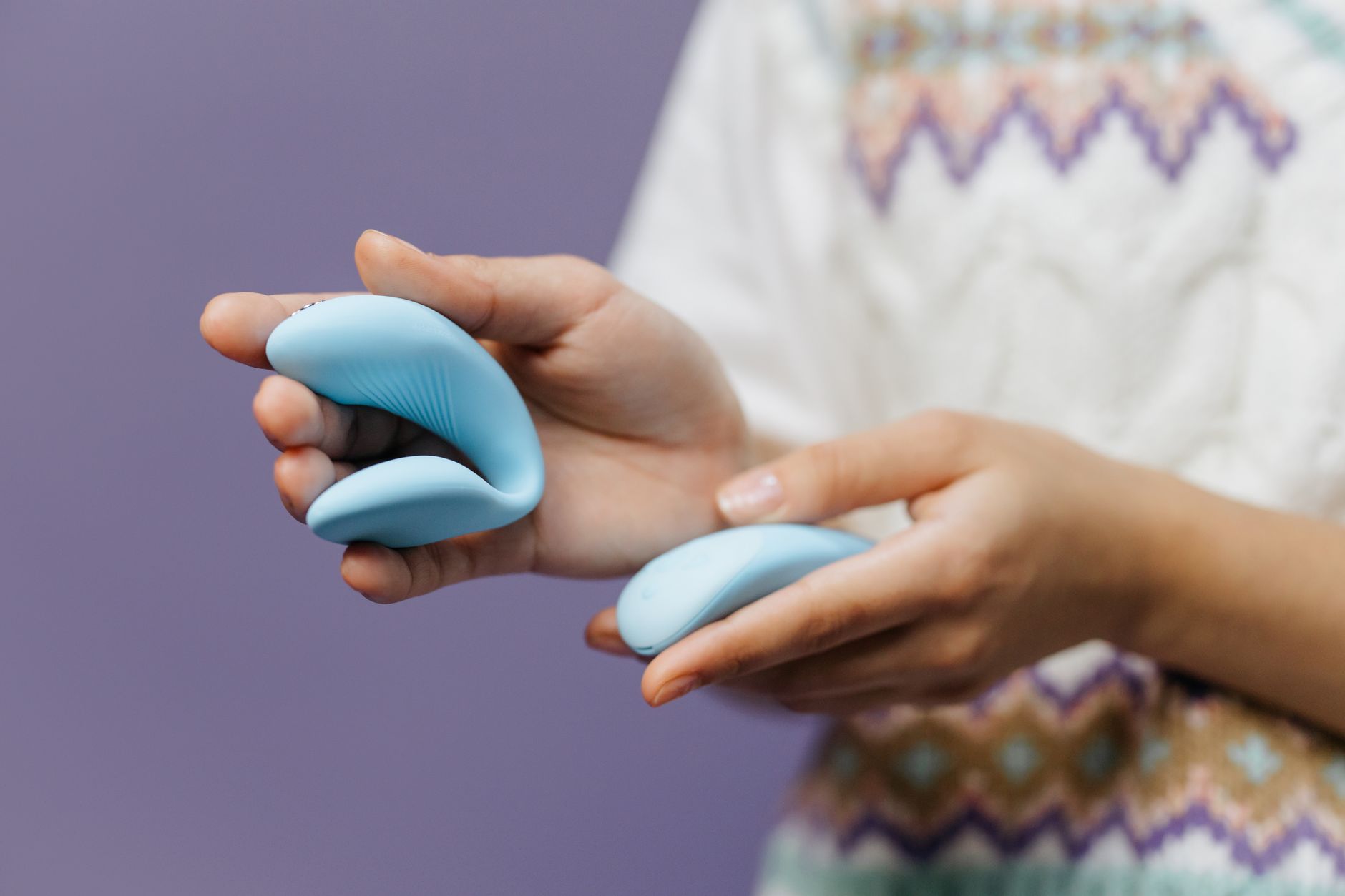
Here's the thing: vulvodynia isn't the end of pleasure. But it does require a completely different framework than someone without chronic pain uses. A lemon vibrator, used thoughtfully, can actually be part of reclaiming sensation and breaking the pain cycle. Not by ignoring the pain, but by carefully training your nervous system that touch doesn't always equal threat.
Why standard vibrator advice doesn't work here
Most guides for clitoral vibrators assume a relatively pain-free body where the goal is intensity. They talk about building sensation over time, finding your favorite pattern, exploring stronger settings. If you have vulvodynia, that entire framework backfires.
Strong vibration can trigger flares. Longer sessions can exhaust already-sensitized nerves. The pressure of expectation ("this should feel good") amplifies anxiety, which tightens the pelvic floor, which increases pain. You end up in a cycle where every attempt at pleasure teaches your body that the vulva is unsafe.
The recovery approach is inverted: the goal isn't more sensation or stronger orgasms right now. The goal is proving to your nervous system that gentle, controlled touch can exist without pain. That takes time and a different kind of patience.
Why the lem works for vulvodynia differently than other vibrators
The Lem uses suction rather than direct vibration. That matters hugely for vulvodynia recovery. Direct vibration creates sustained pressure and friction, which can trigger pain responses in sensitized tissue. Suction is gentler, more rhythmic, and easier to control at lower intensities.
The Lem also has distinct, separated intensity levels rather than a continuous slider. Pattern 1 is genuinely subtle. Pattern 2 is still minimal. This gives you way more fine-grained control than most clitoral vibrators, which means you can stay in the ultra-low range where your nervous system won't perceive threat. The lemon vibrator design itself is approachable and less clinical-looking, which reduces the psychological barrier many people with trauma or pain disorders feel around sexual devices.
How to introduce the lem safely when you have vulvodynia
Start by not using it for pleasure at all. This sounds counterintuitive, but it's critical. Instead, use the Lem in a desensitization framework.
Week one: hold the Lem against the outside of your vulva, unpowered. Just hold it there for 30 seconds while you breathe. The goal is familiarization without sensation. Your body learns: this object exists, I can control it, nothing bad happens. Do this once daily for three to five days.
Week two: turn on Pattern 1 for five seconds, then off. Again, hold it externally. You're teaching your nervous system to recognize the vibration as a neutral stimulus. Five seconds is enough. Repeat three to five times per session, once daily.
Week three: increase to ten seconds of Pattern 1, five to ten seconds of rest between pulses. Still external. Still keeping the focus on sensation awareness rather than pleasure building.
Week four and beyond: if there's been no pain increase or flaring, gently introduce contact with more sensitive tissue (outer labia, then potentially the clitoral area itself), still on Pattern 1, still for short intervals. The key metric isn't "does this feel amazing" but "did this feel neutral or pleasant without triggering pain later."
Tracking what actually helps (pain journals matter here)
Without data, vulvodynia feels random and hopeless. With it, patterns emerge. For two weeks, keep a daily log after any Lem session: intensity level used, duration, what area of the vulva you touched, and whether pain increased in the following 24 hours.
You're looking for your individual threshold. Maybe Pattern 1 for fifteen seconds on the clitoral hood is fine, but twenty seconds triggers a three-day flare. That's useful information. Maybe external use never causes problems, but internal contact does. That's data.
Most people discover that there's a window where gentle, brief suction feels genuinely okay. Not fireworks. Okay. That's the baseline to build from. The goal isn't to replicate what pleasure felt like pre-pain. It's to establish a new normal where your body can experience touch without alarm.
When pelvic floor tension is the real bottleneck
Vulvodynia almost always comes with pelvic floor dysfunction. The muscles are tight, guarded, sometimes in spasm. Using a clitoral vibrator when your pelvic floor is locked down is like trying to drive with the parking brake on. The tension prevents the nervous system from relaxing, which prevents pleasure, which reinforces the cycle.
Before Lem sessions, spend five minutes on pelvic floor relaxation. This means the opposite of Kegels. Lie on your back with knees bent, and focus on consciously loosening the muscles around the vaginal opening and anal sphincter. Breathe into the pelvic floor. Some people visualize the muscles softening, or imagine the breath traveling into that space. The Helen O'Connell research on pelvic floor anatomy shows that voluntary relaxation is literally possible. You're not broken. Your muscles just learned to stay tight, and they can relearn.
If relaxation exercises feel inaccessible, working with a pelvic floor physical therapist before trying any vibrator is worth it. They can identify exactly which muscles are hypertonic and teach you release techniques that actually work for your body.
The psychological piece that gets minimized
Vulvodynia is wrapped up in fear. Fear that touch will hurt. Fear that you're broken. Fear that you'll never experience pleasure again. That fear is completely rational and also completely blocking recovery. No vibrator, no matter how thoughtfully designed, works while you're in fight-or-flight.
This is why managing anxiety about pleasure is sometimes the actual prerequisite for exploring sensation with a lemon clitoral vibrator. It's not weakness or neurosis. Chronic pain rewires threat perception. Your brain has evidence that the vulva is dangerous, and it's trying to protect you.
Talk to a therapist if the fear is paralyzing, especially one trained in somatic therapy or pain psychology. Or start with a simple reframe: every Lem session where nothing hurt is evidence against the fear. Each one is a data point that rebuilds safety.
When to pause and seek help
If a Lem session triggers increased pain that lasts more than a few hours, stop and wait at least a week before trying again. If flares become more frequent despite following a conservative protocol, you might need to involve a vulvologist or pain specialist, not because vibrators are wrong but because something else might need addressing first.
Pain medications (topical lidocaine, gabapentin, amitriptyline), pelvic floor physical therapy, and sometimes hormonal interventions work better together than any single approach alone. A lemon vibrator is a tool in recovery, not a replacement for multidisciplinary care.
Some people with vulvodynia will never have penetrative sex feel comfortable. Some will. Some will find that clitoral stimulation alone is the path forward. None of those outcomes are failure. Recovery means reclaiming your right to explore sensation on your own terms, at your own pace, without pain.
FAQ: What people actually ask about lemon vibrators and vulvodynia recovery
Can I use a lemon vibrator if I'm in an acute flare right now?
No. When you're actively flaring, don't introduce new stimuli. Focus on pelvic floor relaxation, heat, and pain management. Once the flare settles and you've had at least 48 hours without pain, you can consider reintroducing gentle Lem use at an even lower threshold than before. A flare is information that your nervous system needs more time.
How long before I feel pleasure again instead of just tolerance?
It varies widely. Some people notice genuine enjoyment within four to six weeks of consistent, careful use. Others take three to six months. And some find that pleasure returns in unexpected ways. Instead of the fireworks feeling you remember, it might be a calm, grounded sensation of aliveness. That's still pleasure. Still recovery.
Does using a lemon clitoral vibrator make vulvodynia worse long-term?
Not when used conservatively within your pain threshold. The research on vulvodynia treatment shows that graduated sensory retraining actually improves outcomes over time by teaching the nervous system that not all touch is a threat. The Lem's gentle suction makes it safer for this approach than high-intensity vibration.
What if my partner wants to help, but I'm afraid they'll accidentally hurt me?
Communication is everything. Before any intimate touch, tell your partner exactly what you've discovered about your pain thresholds. "Pattern 1 for ten seconds on the outer area is okay. Longer than that or switching to Pattern 2 will likely hurt." Sharing the Lem with your partner gives them a tool with measurable settings instead of guessing. And reassure them: your pain isn't their fault, and their patience is part of the recovery.
Is there a point where I graduate off the lemon vibrator?
Some people do. Others keep using the Lem because it's reliably gentle and works. There's no finish line where you have to prove you're "recovered" by not needing it anymore. If a lemon suction vibrator is part of what helps you experience pleasure safely, that's enough.
Should I tell my doctor I'm using a lemon vibrator for vulvodynia recovery?
Yes, especially if you're working with a vulvologist or pain specialist. They'll want to know what sensory input triggers flares and what feels safe. It helps them understand your pain patterns and adjust medical treatment if needed. Most specialists are familiar with sexual devices as part of recovery. This is clinical information, not something to feel embarrassed about.
The path forward
Vulvodynia is frustratingly common and genuinely lonely. Most people don't talk about it openly, so you might feel like you're the only one. You're not. And recovery is possible, even when the conventional medical system makes you feel like you should just accept chronic pain.
A lemon vibrator won't cure vulvodynia. But paired with pelvic floor work, pain management, therapy, and time, it can become a tool for proving to your nervous system that the vulva can be a source of pleasure and safety again. That's not a small thing. That's everything.