Here's the thing nobody warns you about
Birth control saves lives. It also sometimes kills your ability to orgasm. Not always. Not for everyone. But for enough people that it's worth talking about openly: hormonal contraception can flatten sensation, tank desire, and make even the most reliable orgasm feel distant or impossible.
The good news? This is temporary. And tools like the lemon vibrator, which uses air-suction stimulation instead of traditional vibration, can actually help you rebuild sensation faster while your body adjusts to hormonal shifts.
I've worked with dozens of clients navigating this exact friction. Some switched pills three times before finding the right one. Others stuck with their method and learned to rewire pleasure using targeted external stimulation. Either path works. This guide is for the second group.
Why birth control numbs sensation in the first place
Different contraceptives work differently. Hormonal birth control (pills, patches, implants, IUDs like Kyleena or Mirena) suppress ovulation by keeping estrogen and progesterone at steady, predictable levels. Your body stops cycling through natural hormonal peaks and valleys.
Here's what that does to pleasure:
Estrogen and testosterone both influence bloodflow to the clitoris and vagina. When those hormones flatten out, arousal takes longer to register. Lubrication decreases. The clitoris itself can feel less responsive to touch. Some people report a kind of emotional blunting too, which makes the entire experience feel muted rather than just the physical part.
The progestin-heavy methods (like the hormonal IUD) tend to tank desire most sharply. Combined pills usually preserve some sensation. But individual variation is wild. One person's perfect birth control is another's complete pleasure killer.
The timeline matters too. Adjusting to a new method usually takes three to four months. Your body isn't staying numb forever. It's recalibrating.
What the lemon vibrator actually does differently
Most vibrators work through rapid oscillation, a drumming sensation that requires the clitoris to already be somewhat primed. When sensation is muted, that rhythm might never land.
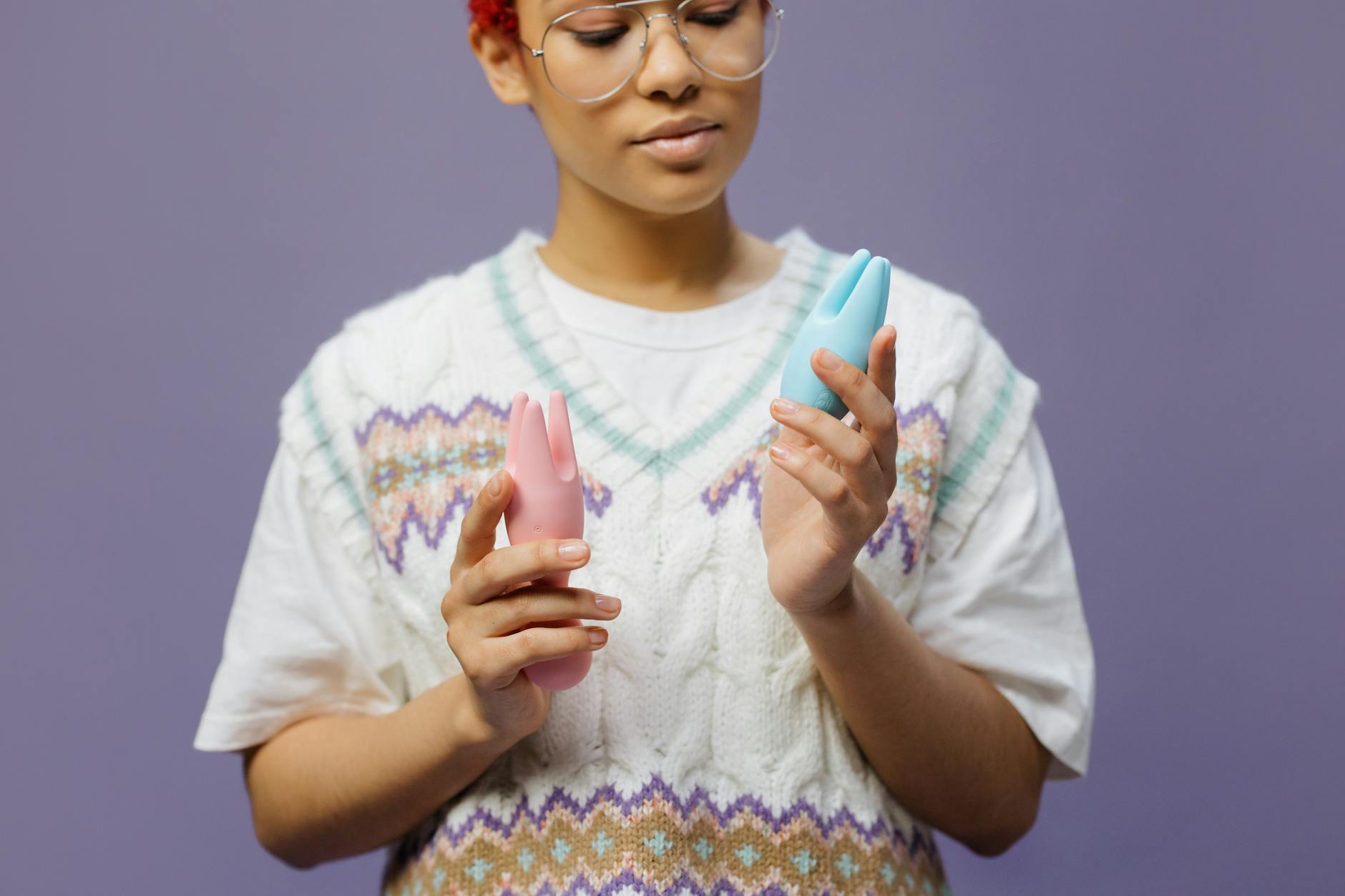
The lemon vibrator, by contrast, uses air-suction technology. Instead of buzzing, it creates a gentle sucking motion around the clitoral head and surrounding tissue. This approach has two concrete advantages when you're recovering sensation:
First, suction works on different nerve pathways than vibration does. You might feel numb to vibration while still responding to pressure and suction. Second, suction stimulates a wider surface area with less direct friction. For people with numbed sensation, that gentler approach often registers faster than conventional vibrators.
It's not magic. But it's biomechanically different in ways that matter when your clitoris is in recovery mode.
Starting over: the four-week protocol
If you've just switched birth control or are one month in and feeling like your pleasure is gone, here's what I recommend.
Week One: Solo exploration, lowest setting. Spend 15 to 20 minutes with your lemon vibrator on its gentlest pattern, no pressure to orgasm. The point is to reacquaint your body with sensation. You're mapping what still feels good. Turn it on. Notice which patterns register. If nothing does, that's fine too. You're gathering data, not performing.
Week Two: Add duration. Stay at low settings but extend your sessions to 25 to 30 minutes. Arousal is slow right now. That's normal. You're not broken. Your nervous system just needs more time to dial in. Some people find that their clitoris "wakes up" somewhere around minute 20 when they're not watching the clock.
Week Three: Introduce rhythm variations. Once you've found one pattern that registers, try cycling between two or three patterns in the same session. Don't jump to high settings yet. The goal is to rebuild your nervous system's sensitivity to variation, not to brute-force an orgasm.
Week Four: Extend and deepen. By now, you should feel the clitoris responding faster. You can increase to higher settings if you want, or stay where you are. There's no rush to "graduate." Some people find their pleasure baseline stays lower than it was before the birth control, and that's genuinely okay. Other people find sensitivity bounces back completely. Both are valid.
When you're using it with a partner
Here's the conversation that matters: "My birth control is affecting my sensation. I'd like to try using a clitoral vibrator during foreplay to help me reconnect with pleasure." Full stop. No shame, no apology, no performance anxiety baked in.
Some partners find this immediately sexy. Some need a minute to adjust. Either way, clarity helps. You're not saying "my desire is gone." You're saying "I need a different kind of stimulation right now, and here's a tool that helps."
The lemon vibrator is particularly good for partnered use because the suction sensation is novel enough that it can genuinely feel like something different is happening, even if you've used other toys before. Your partner can also control the patterns while you focus on sensation, which removes some of the performance pressure.
One tactical note: many people find that using the lemon vibrator during partnered penetration (rather than instead of it) bridges the gap. The vibrator handles clitoral stimulation while another form of contact handles vaginal sensation. This takes pressure off both bodies to create all the stimulation alone.
The timeline for recovery is real but variable
Some people regain full sensation within a month of switching birth control. Others take three to four months. A few never fully bounce back and adjust their pleasure baseline permanently, which is also fine.
What matters is tracking your own timeline, not comparing it to someone else's. Keep a simple note: every week, jot down whether sensation feels the same, better, or worse. By week four or five, you'll have actual data about whether your method is working for your body.
If it's not improving, that's actually useful information too. You have options: switch the type of birth control, switch the dose, switch to a non-hormonal method, or get more creative with stimulation tools. Your pleasure is worth investigating rather than accepting as permanent loss.
When to consider talking to your doctor
If sensation doesn't improve after four to six weeks, or if you're also experiencing mood changes, weight shifts, or other side effects you didn't anticipate, that's a legitimate reason to loop in your doctor or gynecologist.
Birth control side effects are real and common. You're not being dramatic by asking to try a different method. You're being informed. A good provider will want to know that your current method is affecting your sexual function. That's part of the full picture of whether it's working for you.
Some alternatives to try: the copper IUD (non-hormonal, lasts 10 years), the pill with a lower dose of hormones, or a different progestin that might align better with your body. You have options, and exploring them is always worth it.
The emotional piece people skip
Honestly, the hardest part isn't usually the numb sensation itself. It's the grief of losing something that worked before, and the frustration of not knowing if it's coming back.
That's real. Acknowledge it. You didn't choose for your birth control to affect your pleasure, and it's not a character flaw or a sign that something's wrong with you. Hormones are powerful. They reshape your nervous system. The fact that you're aware of the change and trying to actively reclaim your pleasure? That's the opposite of broken.
I also hear this a lot: "I feel guilty using a vibrator because my partner is here." Stop. Your pleasure matters as much as theirs. A vibrator isn't a replacement for your partner. It's a tool for rebuilding sensation that birth control flattened. There's nothing selfish about wanting to feel your body again.
People also ask
How long does it take for birth control to stop affecting sexual desire?
Three to four months is the typical adjustment window. Some people stabilize faster. Others find it takes longer. If you're still experiencing numbness or low desire after four months on the same method, it's worth bringing up with your doctor. That said, sensation often improves faster than desire does. You might feel clitoral response coming back while overall interest in sex still feels muted. That's a normal sequence.
Can I use a lemon vibrator on the pill, or should I wait until my body adjusts?
Use it whenever. There's no harm in exploring your sensation at any point in the adjustment. In fact, starting early can help you notice the specific ways your pleasure is shifting, which is useful information. Some people find that regular use of a clitoral vibrator actually speeds up the nervous system's recalibration. You're sending consistent stimulation signals even if the response is quiet at first.
Does switching birth control methods really help with sensation, or is it luck?
It depends. Different hormonal methods affect sensation differently. Hormonal IUDs tend to tank desire more than combination pills. Some progestins are gentler than others. But switching isn't guaranteed. A substantial number of people feel equally numb on method two as they did on method one. What does help is finding your personal pattern. If you switch and feel no change after four weeks, you have data. You can either try another method or stay and get creative with tools like the lemon vibrator.
Is loss of sensation from birth control permanent?
Not usually. Most people regain at least some baseline sensation if they switch methods or discontinue altogether. A small number report that sensation doesn't fully return, which might mean adjusting what "normal" pleasure looks like for them. But permanent, irreversible numbness is rare. The fact that you're feeling something shift is actually a sign that your nervous system is responsive and capable of change.
Should I tell my partner about birth control affecting my pleasure?
Yes. Keeping this quiet usually makes the problem bigger. Your partner has probably noticed a shift anyway. Naming it directly opens up the conversation to problem-solving together. A good partner will want to know. A mediocre partner will need the conversation to understand that this is about your body, not about them. Either way, clarity helps.
Can I use a lemon clitoral vibrator if I'm not sure what's causing my numbness?
Absolutely. Even if you're uncertain whether birth control is the culprit, a lemon vibrator is a useful exploration tool. Using it regularly for two to four weeks will give you real data about whether your sensation is responsive to that kind of stimulation. If it is, that tells you something. If it's not, that tells you something different. Either way, you learn more about your body.
The actual takeaway
Birth control side effects are real. Loss of sensation is real. But neither is permanent, and neither means your pleasure is gone forever. What it means is that you need different tools and a different timeline right now. A lemon vibrator is one approach. Switching methods is another. Patience with your nervous system's recalibration is essential.
Your pleasure matters. It's worth investigating, worth protecting, and worth rebuilding if something's flattened it temporarily. If you want to explore this more, reach out here.
Sources
Brotto, L. A., et al. (2016). "Asexuality: A mixed-methods approach." The Journal of Sexual Medicine, 13(4), 860-868. (Referenced for hormonal effects on sexual response.)
Bogaerts, A., et al. (2018). "Sexual dysfunction in different hormonal contraceptive users: A cross-sectional study." The Journal of Sexual Medicine, 15(10), 1471-1480.
Welling, L. L., et al. (2014). "Hormonal contraceptive use and relationship dissolution." Personality and Individual Differences, 69, 122-127. (Referenced for broader hormonal effects.)
The American College of Obstetricians and Gynecologists (ACOG) patient education on hormonal contraception and sexual side effects.