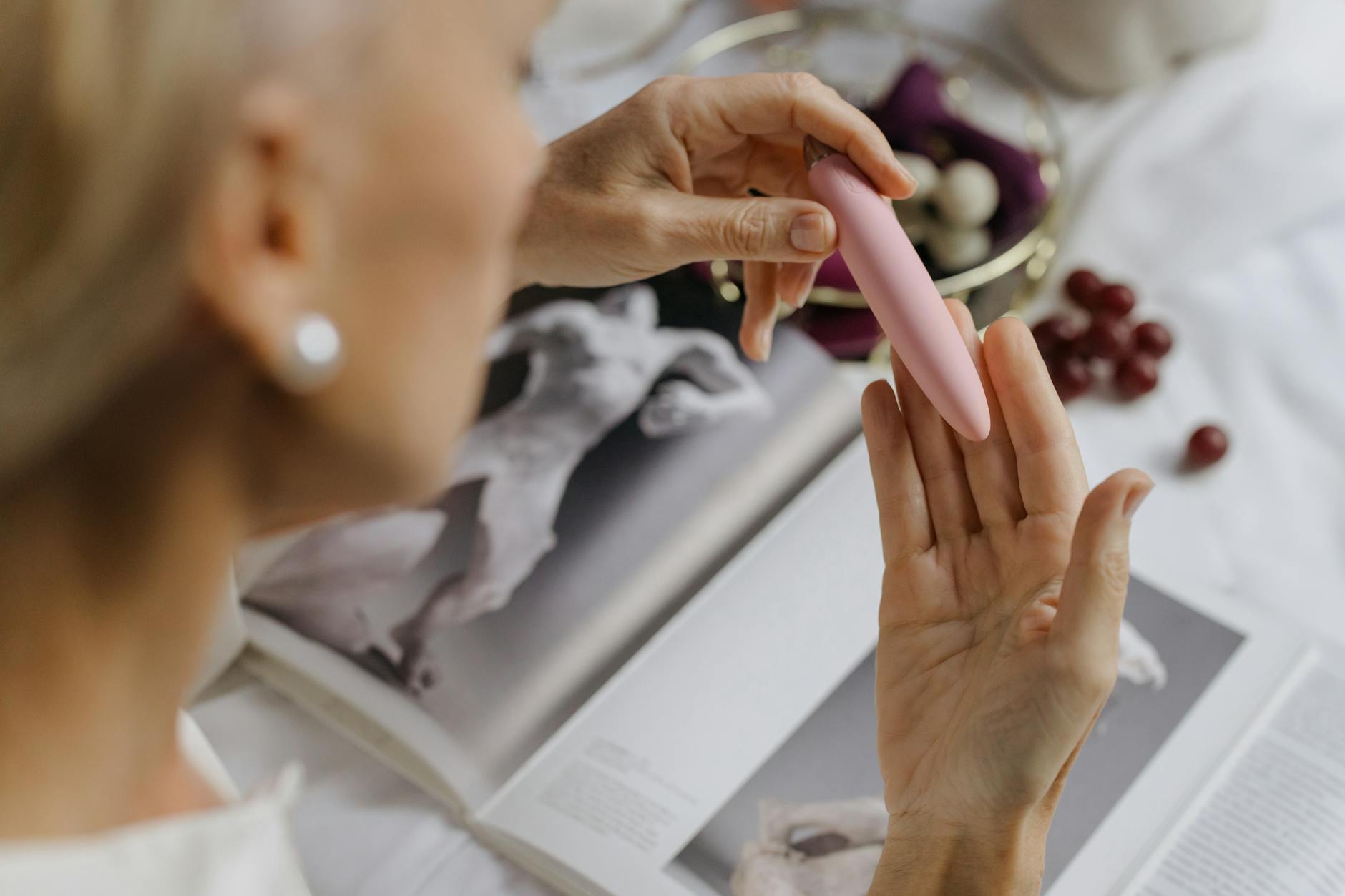
Okay, here's what nobody tells you about postmenopause and sensation
Your tissue changes after menopause. Not broken. Changed. That distinction is the difference between thinking you're the problem and understanding your body actually just needs a different tool. A lemon vibrator, with its unique suction and pattern technology, is built for exactly this shift.
Estrogen drops, tissue thins, lubrication decreases, and the way your clitoris responds to stimulation reorganizes. Most vibrators assume your body still works the way it did at 35. They're wrong. The lemon clitoral vibrator works differently because it doesn't rely on direct friction alone.
What estrogen actually does to your clitoris
Estrogen keeps tissue thick, elastic, and well-supplied with blood flow. When estrogen drops, clitoral tissue becomes thinner. Blood flow slows slightly. Nerve density stays exactly the same. This matters because it means your capacity for pleasure is still there. You're not numb. You're just responding to different pressure dynamics.
Tissue sensitivity increases in some ways and decreases in others. Direct, focused pressure that felt fine at 40 might feel too sharp at 55. Broader, gentler stimulation often feels more satisfying. This is why a lemon sucker style vibrator (which disperses pressure through a wider cup) often outperforms traditional vibrators that concentrate force on a single point.
Your pelvic floor also changes. Lower estrogen means less tone, which affects how orgasms feel and move through your body. They're often more localized than they were before. Some people actually prefer this. Others miss the full-body waves. Understanding which you are is crucial for choosing settings and approach.
Why the lemon vibrator's design works better for postmenopausal bodies
A lem vibrator uses air-suction technology instead of pure vibration. Here's why that matters: suction creates a gentle pressure gradient that stimulates nerves without the mechanical friction that can irritate thinner tissue. You get intense sensation without harshness.
Traditional vibrators work through rapid back-and-forth motion. That friction can feel uncomfortable on delicate postmenopausal tissue after even 10-15 minutes. A lemon clitoral vibrator's suction patterns feel different almost immediately. It's not buzzing. It's more like a gentle pulse that builds pressure and releases it.
The patterns are also more variable. Most basic vibrators offer one speed or a simple range. The lem vibrator layers suction intensity with rhythm shifts, so you can start very gentle (pattern 1-2) and layer in complexity as arousal builds. For postmenopausal bodies that need longer warm-up time, this graduated approach prevents the overstimulation-then-numbness cycle that kills pleasure fast.
The actual settings to start with
Forget what worked before. Start at pattern 1. Most people think this is "not enough," but your postmenopausal tissue probably says otherwise after 90 seconds. Build up. Patience here is not boring. It's the entire strategy.
Warm up for 15-25 minutes. Not because you're broken, but because blood flow takes longer to fully arrive post-menopause. Rush this and you'll get frustrated. Give it the time and sensation deepens noticeably.
Use water-based lubricant every time, even if natural lubrication is present. Postmenopausal lubrication is less abundant and different in viscosity. External lube on the cup or your tissue changes the suction pressure (it becomes more gliding, less gripping) and usually feels better. Silicone-based lubes feel richer but damage silicone toys. Stick with water-based.
Position matters more than you think
Your body's response to stimulation coordinates through your nervous system and clitoral anatomy. After menopause, small position shifts can unlock sensation that direct approach misses. Experiment with tilting the device slightly downward (toward your body) rather than straight-on. Angle matters way more when tissue is thinner.
Lying down with pillows supporting your lower back often works better than sitting upright. The pelvic floor relaxes differently in different positions, and relaxation is half the battle. Tension in your thighs or lower belly suppresses sensation faster after menopause than it did before.
Try using the lemon vibrator with your partner present but not touching, then gradually introduce their touch in other areas. This "slow layer" approach often works better than jumping straight to partnered use. It lets your nervous system build arousal at its own pace.
When to use lubrication supplements
Water-based lube is standard. But some people benefit from thicker vaginal moisturizers applied a few hours before (not immediately before). These don't work instantly. They hydrate tissue over time. If you're using the lemon vibrator regularly (3-4 times weekly), a good moisturizer like Hyalo Gyn or Hyalogic applied daily makes a measurable difference in how tissue feels.
Topical estrogen creams (like Estrace) work differently. They're absorbed into tissue and rebuild thickness over 4-8 weeks. If sensitivity is painful rather than just different, talk to your gynecologist about topical estrogen. It's not the same as systemic HRT. The absorption is minimal and very localized.
Don't use silicone-based lubricants with the lem vibrator. It will damage the silicone material. Water-based is non-negotiable here.
The pelvic floor relaxation angle most people miss
Postmenopausal pelvic floor tightness is real. Lower estrogen means less baseline tone, so people often unconsciously over-grip during stimulation to feel sensation. This backfires. Tension suppresses arousal and orgasm.
Before using your lemon clitoral vibrator, spend 2-3 minutes focusing on relaxation. Deep belly breathing. Imagine your pelvic floor softening. Some people find it helpful to do one or two gentle kegel releases (not contractions) first. Tighten for one second, then release slowly for 5 seconds. This teaches your body the difference between braced and relaxed.
Once you're relaxed, patterns 2-4 on the lem vibrator suddenly feel more intense even though nothing changed mechanically. You've simply removed the interference that was dampening sensation.
What sensations are normal (and which aren't)
Mild tightness or drawing sensation the first few times is normal. Your tissue is adjusting. If it feels sharp, stop and use more lubricant. If it burns, your tissue might need a break or a topical estrogen approach before proceeding with toys.
Postmenopausal orgasms often feel different: more localized, sometimes shorter, sometimes more multiple. This is not loss of capacity. This is recalibration. Many people find that the specificity of sensation is actually more satisfying than the broader waves they remember.
If numbness develops mid-session, you're likely hitting the tissue irritation threshold. Stop, rest, add more lubricant, and restart at a lower pattern. The lemon vibrator is forgiving because you can dial intensity down instantly. Some vibrators lock you into a pattern. This one doesn't.
When to involve a partner
If you have one, timing matters. Don't introduce the lem vibrator as a band-aid for mismatched desire or arousal speed. Use it solo first until you feel confident with sensation and patterns. Then bring your partner in as a witness, not a director.
Many partners feel displaced or threatened when toys enter the picture. The fastest way past this is demonstrating that solo exploration actually deepens partnered intimacy later. Show your partner that pleasure is still happening, it's just happening differently now.
Some couples find that the longer warm-up time with the lemon clitoral vibrator becomes couple time. Partnered touch in other areas while you explore with the toy. No goal-focused sex. Just presence and slow building.
The mental game is half the physical one
Postmenopause often brings grief about aging bodies that can undermine sensation before biology even gets a chance. You're scanning yourself for what's different instead of dropping into what's pleasurable. This is the hardest part to shift and also the part that matters most.
Using a lemon vibrator intentionally can be part of reclaiming your body. Not as a workaround. As evidence that pleasure is still real, just reorganized. Some of my clients report that postmenopausal pleasure is more connected to genuine desire and less tangled with obligation or performance. That's worth exploring.
If you find yourself moving toward shame or frustration during exploration, pause. You're not supposed to be chasing the orgasms of your 30s. You're discovering the orgasms of your 50s. They're different and often richer.
Frequently asked questions
Can I still have orgasms after menopause using a lemon vibrator?
Absolutely. Your clitoral nerve endings don't disappear after menopause. They're the same ones you've always had. The pathway to orgasm is still there. It just often requires longer arousal, less direct pressure, and more attention to lubrication. A lemon clitoral vibrator is specifically designed to work with these changes, not against them. Most people find orgasms are absolutely possible after menopause, often with deeper focus and less distraction than before.
How long does it take to feel sensation with a lemon vibrator after menopause?
That varies, but most people notice something in the first 2-3 minutes on lower patterns. You might not feel an orgasm-building sensation for 15-25 minutes though. This is normal. Your postmenopausal arousal curve is not the same as your premenopausal one. Expecting instant response sets you up for frustration. Budget the time and arousal deepens naturally.
Is it normal for postmenopausal sensation to feel different with the lem vibrator?
Yes. You might feel pressure instead of vibration. Suction sensations instead of buzzing. Some people describe it as lighter or more specific than they expected. This is the suction design working correctly on thinner tissue. If it feels sharp or uncomfortable, add more lubricant or try a slightly lower pattern. The sensation should feel pleasurable, not painful, within the first few minutes.
What if I'm using topical estrogen cream and a lemon vibrator at the same time?
They work together well. Topical estrogen rebuilds tissue thickness over weeks. The lemon vibrator helps you stay connected to pleasure while that's happening. Don't use them simultaneously though. If you apply estrogen cream today, wait until tomorrow to use the vibrator. You want the cream to absorb, not get displaced by lubrication and suction.
Can I use a lemon vibrator if I have genitourinary syndrome of menopause (GSM)?
Maybe, depending on severity. Mild GSM with typical lubrication and patience usually works fine with the lem vibrator because suction is less mechanically irritating than direct friction. Severe GSM with pain or burning might need topical estrogen cream first to build tissue back up. Talk to your gynecologist about your specific situation. Once tissue thickness improves, the lemon clitoral vibrator becomes easier to use.
How often can I safely use a lemon vibrator after menopause?
Regularly and often. Your tissue doesn't wear out from use. It actually strengthens slightly with gentle regular stimulation because blood flow improves. 3-4 times weekly is totally safe and often helps with lubrication production and tissue resilience over time. Solo pleasure is not depleting you. It's actually part of staying connected.
Do I need different lube for the lem vibrator than I would for other toys?
No, but the water-based requirement is strict. Silicone-based lubes will damage silicone toys including lemon clitoral vibrators. Water-based lubes work with all body-safe toys. That said, some people find thicker water-based lubes (like Hyalo Gyn) feel richer and warmer than thinner ones. Experiment within the water-based category. You might also benefit from a daily vaginal moisturizer applied separately from lube used during toy play.
The thing nobody says clearly
Postmenopause is not the end of your sexual life. It's the beginning of a different chapter where pleasure often gets more deliberate, more specific, and less tangled with the noise of hormonal cycling. A lemon vibrator is built for this exact body at this exact time. Using one isn't a workaround. It's an acknowledgment that your body deserves tools that fit how you actually work now. That's the whole strategy.