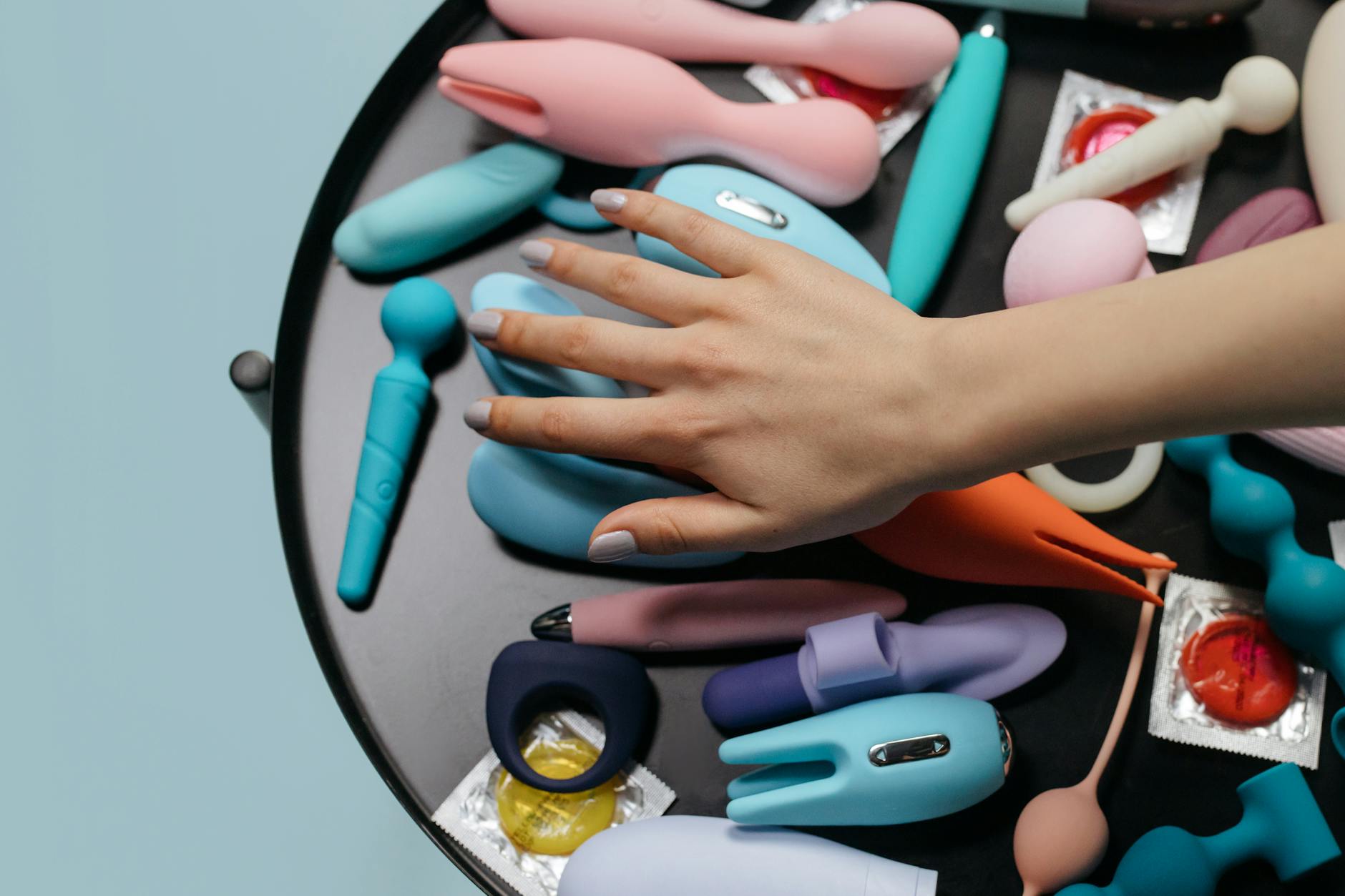
Here's the real thing about toy resistance
Most people who say they're "not into toys" aren't actually worried about the toy. They're worried about what the toy means. About whether it means you're not satisfied. Whether they're failing. Whether they'll be replaced by something that buzzes.
They're worried the toy is an indictment.
And until you separate the toy from that narrative, no amount of logical explanation is going to work. A lemon clitoral vibrator isn't going to change anyone's mind who thinks it's a referendum on their adequacy.
The two conversations you're actually having
There's the conversation about the toy. Then there's the conversation underneath it. Your partner isn't resisting because they hate vibrators. They're resisting because the toy represents something else: anxiety about performance, fear of redundancy, or maybe just unfamiliarity.
If you pitch a lemon vibrator as "this will make my orgasm better," your partner may hear "you're not doing this right." If you pitch it as "I've been curious about this and I want to explore it," they might hear that differently. Same toy. Different frame.
But here's what's key: the frame only works if it's actually true. Don't fake curiosity. Don't pretend you're introducing this for "us" if you really want it for you. Your partner will sense that immediately, and toy resistance will harden into a wall.
Start with the fear, not the toy
If your partner says "I don't want toys," the instinct is to defend the toy. Don't. Ask instead: What are you actually worried about? Not in a defensive way. In a genuinely curious way.
Listen for the real concern. Maybe it's "I feel like I'm not enough." Maybe it's "That seems clinical and weird." Maybe it's "I don't understand how it would work during sex." Each one is a different conversation.
"I feel like I'm not enough" needs reassurance about desire and partnership. Not right now. Later, when you're not asking for something. Just genuine, specific affirmation about what you love about sex with them.
"That seems clinical and weird" needs normalization. Lots of people use toys. It's not a fringe thing anymore. Bring that up in casual conversation, not as an argument.
"I don't understand how it works" needs practical explanation. Here's where the lemon vibrator helps, because it's not intimidating. It's shaped like a lemon. It's playful. It's not some elaborate apparatus that requires a manual.
The introduction that doesn't trigger defensiveness
Don't lead with "I want to introduce a toy." That's an announcement that puts your partner immediately on the defensive.
Instead: "I've been curious about this thing and I looked into it. It's actually kind of cool, and I'd love to try it sometime. But I want to know what you think first." Notice what's different. You're not asking permission. You're inviting their thoughts. There's a difference.
Then show them. Actually hold up the lemon vibrator. Let them touch it. Feel the weight, the material, the shape. It immediately becomes less abstract. Less threatening. It's just a small silicone device. Not a replacement partner.
If they ask how you'd use it, explain honestly. During solo time, or with them sometimes, or during partnered sex if it feels right. No pressure. You're exploring.
If they say no, you have a choice point. You can push, which almost always backfires. Or you can let it sit. Say "Okay, I hear you. I'm not going anywhere. If you ever want to revisit this, I'm open." And then actually let it go. Not resentfully. Actually.
The middle ground that works
Sometimes the resistance softens when there's no audience. If your partner feels like they're being put on the spot, they dig in. But in a quiet, private moment, when there's no performance pressure, curiosity often wins.
You might say: "I was thinking about trying this when I'm alone. I'm not trying to hide it from you. You're welcome to be there or not, whatever feels right." That removes the pressure from them while signaling that you're not ashamed.
Some partners will watch out of curiosity. Some will leave the room. Some will come back later and ask about it. Each response is fine.
The key is that you're not asking them to validate your pleasure. You're simply claiming it as yours and making space for them to participate or not.
When using a lemon vibrator solo (and your partner knows it)
This is actually powerful, even if your partner never touches the toy. When you use a lemon clitoral vibrator by yourself and your partner is aware of it, something shifts. The toy becomes normalized. Shame evaporates. It's just part of your sexuality, like masturbation was before you met.
Many partners who initially resisted toys become curious after they see their partner's satisfaction with one. Not because they're suddenly convinced by logic. Because they see the pleasure. Pleasure is contagious.
If you invite them to join you sometimes, frame it as a different kind of together time. Not a replacement for partnered sex. A different thing. "Sometimes I like to use this while we're connected in other ways," or "I like when you watch," or "Maybe you could use it on me." Different invitations for different comfort levels.
The conversation after resistance softens
Once your partner moves from "no" to "maybe" or "I'm curious," the energy shifts. They may ask questions. They may want to try it together. They may want to understand how it fits into your sex life.
Here's what helps: honesty about what you hope for, without pressure. "I think it could feel good for me, and I'm interested in exploring it with you if you're open to it. But I also respect that this might not be your thing." You're claiming your desire while respecting their boundary.
Some partners need time to adjust to the idea. Others need permission to be curious without committing. Some need reassurance that it doesn't replace them. All of that is okay. Resistance usually softens through consistent, gentle exposure and reassurance, not through arguments.
When resentment is actually the real problem
If you're angry about your partner's toy resistance, that's worth looking at separately. Sometimes toy resistance is actually about something bigger: a partner who never wants to try anything new, or who shuts down your desires routinely, or who uses control as their primary dynamic.
If that's your situation, a lemon vibrator won't fix it. A conversation about autonomy and partnership might. Or a therapist might.
But if this is the only area where your partner is resistant, and everything else feels open and connected, then this is usually just fear wearing a mask of refusal. And fear responds to time, reassurance, and seeing that nothing catastrophic happens when you claim your own pleasure.
The long play
Honestly, the most effective thing you can do is stop needing your partner to be enthusiastic about this right now. Use your lemon vibrator. Enjoy it. Be unapologetic about it. Let them see your pleasure. Let them ask questions from curiosity instead of defensiveness.
Some partners will never want to use toys. That's fine. But many will soften once they realize the toy isn't a threat. It's just an extension of your sexuality. It coexists with them. It doesn't replace them.
Meanwhile, you deserve pleasure. Whether your partner gets there or not. The toy is for you.
FAQ
What if my partner says toys are emasculating?
Emasculation is a belief, not a fact. His worth as a lover isn't determined by whether a vibrator exists. Often what's underneath this is anxiety about performance or insecurity about masculinity itself. That's worth addressing, but not through toy arguments. Through conversation about what makes him feel confident and valued in the relationship. Once that ground is more solid, toy resistance often softens.
Can I use a lemon vibrator without telling my partner?
Technically, yes. Practically, if you're hiding it, you're probably not enjoying it fully because there's shame attached. And if they find out later, it can feel like betrayal. Better to be matter-of-fact about it. "This is something I want to explore," stated as fact, not question.
How long should I wait for my partner to come around?
If they said no and you keep pushing, you're asking them to override their boundary. That's not going to make them suddenly enthusiastic. Instead, let it go for a few months. Keep using your lemon vibrator (they know about it). Eventually curiosity or comfort might kick in. Or it might not. But at least you'll know you're not spending energy on something they genuinely don't want.
What if they say I'm being selfish for wanting to use a toy?
Using a toy for your own pleasure is not selfish. It's self-care. Your partner's discomfort with your solo pleasure is worth exploring, but not accepting as a boundary on your sexuality. You might say: "My pleasure matters to me. I'm not asking you to participate, but I am going to explore this. I hope you can respect that, even if you're not interested yourself."
Can a lemon vibrator actually help if my partner is resistant?
Yes, because it's less intimidating than other toys. It's playful. It's easy to hold and understand. It doesn't feel clinical. Sometimes the resistance isn't to toys in general, but to feeling overwhelmed or ashamed. A smaller, more approachable device can lower that barrier. Plus, if your partner sees how much you enjoy it, that often changes their perception entirely.
What if I want to use a lemon vibrator during sex and my partner won't allow it?
That's a deeper partnership issue. Your pleasure during sex matters. If your partner consistently refuses to include tools that help you feel good, that's a respect issue, not a toy issue. It might be worth exploring with a therapist who specializes in intimacy. Ideally, partners want each other to feel good, and they're open to ways that makes that happen.
The bottom line
Toy resistance is usually fear wearing camouflage. Your job isn't to convince your partner that toys are good. It's to claim your pleasure as yours, be honest about it, and give them time and space to adjust. Some will. Some won't. But your right to explore your sexuality doesn't depend on their permission.