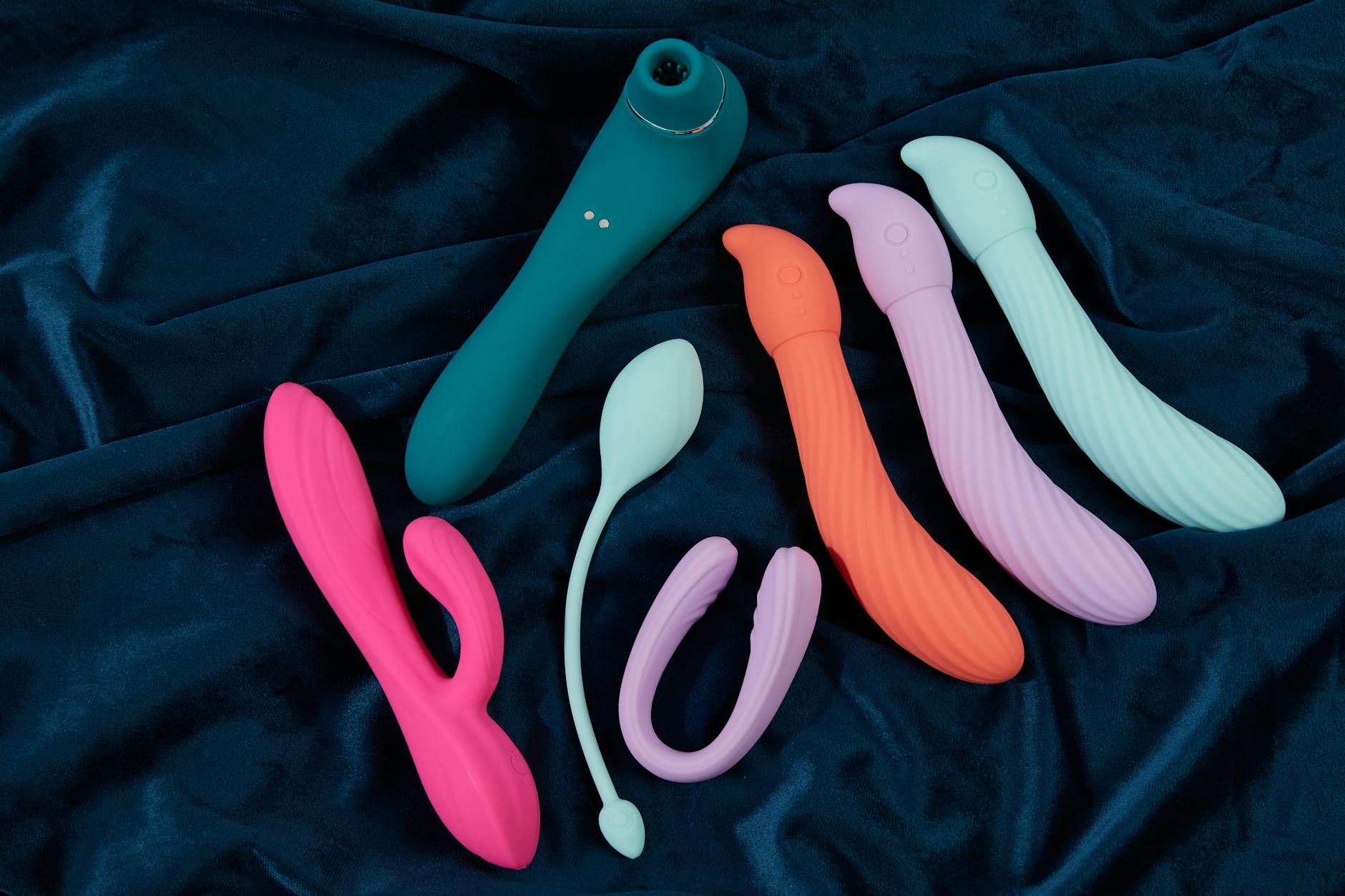
Let's name what's actually happening
Your partner doesn't want toys in the bedroom. Maybe they think it means they're not enough. Maybe they were raised to believe that pleasure should happen one way, and introducing anything else feels like cheating on the script. Maybe they've never seen it modeled, never heard anyone talk about it, and it lands like a curveball out of nowhere.
The block isn't about the toy. It's about what the toy symbolizes to them. That matters because you can't solve a symbolism problem by just dropping a lemon vibrator on the nightstand and hoping for the best.
Why partners resist toys (and what it actually means)
Here are the three most common fears I hear in my practice, almost always unspoken:
"This means I'm not enough." Your partner has been taught that good sex is what happens between two bodies, period. A toy feels like a failure on their part, a sign that you need something external because they can't deliver. This rarely reflects reality. Usually it means you need variety, or your body responds differently than they expected, or honestly, you deserve pleasure that doesn't depend on their performance.
"I don't know how to be around this." Toys weren't in their family conversation. They weren't mentioned by friends. They might've seen them portrayed as sad or desperate or a last resort. Introducing one now feels like asking them to abandon their entire framework for sexuality in one conversation.
"If I say yes, what else comes next?" Some partners fear that toys are the thin end of a wedge. First a lemon vibrator, then something bigger, then where does it end? This anxiety often masks something deeper: fear of losing control, or feeling like they're being left behind while you evolve.
None of these fears are logical. All of them are real. The gap between those two facts is where most conversations collapse.
Start way before you mention the toy
This is the part that actually works, and I cannot overstate it. Do not lead with the lemon vibrator. Lead with the truth about what you want.
Find a moment that's not in bed, not charged, not right before or after sex. Choose a moment when you're both calm. Then say something like this:
"I've been thinking about our sex life, and I want to be honest with you. I feel like there's a gap between what I want and what we're doing. And I don't think that's about you. I think it's about the fact that my body responds in a certain way, and I haven't given you the full picture of what that looks like. I want to change that."
Then stop. Let them respond. They might get defensive. That's not rejection. That's their nervous system flagging a threat. You're not trying to fix them or convince them in this moment. You're just planting the seed that something matters to you and that you value the relationship enough to talk about it.
Build the case before you build the ask
In the days after that first conversation, have smaller conversations. Not arguments. Conversations. These are about normalizing the idea that pleasure is diverse, that bodies are different, and that wanting more doesn't mean settling for less.
You might say: "I read something about how most people need clitoral stimulation to orgasm. I never realized how much I internalized that as something being wrong with me." You're not asking them to fix it. You're just being honest.
Or: "I notice I have better orgasms when I'm relaxed. And I get tense sometimes because I'm thinking about whether I'm taking too long. I want to figure out how to just let myself feel good without that worry."
These conversations do two things. They normalize that pleasure is complicated and individual. And they shift the frame from "I need a toy" to "I need to understand my body better, and I want you in that conversation."
Then introduce the lemon vibrator as a tool, not a solution
Once your partner has heard that this matters to you, that it's about self-knowledge and not dissatisfaction with them, then you can name the actual tool.
The lemon clitoral vibrator is different from a traditional vibrator in ways that matter to this conversation. It uses suction, not just vibration. That changes how it feels. It's less intense in some ways. It's precision. It's about responsive pleasure, not overstimulation. If you're introducing your partner to toys for the first time, this is often easier than a standard vibrator because it requires understanding and presence. You can't just turn it on and zone out. You're actually engaged with what's happening.
Say something like: "I've been thinking about what I said, and I want to try something. There's a tool called a lemon vibrator. It's not about replacing anything. It's about understanding my body better. And I'd like you to be part of it if you're willing."
The ask is not "use this on me." The ask is "be present while I explore this." That's a completely different request, and it usually lands better.
What to actually do the first time
Your partner might say yes. They might say maybe. They might need time. Whatever they say, honor it. If they're willing to try, here's how to make it work.
Start solo, or mostly solo. Use your lemon vibrator by yourself while they're in the room. You're reading, relaxing, just exploring. They see that it's not a performance. It's not frantic or desperate. It's you being curious about your own body.
Let them ask questions if they want. You're not trying to sell them on it. You're just being yourself and letting them observe something that matters to you.
After a few times, you might say: "I feel more relaxed when I do this. Would you want to sit with me while I do?" That's invitation without pressure. Some partners will say yes immediately. Some will take weeks. Both are fine.
If they say yes, they sit beside you. You use your lemon vibrator. They're there. That's it. No performance. No expectation that it leads to partnered sex. You're just normalizing that your pleasure matters and that they can be present for it without having to do anything.
What happens when they soften
Most partners, when they see that toys are about self-knowledge and not replacement, soften. Not all. But most. The anxiety lifts a little because they realize you're not asking them to become someone they're not.
Some partners will then want to be more involved. They might want to hold it for you. To control the speed. To be part of the experience. That's beautiful when it happens, but don't expect it or push for it. Let them decide.
Others will stay in the background. They'll be cool with it, but not interested in hands-on participation. That's also fine. You get what you need. They get to stay in their comfort zone. Everyone wins.
If they really won't budge
Some partners won't move. The no stays solid. If that's your situation, you have a choice to make that's bigger than any single conversation about lemon vibrators.
You can use your vibrator alone. That's your right. Your pleasure matters even if your partner isn't ready to acknowledge it.
Or you can ask yourself whether a relationship where your needs keep getting deferred is sustainable long-term. I'm not saying leave. I'm saying get real about what you're accepting and what it costs you.
Often, that clarity is what changes things. When a partner realizes you're serious, that this isn't negotiable, that you're not going to shrink yourself to fit their comfort level, something shifts. Not always. But often.
The reframe that actually works
Here's what I've learned in two decades of working with couples: toys aren't the problem. Avoidance is. When a partner won't engage with something that matters to you, the toy becomes the symbol of a bigger disconnect.
But when you reframe it correctly, the toy becomes a bridge. It's not you versus them. It's both of you trying to understand pleasure, desire, and what your bodies need. A lemon vibrator or any adult toy is just information. It's your body telling you something. The real intimacy is in listening together.
That takes vulnerability from both sides. It takes your partner being willing to sit with something uncomfortable. And it takes you being willing to not force the pace.
But when it works, it works. Because suddenly you're not defending a toy. You're defending your right to know yourself. And that's a conversation worth having.
Frequently asked questions
What if my partner thinks toys mean I'm not satisfied with them?
That's the deepest fear, and it usually stays unspoken. Address it directly. Say something like: "I'm satisfied with you in a lot of ways. This isn't about you not being enough. It's about my body and how it works. It's actually more about me than you." Then show them that's true by using your vibrator independently, not as part of partnered sex. When they see it's about self-knowledge, not performance, it usually eases.
Can we use a lemon vibrator together if they're nervous?
Absolutely. Start with them holding it while you guide their hand. They control the pressure and speed. That keeps them in charge, which often feels safer. Or try using it on them first. Yes, people with penises can enjoy clitoral suction stimulation on other sensitive areas. Sometimes experiencing it yourself kills the mystique and fear.
How long until they're actually comfortable with it?
It's not a timeline. Some partners soften in days. Some take months. Some never do. What matters is consistency and patience from you. Keep using it. Keep being calm about it. Don't make it a power struggle. Most partners eventually get there because resistance gets boring and curiosity wins.
What if we've been together for 20 years and they still won't try?
Then you're dealing with something that's not actually about the toy. It's about control, or communication patterns, or rigidity around sexuality that started long before you met. That might be worth couples therapy, not because you need to kill the toy idea, but because the deeper pattern is limiting your connection.
Is there a lemon vibrator that feels less intimidating to introduce?
Honestly, the design of the toy matters less than the conversation. A lemon clitoral vibrator is actually less intimidating than a traditional vibrator in some ways because it's smaller, quieter, and less visually aggressive. But what makes it work is your confidence. If you bring it home apologetically, they'll sense that. If you bring it home as a normal thing you're curious about, they're more likely to see it that way too.
What if he wants to use it but I feel weird about that?
Then you've got work to do on your own end. Notice that. Maybe you've internalized shame around toys. Maybe you worry he'll enjoy it more than you do. Maybe you're protecting him from something you think he should feel. All valid things to sit with, ideally with a therapist. But don't let your own discomfort become his barrier to exploration.
The actual goal
You're not trying to force your partner to love toys. You're not trying to convince them that a lemon vibrator is the secret to everything. You're trying to build a relationship where both of you can be honest about what you need and want. Where pleasure isn't shameful. Where exploration is possible even if you don't always participate together.
That takes time. It takes patience. It takes you being willing to not move faster than your partner can handle. But it also takes you refusing to shrink. Those two things aren't contradictory. They're the whole conversation.
If you're stuck on how to start, reaching out to a couples counselor or therapist who specializes in sexual health can help. Sometimes a neutral third party makes the difference. And sometimes you just need permission to have this conversation at all.
You deserve pleasure. Your partner deserves comfort. The middle ground is where real intimacy lives.