Let's talk about tender orgasms
Orgasms shouldn't hurt. But sometimes they do. Not in a sharp, "stop immediately" way, but in a sore, oversensitive, almost raw feeling that makes you want to shy away from pleasure entirely. It's more common than you'd think, and it's usually fixable.
The problem isn't your body breaking. It's that your nervous system is overloaded, your tissue needs recovery, or your technique is accidentally ramping up intensity when gentleness is what you actually need. A lemon clitoral vibrator, with the right approach, can help you rebuild sensation without the soreness.
Why orgasms feel tender in the first place
There are a few culprits here. The most obvious one is overuse. If you've been using a vibrator daily at high intensity, your nerve endings get fatigued. It's like when your muscles feel sore after a hard workout, except this soreness lives in your clitoris and makes climax feel raw instead of pleasurable.
Another driver is pelvic tension. When you're stressed, anxious, or holding tension in your hips and lower belly, your pelvic floor tightens involuntarily. During orgasm, that tension intensifies, and what should feel like release instead feels like a cramp. The clitoris is literally being squeezed by surrounding muscles that won't relax.
Hormonal shifts also matter. If you've recently started or switched birth control, changed antidepressants, or are in a particular phase of your cycle, tissue sensitivity can spike. The tissue around your clitoris is estrogen-responsive, and when hormones fluctuate, it gets thinner or more reactive.
Finally, sometimes tender orgasms signal that you're finishing too quickly or pushing too hard to reach climax. You're not actually enjoying the buildup. You're racing toward the finish line, your body tenses up, and then the orgasm itself feels like relief mixed with rawness instead of pleasure.
The reset: how to reintroduce sensation gently
Start by taking a break. Not forever. A few days to a week, depending on how sore you feel. Let your nerve endings calm down. Your clitoris isn't broken. It's just tired.
When you're ready to come back, start with the lowest settings on your lemon vibrator. The Lem, for instance, has multiple intensity levels. You're looking for setting 1 or 2. You should barely feel it at first. The goal isn't orgasm yet. The goal is to reawaken sensation without pain.
Use this time to notice what feels good versus what feels tender. You might find that certain patterns feel more comfortable than others. Some people find that the pulsing patterns on a lemon sucker feel gentler than continuous vibration. Others prefer continuous but at whisper-level intensity.

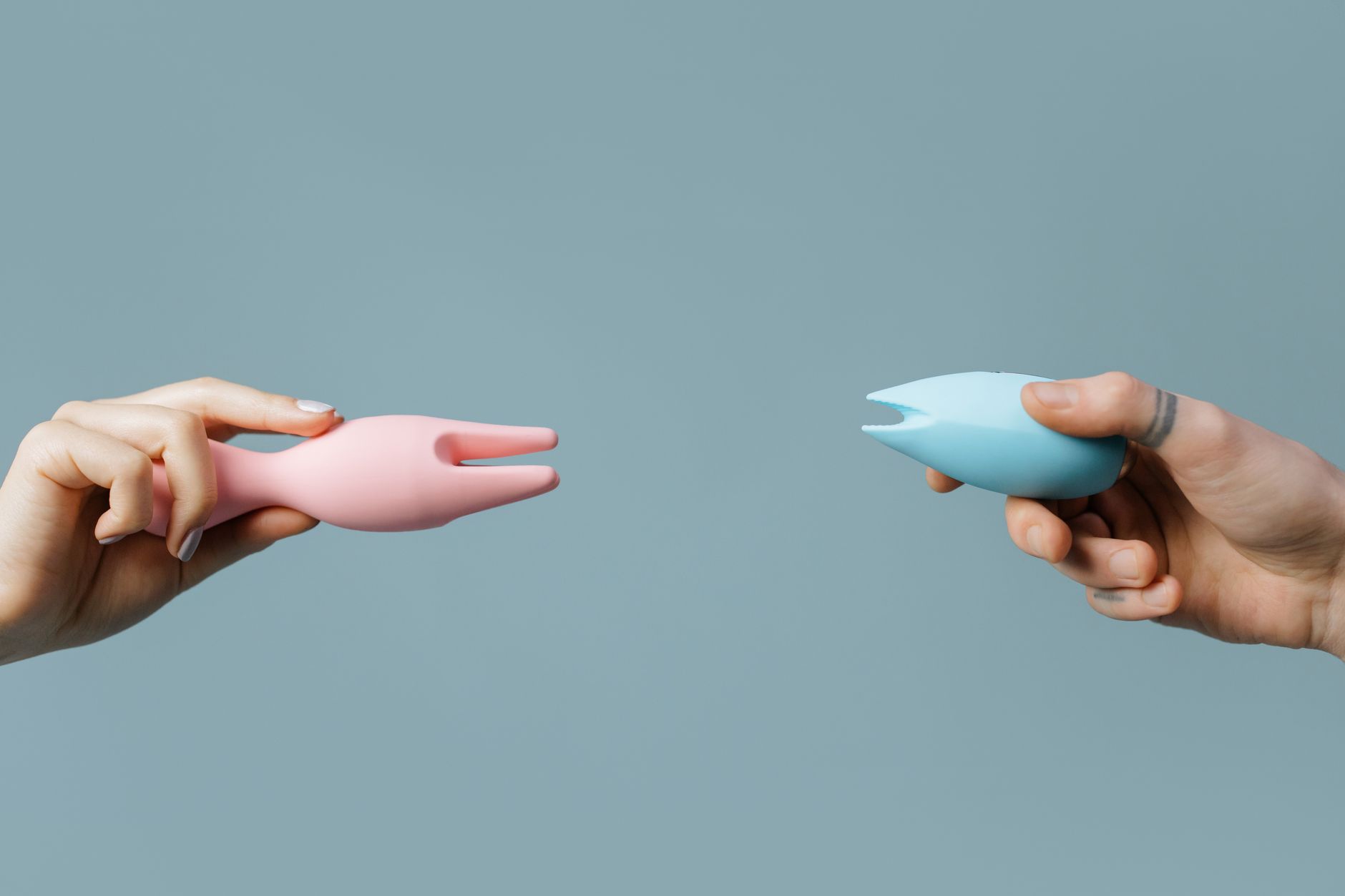
Photo by Ihsan Adityawarman on Pexels
Lubricant becomes crucial here. Water-based lube reduces friction and makes every sensation feel less intense and more gliding. It's not that the vibrator is working less hard. It's that the experience is smoother, which your sensitized tissue will appreciate.
Rebuilding from low to medium intensity
Once you can touch yourself at level 1 without discomfort, move to level 2. Spend a full week here if you need to. There's no rush. You're not trying to prove anything. You're retraining your body to feel pleasure without pain.
At this stage, you might start to feel arousal building. That's good. Let it. Don't push toward orgasm yet. Let yourself sit in arousal for 10 to 15 minutes. Your nervous system needs to remember that pleasure is safe. When you've been having tender orgasms, your body starts to brace for pain. It tenses up preemptively. This phase rewires that.
When you do feel ready to approach orgasm, do it slowly. Take longer than you normally would. If you usually orgasm in 5 minutes at high intensity, give yourself 15 to 20 minutes at medium intensity. Let the arousal crest gradually instead of spiking suddenly.
Many people find that their most comfortable orgasms happen this way. Gentle build, longer duration, less explosive finale. It actually feels better in the end.
The pelvic floor piece
Here's something almost nobody talks about. Your pelvic floor muscles are probably tight right now. When you're anticipating pain, you clench. When you clench during arousal, the clench intensifies during orgasm, and suddenly the whole experience feels like a cramp instead of release.
Spend time learning to relax your pelvic floor, not tighten it. You've probably heard about Kegels (clenching exercises). The opposite is equally important. Lie down, put a hand on your lower belly, and breathe into that space. As you exhale, imagine your pelvic floor softening and dropping, like an elevator going down. Do this for a few minutes daily.
When you return to using a lemon vibrator, do this pelvic floor breathing beforehand. You're literally teaching your muscles to be available for pleasure instead of braced against it.
Technique adjustments that make a real difference
Don't aim the vibrator directly at the most sensitive spot on your clitoris. Instead, angle it slightly to the side or use it on the hood (the skin covering your clitoris). You get stimulation without the direct intensity that might feel raw.
Alternate between movement and stillness. Use your lemon clitoral vibrator for 30 seconds, then pause for 10 seconds. This gives your nerve endings a chance to reset between pulses. It sounds counterintuitive, but many people find that intermittent stimulation feels less tender than continuous.
Consider adding external sensation. Sometimes tender clitoral sensations feel better when paired with other stimulation. Gentle rubbing on your thighs, a partner's touch on your breasts, or even just focusing on your breath can contextualize the clitoral sensation in a way that feels less isolating and raw.
When to check in with a healthcare provider
If tenderness persists after two weeks of gentle use, or if it comes with pain during regular (non-sexual) activities, see a gynecologist. Vulvodynia, yeast infections, or other underlying conditions can cause this, and they're treatable.
Similarly, if you recently started a new medication and your orgasms suddenly feel tender, mention it to your prescriber. Some antidepressants and antihistamines change tissue sensitivity. There might be alternatives worth trying.
The patience payoff
Rebulding pleasure takes time. You're not broken. Your body is just asking you to slow down and listen. A lemon vibrator at low intensity, combined with pelvic floor awareness and a willingness to take your time, usually gets you back to orgasms that feel genuinely good within a few weeks. You might even find that this slower approach becomes your preference going forward.
People also ask
Why do orgasms feel tender after using vibrators frequently?
When you use a vibrator daily at high intensity, your nerve endings fatigue and become hypersensitive. Think of it like overexercising a muscle. The tissue needs recovery time to reset. Taking a break of several days to a week, then returning at lower intensity, usually resolves this.
Can a lemon vibrator help if my orgasms feel sore?
Yes, but only if you use it differently than before. A lemon sucker or clitoral vibrator at its lowest settings can help you gently reintroduce sensation without triggering rawness. The key is patience and gradual intensity increase rather than jumping back to high settings.
Is pelvic floor tension making my orgasms hurt?
Almost always, yes, at least in part. When you're stressed or anticipating discomfort, your pelvic floor muscles tighten reflexively. During orgasm, that tension intensifies and can make climax feel like a cramp. Pelvic floor relaxation breathing before using your vibrator helps break that pattern.
How long does it take for tender orgasms to feel normal again?
Most people notice improvement within 2 to 3 weeks of gentle, consistent practice with low-intensity stimulation and pelvic floor work. Some take longer depending on what caused the tenderness. Consistency matters more than intensity.
Should I use lube when my orgasms feel tender?
Absolutely. Water-based lubricant reduces friction and makes every sensation feel smoother and less intense. It's not a workaround. It's actually part of the solution because it changes the texture of the experience in a way that sensitized tissue typically prefers.
What if tenderness doesn't go away after two weeks?
Talk to a gynecologist. Persistent tenderness can signal vulvodynia, infections, hormonal shifts, or other conditions that benefit from professional evaluation. It's not something to push through. It's something to get checked out.
The real shift
Tender orgasms often teach you something valuable. They force you to slow down, tune in, and ask yourself what actually feels good instead of what you think should feel good. That curiosity doesn't disappear once you recover. Many people find that the orgasms they rebuild tend to feel deeper and more satisfying than the ones they were having before. Sometimes the slowdown is the upgrade.
If you're navigating relationship dynamics around this shift, remember that how you talk about pleasure with your partner matters as much as the technique itself. And if sensitivity changes seem tied to a bigger shift in desire, that's worth exploring separately from the physical piece.
Your pleasure matters. Taking time to rebuild it gently is an act of care, not avoidance.