Here's what nobody tells you about postpartum sensation
Your body just did something enormous. And now, when you finally have a moment to think about pleasure again, everything feels muted. Like touching your clitoris through a thick blanket. Or worse, touching it and feeling almost nothing at all.
This is not broken. This is not permanent. And you are not alone.
Why postpartum sensation actually changes
Three things happen at once after childbirth, and they all hit your nerve pathways.
First, the pelvic floor muscles get stretched and sometimes torn (even with a vaginal delivery that "went well"). Those muscles are loaded with nerve endings. When they're swollen or healing, sensation gets muffled. The nerves are still there. They're just sending slower signals while everything else is busy repairing.
Second, hormones collapse. Estrogen was high during pregnancy. Now it drops like a stone. Lower estrogen means thinner vaginal and clitoral tissue, which changes how nerves respond to touch. Add in the fact that you're probably not sleeping, you're bleeding, your body hurts, and your brain is running on cortisol and oxytocin (bonding hormones), and tactile pleasure just... takes a back seat.
Third, if you're breastfeeding, prolactin stays elevated. Prolactin is essentially the opposite of desire. It kept you pregnant and now it's keeping you focused on your baby. Your body is doing exactly what it's supposed to do. That doesn't make it feel less weird.
When sensation typically comes back
Most people report that basic sensation returns around 6-8 weeks postpartum, once initial healing is further along. Clitoral sensitivity often lags behind by another month or two. By 4-6 months, most folks say things feel closer to normal, though "normal" might feel slightly different than it did before.
If you had a cesarean, the timeline is similar but the trigger is different. Your pelvic floor wasn't stretched in the same way, but your hormones still bottomed out and your nervous system is still recovering from major surgery.
The uncomfortable truth: if nobody told you this was coming, you might interpret it as a relationship problem, a you problem, or proof that something is permanently wrong. It's none of those things. It's biology doing its job while your body heals.
How lemon vibrators fit into recovery
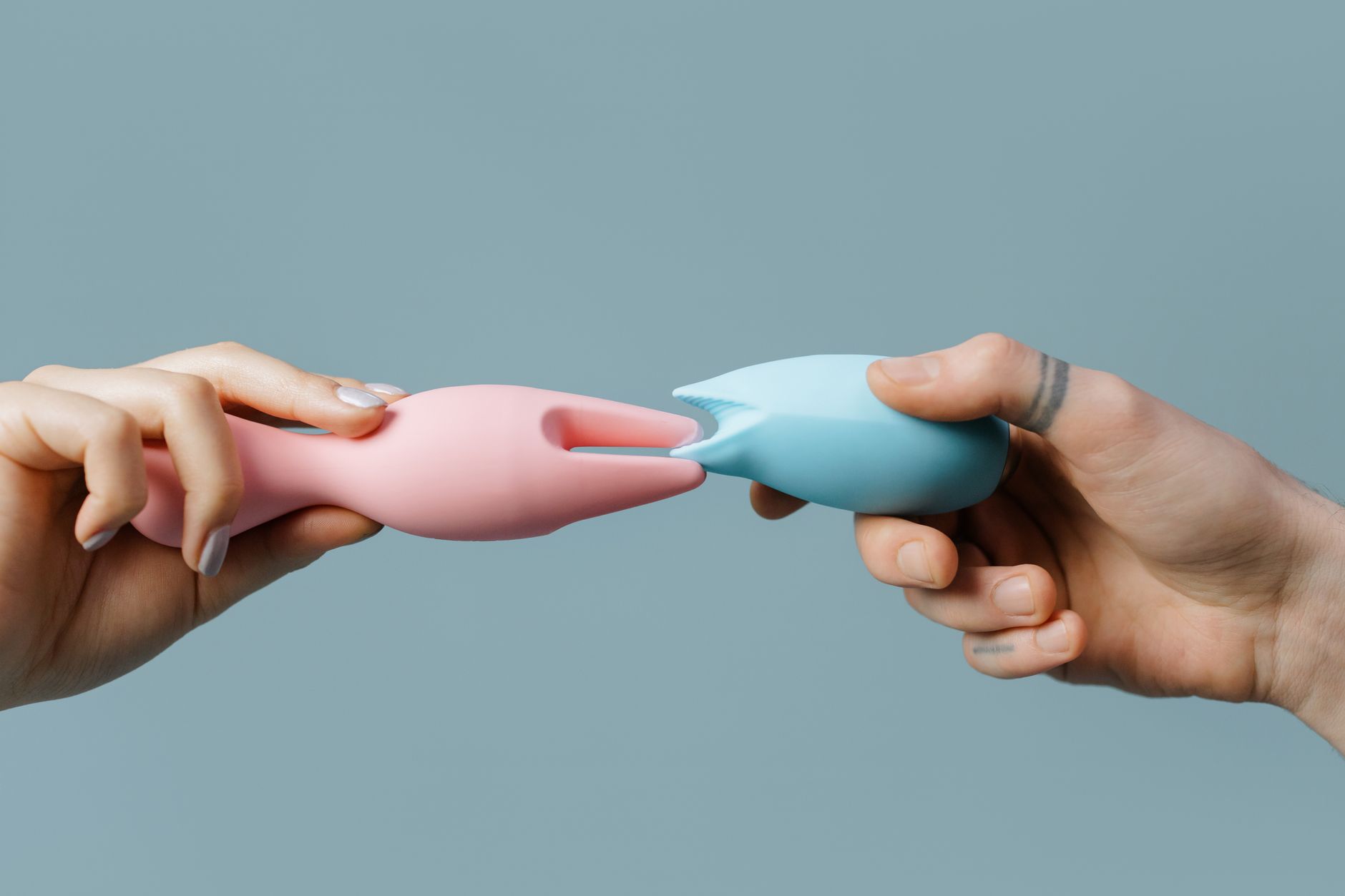
A lemon clitoral vibrator like the Lem works well for postpartum reconnection because it does something your hand or a partner's touch can't do alone. It provides consistent, targeted stimulation without requiring anything from your pelvic floor.
Here's the key difference: when sensation is muted, you need stimulation that gets through that fog. The suction mechanism on a lemon vibrator engages nerve clusters that respond differently than direct vibration. It's gentler on healing tissue while still being potent enough to register when your sensitivity is low.
That matters because the goal right now isn't to come as quickly as you used to. The goal is to rebuild the neural pathway that says "my body can feel pleasure." That pathway gets rusty after months of being in full survival mode.
How to actually use a lemon vibrator postpartum
Wait until you've had your postpartum checkup. If your doctor cleared you for intercourse, you're cleared for solo exploration. If they said "wait another few weeks," listen to them.
Start with the lowest intensity setting. Your clitoris is probably sore from swelling and hormonal changes. You want to introduce sensation gradually, not shock the system.
Use a water-based lubricant even though you might not feel like you need it. Postpartum tissue is thinner and drier. Lube isn't just about comfort. It's about signaling to your nervous system that this is gentle, safe, and intentional.
Set aside 10-15 minutes when you're not on a timer. Not right before bed, not squeezed between tasks. Your brain needs permission to focus. That permission is half the battle.
Start at the base of your clitoris or slightly to the side instead of going directly over the head. As the hood retracts and sensation builds, you can shift upward if it feels good.
If nothing happens after 10 minutes, that's fine. Stop. The point isn't to force an orgasm. The point is to show your nervous system that pleasure is still possible. Consistency matters more than results.
Do this 2-3 times a week if you can. Your sensitivity will build. It's like learning to hear again after someone's been shouting.
The emotional piece (which is actually the physical piece)
Most postpartum people are running a parallel track: your body is healing, your identity is shifting, you're probably exhausted, and somewhere underneath all that is grief for your former self. Touching your own clitoris can feel like acknowledging that version of you still exists.
If that feels loaded, it's because it is. You're not just reconnecting with sensation. You're reconnecting with yourself as a person who experiences pleasure separate from motherhood.
If you have a partner, they might feel confused by your muted response. Here's what helps: tell them directly. "My sensation is coming back slowly. This isn't about you. I'm using time alone to rebuild what I can feel, and that actually helps us both." That conversation isn't sexy, but it prevents you both from creating a story about what the numbness means.
Many couples find that when the person with postpartum numbness spends a few weeks on solo reconnection with something like a lemon clitoral vibrator, the shared experience comes back more naturally. You're not waiting for sensation to magically appear. You're actively building it.
When to reach out for help
If 6 months postpartum and sensation still hasn't returned, talk to your OB-GYN. There are conditions like postpartum depression that can flatten sensation, and they're highly treatable. Pelvic floor physical therapy can also help if there's lingering muscle tension blocking sensation.
If penetration became painful after birth and it's still painful months later, that's also worth flagging. Postpartum pain with intimacy can have several causes. None of them are things you're supposed to just live with.
Postpartum reconnection isn't linear. Some weeks you'll feel more sensation than others. Your nervous system is integrating a lot. Patience with yourself is the real work here.
FAQs
How soon after birth can I use a vibrator?
Wait until your postpartum checkup and your doctor clears you for sexual activity. For vaginal births, that's typically 4-6 weeks. For cesareans, it's usually 6-8 weeks. Once you're cleared for intercourse, you're cleared for solo play. Start gently with lube even if you're impatient.
Will using a lemon vibrator slow down my recovery?
No. Gentle stimulation actually supports pelvic floor recovery because it keeps the tissue flexible and blood flow active. What matters is starting with low intensity and stopping if anything hurts. Sharp pain is your signal to pause. Tenderness that softens after a minute or two is fine.
My partner wants to help me reconnect. Should I let them?
Yes, but start solo first. Once you've rebuilt some basic sensation on your own, partnered touch becomes additive rather than confusing. You'll know what you can feel, so you can guide them toward what works. Most partners appreciate having clear direction instead of guessing.
What if I'm breastfeeding and my sensitivity still hasn't come back at 8 months?
Breastfeeding extends the timeline slightly because prolactin stays elevated. But 8 months is long enough that it's worth checking in with your doctor. Sometimes postpartum depression or thyroid issues get overlooked. You deserve an evaluation.
Can I use a lemon vibrator while my partner and I are intimate?
Absolutely. Many postpartum couples find that adding a lemon clitoral vibrator to partnered sex helps rebuild sensation faster. You get the stability and intimacy of penetration or closeness with your partner plus the targeted stimulation that your muted clitoris actually registers. It takes pressure off both of you.
Is it normal that my orgasms feel different now?
Completely normal. Your pelvic floor has shifted, your hormones are resettling, and the neural wiring is recalibrating. Some people's orgasms become deeper and more localized. Some become more subtle. Over time, most people report they feel like their pre-pregnancy orgasms again, but it can take 6-12 months. You're not broken. You're recalibrating.