The real conversation you're having
When you're thinking about introducing a lemon vibrator to a new partner, you're not actually worried about the toy itself. You're worried about what it means. Will they think you're not satisfied? Will they feel replaced? Will the moment become weird instead of hot? Here's the thing: those concerns make complete sense, and addressing them head-on changes everything.
I've worked with hundreds of couples navigating this exact moment, and the ones who move through it successfully aren't the ones with perfect communication already built in. They're the ones who stop waiting for the right moment and create one instead.
Why new partners specifically benefit from this conversation
When you've been with someone for years, there's often a weird baggage around toys. Maybe you introduced them early and it felt loaded with meaning. Maybe you brought one up late and it felt like criticism. With a new partner, you get to reset that narrative entirely.
Research on sexual satisfaction in early relationships shows that couples who establish sexual communication early (meaning actually talking about what feels good, what you want to explore, what your body responds to) report higher satisfaction and less conflict long-term. A lemon vibrator conversation is sexual communication. You're not introducing a substitute. You're introducing information about your body.

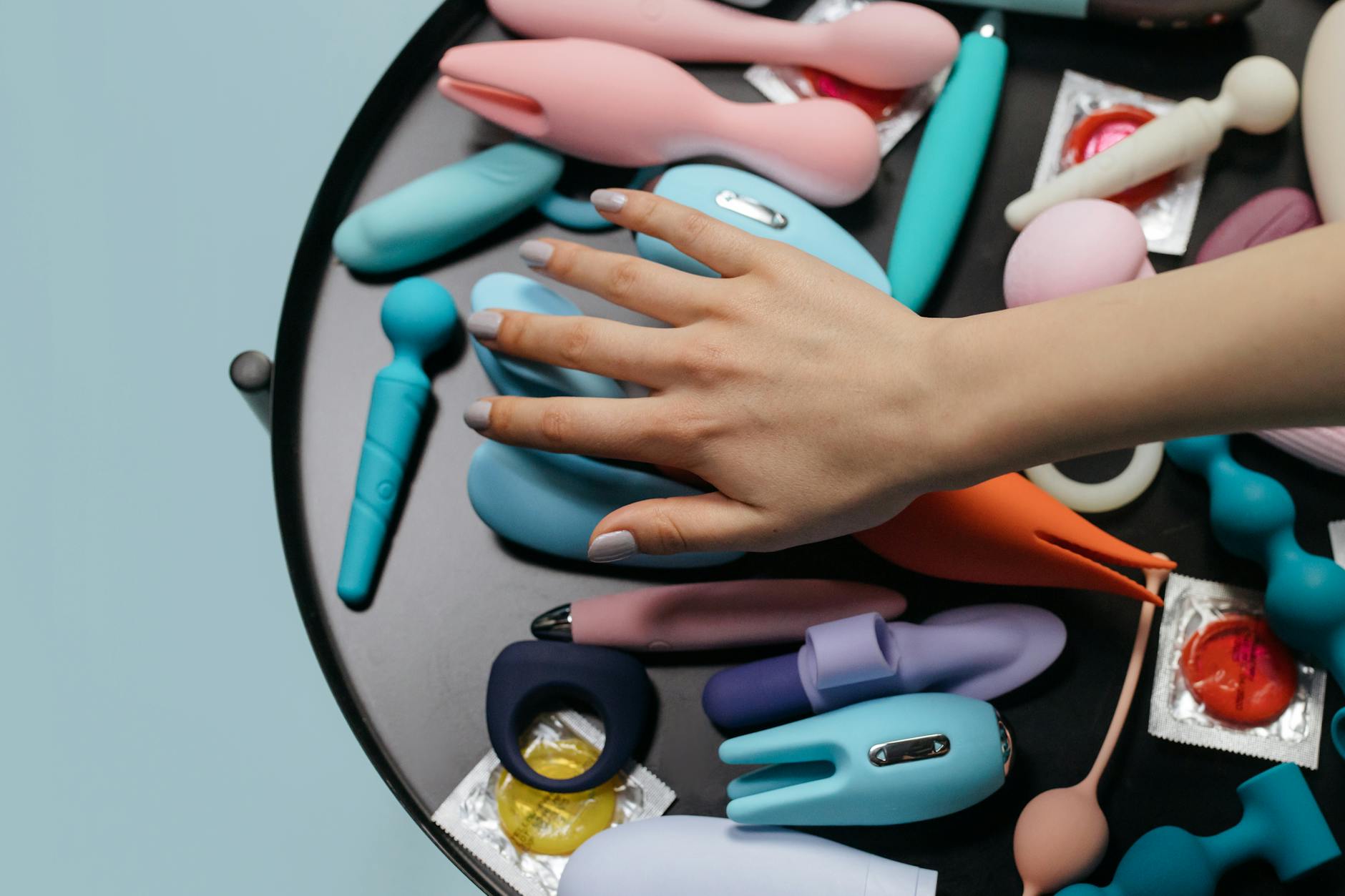
Photo by cottonbro studio on Pexels
The second advantage: early in a relationship, there's still novelty and curiosity. Your new partner is likely interested in learning what you like. They're not yet burned out on the relationship or defensive about their own technique. That's the window to work with.
When to bring it up (timing matters more than you think)
Not during sex. Not in the heat of the moment when sensitivity is high and someone's vulnerable. Not as a criticism of what's already happening ("Your fingers aren't getting me there"). Not after a few drinks when you can blame it on alcohol.
Bring it up during a calm, clothed conversation. Ideally after you've already had good sex a few times. This signals that you're not saying "what we're doing isn't working." You're saying "I want to explore this together." The frame changes everything.
You might say something like: "I really enjoy when we're intimate. I've also discovered that I orgasm more reliably when I use a clitoral vibrator, and I'd love for us to experiment with that together. It's not about you doing something wrong. It's about my body and how I respond." That's honest. That separates the toy from the person. That invites collaboration instead of defense.
Wait for a conversation that feels relatively private and relaxed. Maybe you're making dinner together, or you've got time in the morning before work. Not right before you're supposed to leave for something. Give space for questions and reactions without time pressure.
What to expect from their reaction (good news: it's usually better than you think)
Most new partners respond positively. Not because they're uniquely enlightened, but because in a new relationship, they want you to feel good. That's not cynical. That's how attraction works. If someone is into you, they generally want sex with you to be great for both of you.
What they might worry about: Will I be replaced? Can I learn to use it with her? Will I feel inadequate? These are normal insecurities. Don't minimize them, but don't absorb them either. A lemon vibrator doesn't replace a partner. It supplements what already feels good. It's a tool, not a comparison.
You might say: "I want to try this together. I'd love your hands on me at the same time. I'm more likely to have an orgasm this way, and that means better sex for both of us." That's true, it's collaborative, and it frames the toy as something that improves the shared experience.
Some partners will be hesitant at first and become enthusiastic once they see how it works. Others will be immediately curious. A small number might need time to warm up to the idea. Give them that, but also be clear about your own interest. This is about your pleasure, which is valid on its own.
How to actually use it together (the logistics that matter)
Start with a conversation about preference before you're in the moment. A lemon clitoral vibrator works best on lower settings initially, especially if you're new to each other's bodies and arousal patterns. You might say: "Let's start slower and see what feels good. We can build intensity as it happens."
Position matters. If you're partnered and using a lemon vibrator, you have options. Your partner can hold it while you guide them. You can hold it yourself while they use their hands elsewhere. You can work together to find an angle that lets them stay close. The suction-based design of a lemon vibrator means you don't need the same kind of pressure management as traditional vibrators. That's actually easier for partners to handle together.
Use lube. Even if you don't typically need it, lubrication makes everything feel better, reduces friction on sensitive tissue, and actually helps suction-based toys work more effectively. Water-based lube is your friend.
Start during foreplay, not as the main event. Use the vibrator for 10-15 minutes while you're both warming up and building arousal. This lets you both adjust to the sensation and the newness without pressure to perform.
What changes when you add a vibrator to partnered sex
Honestly, your orgasm becomes more reliable. That's the whole point. And here's what partners notice: when their partner has a stronger, more consistent orgasm, the whole experience feels better for them too. It's less performance-based. It's more connected.
Your arousal might also build faster once you introduce the toy. The psychological relief of not worrying whether you'll orgasm is huge. That anxiety actually blocks the physical response. Remove the anxiety, and the body follows.
You might also discover that you like different levels of intensity than you thought. Your new partner might learn that you enjoy gentler stimulation initially and building from there. That's all valuable information. A lemon vibrator becomes a way to have a conversation your bodies couldn't have without it.
The conversation after (just as important)
After you use it together, circle back. Not a formal debrief, but a real check-in. "That felt really good" or "I loved seeing you respond that way" or even "Let's do that again soon." This normalizes it and signals that it's now part of your sexual repertoire, not a one-time experiment.
If something felt awkward or didn't work, talk about that too. Maybe the angle wasn't right. Maybe the setting was too intense. Maybe you both felt self-conscious. All of that is fixable. And fixing it together actually deepens intimacy more than if everything had been perfect the first time.
If he or she mentions insecurity afterward, take it seriously without over-explaining. "I want you inside me and also want this stimulation. I don't want one or the other. I want both." Simple. True. Moves past the anxiety.
Introducing a lemon sucker specifically
If you're thinking about a lemon clitoral vibrator specifically, the suction design has a particular advantage with new partners. It's gentler than traditional vibrators initially, which means there's less risk of overstimulation. It also creates a very specific sensation that many people find easier to orgasm from than vibration alone. That's why you might find success faster with a lemon sucker than you would with another type of toy.
The Lem by Hello Nancy is designed to work at multiple intensities, so you can start at setting one and build up. That's perfect for a new partner situation where you're both learning what your body likes together.
What not to do
Don't sneak it into the bedroom without mentioning it. Don't frame it as a fix for something "broken." Don't compare your new partner to exes or past partners who you've used toys with. Don't use it as a weapon in a disagreement ("Well maybe if you paid more attention, I wouldn't need this"). Don't expect him or her to be an expert with it right away.
Don't assume that because they seemed hesitant in conversation that they'll never be enthusiastic. Sometimes the hesitation is just adjustment time. People often surprise you.
Moving forward
Once you've done this once, it stops being a big deal. It becomes another tool in your intimate life. And couples who can talk about toys, preferences, and how they want to be touched together have a huge advantage. You're not managing each other's egos around sex. You're actually focused on pleasure.
That's the real benefit. Not the toy. The fact that you can have an honest conversation about your body with someone you're intimate with. That's intimacy. Everything else follows from there.
If you want a bit more structure for having this conversation, you might also check out our guide on how to introduce a lemon clitoral vibrator to your partner without awkwardness. And if you're curious about how sensation changes when you use a lemon vibrator with a new partner versus solo, that's worth reading about too.
FAQ: Questions we hear often
Will my new partner feel threatened or insecure about a lemon vibrator?
Most don't, especially if you frame it correctly. The key is separating the tool from the person. You're not saying he or she isn't enough. You're saying your body needs this specific stimulation to orgasm reliably. That's not an indictment of your partner. It's information about your body. Partners who care about you generally want that information.
Should I use a lemon vibrator before mentioning it to him or her?
That's up to you. Some people feel more confident bringing it up after they've already experienced what it does. Others prefer to introduce the idea first and then explore it together. Either way works. The conversation matters more than the order.
What if my new partner wants to use the lemon vibrator on me but doesn't know how?
Show them. Guide their hand. Say things like "A little higher" or "Lighter pressure" or "That setting feels amazing." This is actually hot, because it's directing them toward your pleasure. Most people like being told what feels good. It makes them feel competent.
Can I use a lemon clitoral vibrator if my new partner doesn't want to participate?
Absolutely. You can use it solo, or you can use it during partnered sex while they focus on other forms of touch. The vibrator doesn't require their involvement to work. It's an enhancement, not a requirement. If they're not comfortable with it yet, that's okay. You can revisit the conversation later.
Is there a "right" intensity setting to start with when using a lemon vibrator with a new partner?
Start low. Most people begin at settings one or two and work up. You're not trying to race to an orgasm. You're exploring what feels good. Lower settings also give your partner a chance to see your body's response without things feeling overwhelming. You can always increase intensity. You can't un-increase it.
How often should we use a lemon vibrator together?
As often as you both want to. Some couples use it occasionally. Others incorporate it regularly. There's no rule. What matters is that you both enjoy it and feel good about it. If one of you stops enjoying it, circle back and check in.
Introducing a lemon vibrator to a new relationship is really just introducing honesty about what your body needs. That conversation, had well, makes everything better. Not just the sex. The whole thing.