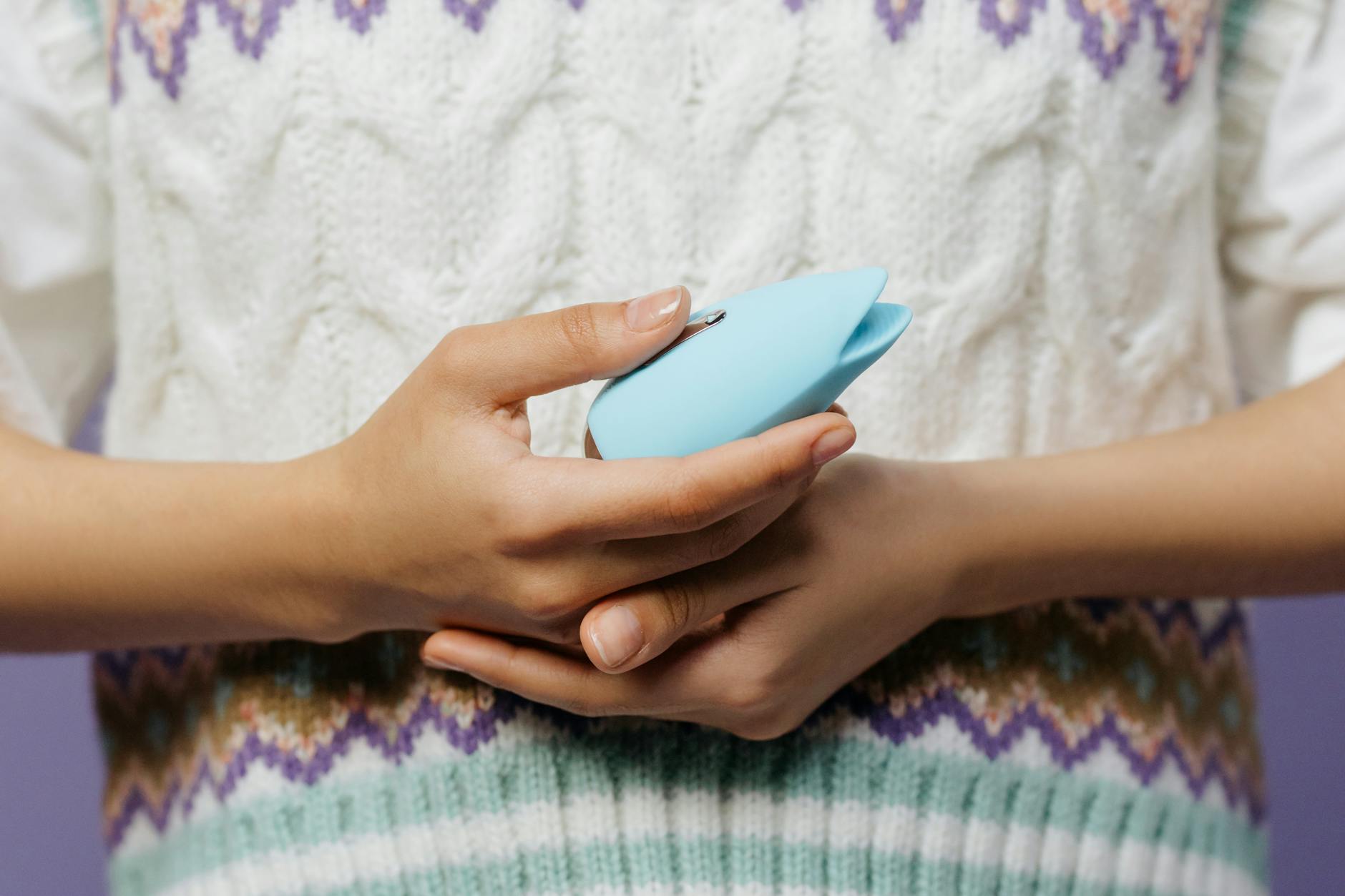
Here's what nobody tells you about pleasure after menopause
Menopause doesn't kill your capacity for orgasm. It changes the conditions. That distinction is everything, because it means you're not broken. You're working with a different set of physics.
When estrogen drops, tissue thins. Lubrication shifts. The pelvic floor loses elasticity. Your clitoris still has the same nerve density, still responds to stimulation, still builds toward release. What changes is the friction tolerance and the speed of arousal. A lemon clitoral vibrator works so well during this transition because it changes the type of stimulation, not the intensity.
Why air-suction vibrators work differently than traditional vibration
Most vibrators work by friction. They shake rapidly against tissue, and that's fine for many bodies. But after menopause, when tissue is thinner and more sensitive, friction can feel sharp or uncomfortable. A lemon vibrator uses gentle suction and pulse waves instead. Think of it less like a massage and more like a rhythmic squeeze.
This matters clinically because suction stimulates the thousands of nerve endings in and around your clitoris without the mechanical stress of direct friction. Your tissues stay comfortable, and the sensation builds more gradually but also more intensely. Many of my clients in midlife report their strongest orgasms come from this kind of targeted, gentle pressure rather than aggressive vibration.
The lemon sucker design also covers a larger area of the clitoral complex, including the glans and the surrounding tissue. You're not isolating one tiny point. You're distributing sensation across the whole region, which changes how the orgasm feels. Most people describe it as deeper and more full-bodied than what they remember from their thirties.
The hormonal reality and what to expect timing-wise
Eight weeks. That's roughly how long it takes for your nervous system to recalibrate after a major hormonal shift like menopause. If you've been without estrogen for a few years, your body has already adapted. But if you're in early menopause or recently transitioned, your nerves are literally rewiring. That means sensation might feel dull or unpredictable at first.
This is temporary. Your clitoris hasn't lost sensitivity. It's just operating on different neurochemistry. Consistent use of a lemon vibrator during this window actually helps speed the adaptation. You're teaching your nervous system that the sensation is safe and reliable, which makes your brain more responsive to it.
If you're on hormone replacement therapy, the timeline might be different. HRT restores some tissue thickness and lubrication, which can make sensation more immediate. But HRT isn't necessary to have great sex after menopause. It's just one tool among many.
Practical setup for your first session with a lemon clitoral vibrator
Let's talk mechanics. You'll want to carve out at least thirty minutes. Not because the experience will take that long, but because your body needs buffer time. Arousal after menopause is slower to build, and that's not a flaw. It's an invitation to stop rushing.
Start with a water-based lubricant. Your body will still produce some natural lubrication, but you'll benefit from external support. Water-based is safer for silicone toys and easier to refresh as you go. Generously apply around your vulva and especially over your clitoris.
Position yourself comfortably. Lying down is fine, but some people prefer sitting propped against pillows or even standing. There's no wrong position. Start on the lowest intensity setting, which on most lemon vibrators is a gentle pulse. Place it directly over your clitoris and wait a beat. Don't immediately push harder. Let your body register the sensation for five or ten seconds.
Then move. Gentle circles, side to side, direct pressure, off to the side of your clitoris. You're mapping what feels good right now, in this body, in this moment. Sensation changes month to month and year to year. That's not something to fight. It's something to explore.
Common obstacles and how to work through them
One thing I hear often: "It feels numb at first." That's usually not numbness. It's that your nervous system hasn't switched on yet. Keep going gently for another five to ten minutes. Often the sensation will suddenly become vivid. Your brain just needed time to register the input.
Another common one: "It feels too intense." This usually means you're on too high a setting or applying too much direct pressure. Step down the intensity and move the vibrator slightly off-center from your clitoris. The sensation will feel softer but actually more pleasurable.
Some people report that they need to warm up first. This is completely normal. Spend ten or fifteen minutes on foreplay with your partner, or use a different type of stimulation first, before bringing in the lemon vibrator. Your body might be more responsive after a bit of buildup.
If nothing feels right after two or three sessions, check in with a menopause-trained gynecologist. Sometimes there are deeper tissue changes that a topical estrogen cream can help with. That's not a failure. It's just getting the support your body needs.
Why the specific sensation of a lemon sucker changes your orgasm pattern
Here's the science piece that often gets left out. When you use a lemon vibrator, you're creating rhythmic suction rather than friction. Your clitoris is full of erectile tissue, similar to the tissue in a penis. Suction causes that tissue to fill and engorge. Over time, that engorgement creates more surface area for sensation. Your orgasm, when it comes, often feels stronger because there's more engaged tissue.
You might also notice that your orgasms have a different shape. Instead of a sharp peak, they might feel more like rolling waves. Instead of a sudden release, you might experience multiple smaller peaks that build. This isn't less intense. It's just different. And most people, once they adjust, prefer it. You have more control over the arc. You can ride the pleasure longer.
The other piece is mental. Once you know you can have really good sensation with the right tool and the right setup, the anxiety drops. For years, you might have been bracing for disappointment. Now you're not. That mental shift alone changes your nervous system's response. Pleasure becomes something you expect rather than something you're braced against.
Building a routine that sticks
You don't need to use a lemon clitoral vibrator every day. But consistent use, even two or three times a week, helps your body stay responsive. I usually recommend picking a specific time. Maybe Saturday morning. Maybe after your partner leaves for work. Consistency matters because your nervous system responds to patterns. When your body knows it's coming, it preps itself.
After menopause, pleasure works better when it's scheduled, not just spontaneous. That sounds unsexy, but it's actually liberating. You're not waiting for the right moment or hoping things magically happen. You're showing up intentionally. That intention rewires your brain to prioritize pleasure again.
Also consider this: if you have a partner, they can be involved or not. Some people want to use their lemon sucker alone. Some integrate it into partnered sex. Some use it before partnered sex to warm up. All of these are right. You get to decide what pleasure looks like in your body.
When to seek help beyond the vibrator
If pain appears during use, stop. Pain during sex after menopause is usually genitourinary syndrome of menopause, or GSM. It's treatable, often with topical estrogen cream. A gynecologist can help you distinguish between pain and pressure. Pressure from a suction vibrator is normal. Pain is not.
If you're on medications like antidepressants that can affect sensation, that's a separate conversation. A lemon vibrator can still help, but you might need to adjust your timeline and patience. SSRIs notoriously flatten sensation. The vibrator isn't magic. But it often helps bridge that gap better than friction-based toys do.
If desire has vanished entirely, that's worth exploring with a doctor or therapist. Desire shifts happen during menopause, but they're not inevitable. Sometimes it's hormonal. Sometimes it's relationship stress. Sometimes it's trauma. Sometimes it's all three. A lemon vibrator helps when desire is present but sensation is muted. It doesn't create desire from scratch.
FAQ
Can I use a lemon vibrator if I'm still in perimenopause?
Yes. In fact, perimenopause is often the time when a lemon clitoral vibrator feels most helpful. Your hormones are fluctuating, so sensation is inconsistent. The gentle, targeted suction of a lemon sucker helps bridge those gaps. You might find that it feels amazing one week and less intense the next. That's perimenopause being perimenopause, not the vibrator failing.
How long does it take to feel results with a lemon vibrator after menopause?
Most people report noticeable improvement in sensation within the first three uses. Full adaptation usually takes around four to six weeks of regular use. That said, "results" doesn't mean earth-shattering orgasms overnight. It means sensation becomes clearer, more predictable, and more pleasurable than before you started.
Does a lemon vibrator work better if I'm on hormone replacement therapy?
Not necessarily better, but sometimes faster. HRT restores some tissue thickness and blood flow, which can make sensation more immediate. But the lemon vibrator works brilliantly whether you're on HRT or not. It's just a different starting point. Some people find they need less intensity with HRT. Others don't notice a difference.
My partner is uncomfortable with me using a vibrator. What do I do?
This is really common. Many partners worry that a vibrator means they're not enough. That's rarely true. Usually, it means the partner is insecure. That's a relationship conversation, not a vibrator conversation. You might invite them to learn how the vibrator works, or to use it together, or to stay in the room while you use it. But your pleasure matters. If your partner's discomfort is keeping you from tools that help your body feel good, that's worth exploring with a couples therapist.
Are there side effects or risks to using a lemon sucker regularly?
Not really. Your body won't become dependent or numb. Consistent use actually trains your nervous system to be more responsive, not less. The only real precaution is to avoid using it if you're experiencing active pain or infection. And if you have a clitoral implant or pacemaker, check with your doctor first, though this is rarely an issue with air-suction toys.
Can a lemon vibrator help if my clitoris feels desensitized?
Often, yes. Desensitization after menopause usually isn't true nerve damage. It's usually that your tissues have changed and your nervous system needs time to recalibrate. The gentle, consistent stimulation of a lemon clitoral vibrator helps your nerves wake up. It's not aggressive, so it doesn't further irritate tired tissue. It's patient, which matches what your nervous system needs.
The pleasure you deserve is still there
Menopause changes many things about your body. Your capacity for intense, full-bodied sensation is not one of them. What changes is the path to get there. You need different tools, different timing, different patience. A lemon vibrator meets your body exactly where it is right now, and most people find their strongest orgasms come after they stop fighting the change and start working with it.
If you're struggling to feel sensation after menopause, or if your sex life has dimmed and you're not sure how to reignite it, you don't have to figure it out alone. Reach out to a menopause-trained therapist or gynecologist. And try the vibrator. Your body is still capable of spectacular pleasure. You're just learning a new language for it.