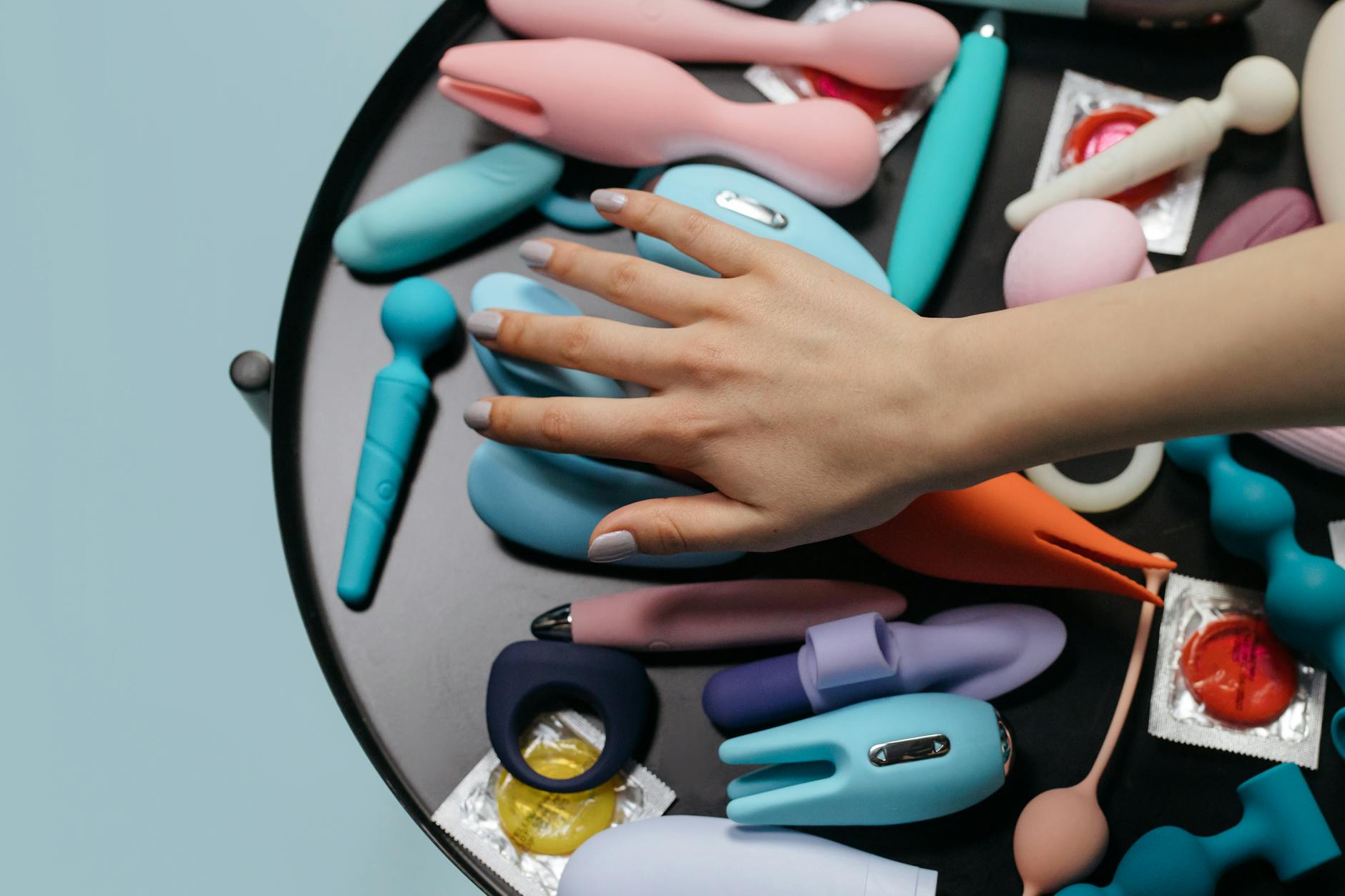
Here's the thing about lemon vibrators and partnered sex
Most couples think they have to choose. Either the clitoral vibrator comes out and one person's pleasure gets the spotlight, or it stays in the drawer because it feels like a third wheel. Neither is true. A lemon clitoral vibrator during intercourse is one of the most reliable ways to bridge the gap between what your body needs and what your partner can deliver. It's not complicated. You just need the right angles and a conversation that doesn't feel like a negotiation.
I've worked with hundreds of couples navigating this exact moment, and the pattern is always the same. Someone brings it up nervously. The other person worries it means they're not enough. Nobody moves forward. But once you get through that first attempt, most couples wonder why they waited so long.
Why lemon vibrators actually enhance partnered sex
Let's start with the simple physiology. During intercourse, your partner is stimulating the vaginal wall and internal structures. A lemon clitoral vibrator stimulates the clitoris, which has roughly 8,000 nerve endings concentrated in a space the size of a pea. These are two different systems entirely. Adding clitoral stimulation doesn't replace anything your partner is doing. It completes the picture.
Here's what actually happens neurologically. Your brain receives two separate signals simultaneously. The suction and vibration from the lemon toy on your clitoris, plus the pressure and movement inside. These signals combine in ways that feel genuinely different from either sensation alone. Orgasms that arrive this way often feel more intense, arrive faster, and can feel less like one singular peak and more like a wave.
For partners who struggle with stamina or rhythm, adding a lemon clitoral vibrator is honest. It shifts the focus from "how long can I last" to "how can we both get there." That's not a failure. That's partnership.
The actual positioning that works
This is where most couples get stuck in their heads. You're picturing something complicated. It's not.
If you're in missionary position, the lemon vibrator goes between your bodies. Your partner enters as usual, and you hold the toy against your clitoris. The vibrations won't interfere with their movement. Positions like cowgirl work even better because you have full control over the toy's placement and your partner's depth. You're literally holding both sides of the experience.
For positions where your hands are occupied, a small rechargeable toy like Hello Nancy's Savo lemon vibrator has a shape that nestles between your bodies without falling out. Your partner can even hold it for you if that feels hot. Some couples find that pressing it against their partner's pubic bone while moving creates sensation for both people. That's not a rule. That's just what some people discover.
Angle matters. You want the vibrator on your clitoris, not jammed underneath your partner's body weight. If the angle is wrong, the sensation feels muffled or uncomfortable. A 15-degree shift often changes everything. This is why communication before and during matters so much.
How to introduce this without it feeling like a negotiation
Okay, this is the part where couples actually falter. The conversation feels loaded because it is loaded. You're essentially saying "I need something extra to orgasm during intercourse," which can land as "You're not enough." But that's not what you're saying at all.
Here's the frame that works. You're not solving a problem. You're exploring something together that feels good. Try: "I've been thinking about trying a lemon clitoral vibrator during sex. I want to see what that feels like with you. Are you open to that?" That's it. Short, specific, collaborative.
If your partner hesitates, the worry is usually one of three things. They think it means they're failing. They're worried about where it fits physically. They're uncomfortable with toys in general. Each needs a different answer.
For the first one: "Using a vibrator isn't about what you can or can't do. It's about adding something that works for my body. You do things a vibrator can't. We're not competing." For the second: "I can show you exactly where it goes. It won't get in your way." For the third: "I get it if toys feel weird. We can take time. Or we can just try it once and see." Most partners, when they feel heard rather than criticized, come around.
The first time you actually do it
Start without penetration. Both of you get comfortable. You use the lemon vibrator on yourself while your partner watches or touches you. This isn't a test run. It's a solo session where they get to see what you like. That visibility matters. Your partner gets to watch your actual response. They get to understand the speed, the pressure, the rhythm that works for you.
Then your partner enters slowly. You keep the vibrator exactly where it's working. Don't rearrange things. The whole point is that you've already found the right angle. Your partner's movement is the new variable. Start shallow and slow. Let your partner feel how your body responds to both sensations at once.
Talking during this helps. "Slower" or "right there" gives your partner real information. Some couples go fully silent because the sensations are too good to interrupt. Both are fine. What matters is that nobody is checking in with their anxiety. You're not evaluating whether this is "working." You're just experiencing it.
Managing sensation when it feels like too much
Here's what nobody warns you about. Sometimes the combination of clitoral and internal stimulation feels overwhelming, not in a good way. It's not pain. It's just sensory overload. Your nervous system goes "too many signals." This happens and it's completely normal.
If this is you, dial down the intensity on the lemon vibrator. Most lemon clitoral vibrators have multiple settings. Drop to pattern 1 or 2. You don't need maximum intensity. The whole job of a lemon sucker is that the suction does most of the work. Add light vibration on top. Sometimes less is genuinely more.
You can also pause penetration and just use the toy for a bit. Let your partner be still inside you while you build up. Then resume movement once you've recalibrated. There's no timeline you have to stick to. Some couples use a lemon vibrator this way for 10 minutes before any penetration even happens. That's not preliminary. That's the main event.
The partner's perspective (and why they might actually love this)
Here's something women often don't realize. A lot of partners genuinely enjoy watching their partner use a vibrator during sex. They get to see exactly what brings you pleasure. They get to last longer because the pressure is off them to be the sole source of stimulation. And honestly, many people find it hot.
If your partner seems hesitant after the first time, ask directly. "Did that feel okay for you?" Listen for the actual answer, not what you think they should say. Some partners want to focus purely on sensation and feel distracted by the toy. That's legitimate feedback. Others realize they can stay harder longer or control their pace better, which feels like a complete game-changer.
The couples who make this work long-term usually land on a rhythm. Maybe a lemon clitoral vibrator comes out twice a week. Maybe it's a weekend thing. Maybe you use it sometimes and don't other times. There's no standard. You're just building a shared vocabulary where "I want the vibrator tonight" is as normal as any other request.
When one person has a lower sex drive
Here's a use case that shows up constantly in my practice. One partner wants sex more often than the other. The person with lower desire often feels pressure to perform. They worry they're letting their partner down. A lemon clitoral vibrator actually helps here, and not in the way you'd think.
When the lower-desire partner knows they have clitoral stimulation available, arousal often comes faster. That takes pressure off. Their body shows up more readily. It's not about forcing desire. It's about creating conditions where genuine desire can show up.
For the higher-desire partner, a lemon vibrator means the encounter doesn't live or die by whether the other person can orgasm through penetration alone. Orgasm becomes more accessible. More encounters feel genuinely satisfying for both people. Frequency might increase naturally because sex stops feeling like a negotiation.
Practical logistics (the unsexy part that actually matters)
Battery life. If you're using a rechargeable toy, charge it before you plan to use it. A lemon clitoral vibrator like those from Hello Nancy's Savo typically runs 60 to 90 minutes on a full charge. That's way more than you'll need, but it's worth checking.
Lubricant. If you're using a silicone toy, use water-based lubricant only. Silicone-based lubes degrade silicone over time. Have it nearby before you start, not as an afterthought when things are already in motion.
Cleanup. Wash the toy with warm water and mild soap afterward. It'll sit on or near your partner's body during sex. Hygiene matters. This takes 30 seconds and it prevents infections and UTIs.
Storage. Keep the vibrator somewhere accessible but not visibly in your bedroom if that matters to you. Some couples leave it out. Others keep it in a nightstand drawer. There's no judgment either way.
People also ask
Will using a vibrator during sex make me dependent on it for orgasm?
No. Your body doesn't develop a "dependency" on vibration the way that myth suggests. What actually happens is your nervous system learns that vibration feels good. That's learning, not addiction. If you use a vibrator 50 times and then stop for a month, your body still remembers how to orgasm without it. Some people prefer vibration, same as some people prefer certain types of touch or certain positions. That's preference, not dependency.
Can my partner feel the vibrator inside me during intercourse?
They won't feel the vibrator directly because it's on your clitoris, not inside. But they'll feel the indirect effects. Your vaginal muscles might contract differently. Your arousal and orgasm might arrive faster and feel more intense. Some partners say it's like feeling the echoes of the vibration, not the vibration itself. Most people find it enhances sensation rather than creating any kind of blocking or numbness.
What if I can only orgasm with a vibrator now that we've tried it?
This is a version of the dependency question. It's rooted in real worry but it misunderstands how bodies work. If you can orgasm with a vibrator and also with your hand, your mouth, or penetration, you have multiple pathways to pleasure. You're more flexible, not less. If vibration happens to be your fastest or most reliable path, that's useful information. It doesn't lock you in. You can still access other paths when you choose to.
Should I use a vibrator every time we have sex?
No. Some couples use a vibrator occasionally. Some use it regularly. Some have phases where it comes out a lot and then phases where it doesn't. You're responding to your body's actual preferences, not following a rule. The point is that having it available as an option makes sex feel less stressful, not more. You get to choose based on what you want that day, not based on obligation or anxiety.
Can I use a lemon clitoral vibrator if I have a partner with lower stamina?
Yes, actually this is one of the most helpful scenarios. If your partner finishes quickly, a lemon vibrator on your clitoris means you can continue toward your own orgasm after they do. Or, if you time it right, you both orgasm closer together because the vibrator accelerates your arousal. This is one of the most common reasons couples eventually try toys together.
What if my partner feels insecure about the vibrator?
This is worth a real conversation, not a quick reassurance. Ask what specifically worries them. Are they concerned it means you don't want them? That they're not enough? That the vibrator is replacing them? Once you understand the actual fear, you can address it. Usually this looks like: using the vibrator while staying deeply connected (eye contact, touch, communication). Your partner isn't competing with the toy. They're part of the experience. That distinction matters.
The shift that happens after the first time
Most couples report something interesting after they've tried a lemon clitoral vibrator during intercourse once. The anxiety dissolves. It becomes just another tool, like a position or a specific touch. You stop overthinking it and start responding to what actually feels good.
Sex becomes less about performance and more about pleasure. That's the real benefit. You're not worrying about whether you should want something. You're experiencing what you actually want and building connection around that truth. That's what changes couples long-term. Not the vibrator itself. The permission to be honest about pleasure.
If you're considering trying a lemon vibrator with your partner, you don't need to make it a big production. You don't need to schedule it like a doctor's appointment. You just need one conversation that feels genuine and one moment of willingness to try something new together. Most couples find that's all it takes to unlock a whole dimension of sex they didn't know was available to them. If you want guidance on getting started, we're here to help. Reach out anytime.