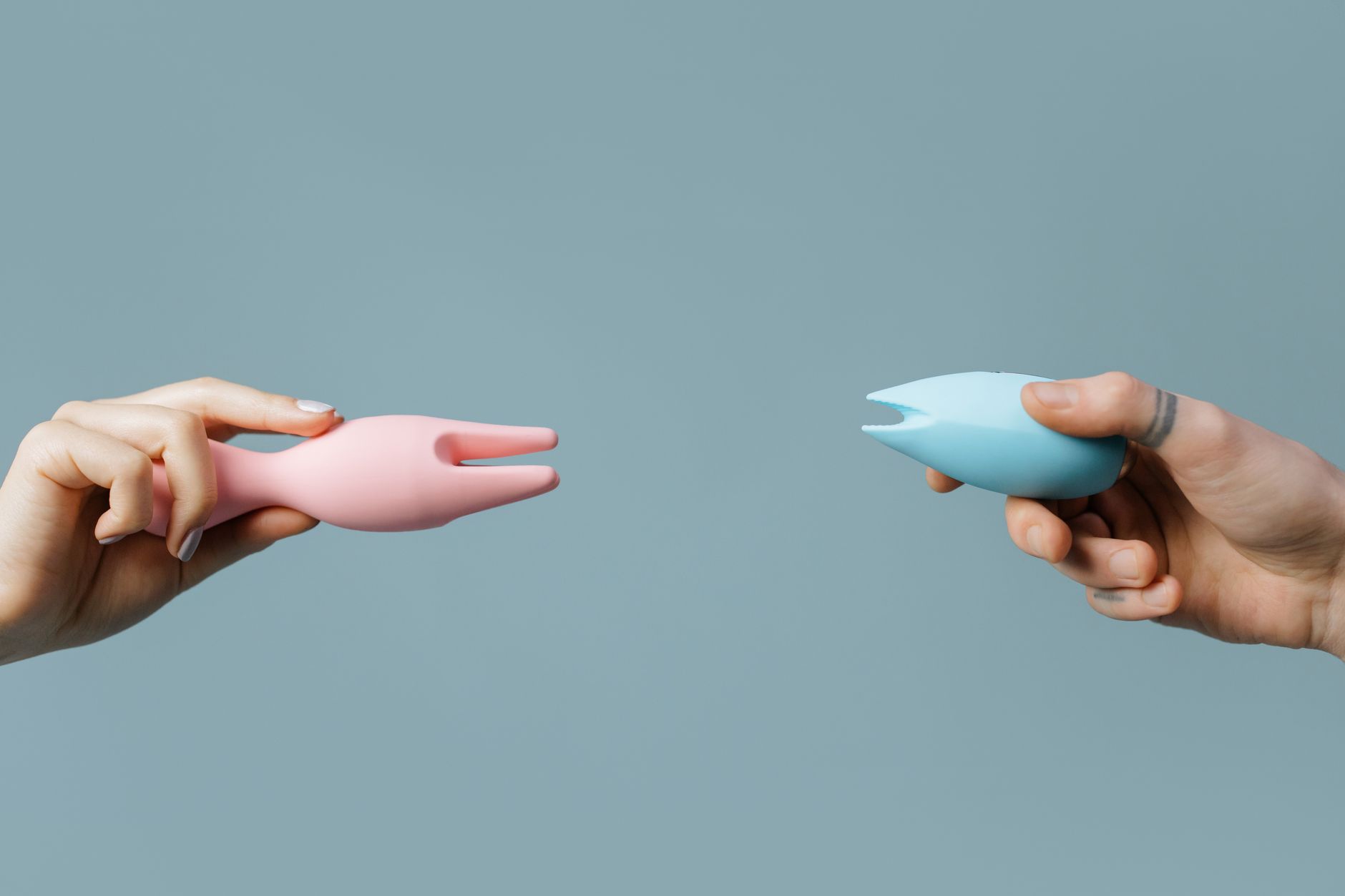
Let's talk about what nobody tells you
Your clitoris doesn't stay the same all month. Hormone fluctuations change blood flow, sensitivity, arousal speed, and even orgasm intensity. Most people use their lemon vibrator the exact same way every single day, then wonder why some days feel incredible and other days feel mediocre. The answer isn't your device. It's your cycle.
Here's the thing: understanding how your body shifts across your menstrual cycle isn't just fertility knowledge or temperature tracking. It's practical pleasure information. And once you know it, you can work with your body instead of against it.
Why your clitoris changes throughout your month
Estrogen and testosterone rise and fall on predictable schedules. These hormones directly affect genital tissue thickness, blood flow, and nervous system responsiveness. During the follicular phase (days 1-14 of a typical 28-day cycle), estrogen climbs, and your clitoris becomes more engorged and sensitive. During the luteal phase (days 15-28), progesterone rises and estrogen dips, making tissues denser and sometimes less responsive to light touch.
This isn't subtle. Studies show clitoral sensitivity peaks right around ovulation and is lowest during the luteal phase. But "lowest" doesn't mean gone. It means different. And different is where your lemon vibrator becomes either your best friend or your obstacle, depending on how you use it.
The menstrual phase: days 1-5
Your period is a reset. Estrogen and progesterone are both low, which means tissues are thinner and sometimes more tender. This isn't the time for experimentation or longer sessions. Cramping can also make internal or deep sensation uncomfortable.
If you want to use your lemon vibrator during menstruation, start with lower intensity settings (patterns 1-3 on the Lem). The suction-based design of a lemon clitoral vibrator is actually ideal here because it doesn't require direct friction. Focus on short bursts, 5-10 minutes max. Many people find that orgasm actually eases cramping by releasing endorphins, so this can be a win if you're in the mood.
Practical tip: keep a small towel nearby. Some people experience heavier or messier flow during arousal and orgasm. There's nothing wrong with that, and being prepared means you can relax instead of tensing up.
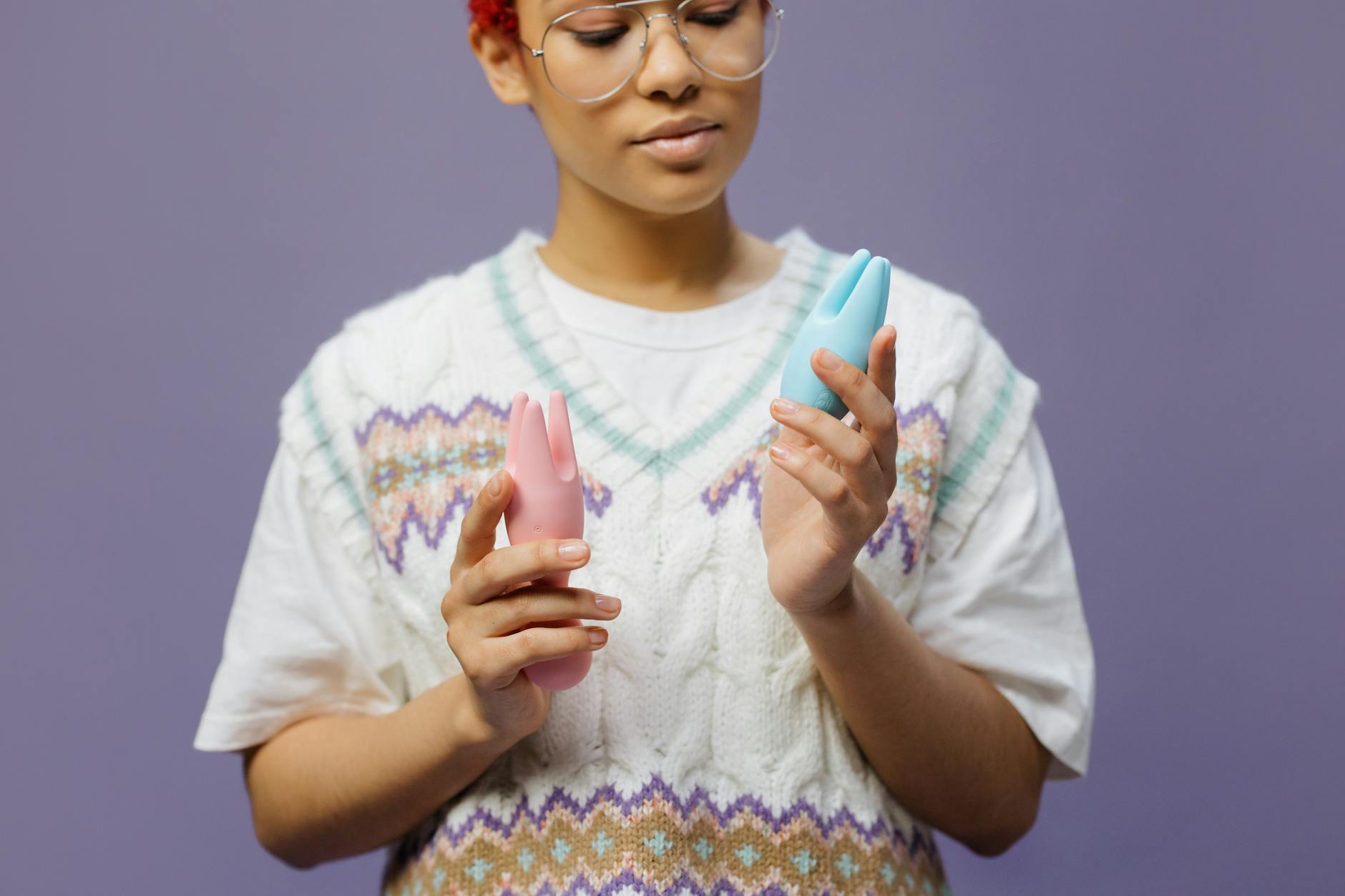
Photo by cottonbro studio on Pexels
The follicular phase: days 6-13
Estrogen climbs, energy climbs, and sensitivity climbs. This is your sweet spot. Your clitoris is naturally more engorged, arousal builds faster, and you can probably handle higher intensity without discomfort. This is when a lemon vibrator shines.
You can extend sessions to 15-20 minutes. Try patterns 4-7 on the Lem if you usually stick to lower settings. Your warm-up time shrinks. You might find that you reach orgasm faster and with less effort. That's not you being weird. That's biology working in your favor.
This phase is also when experimenting with different patterns or techniques feels good. Your body is more forgiving, more responsive. If you've been curious about combining internal and external stimulation, or trying new positions, this is the time.
Ovulation window: days 13-16
Right around day 14, you ovulate. This 3-4 day window is peak sensitivity. Estrogen surges, testosterone surges, and your clitoris is maximally engorged. This is scientifically when people report the strongest orgasms.
Honestly? You might not need your lemon vibrator at all during this window. Some people can reach orgasm with minimal stimulation, or even through partnered touch alone. But if you want to use a clitoral vibrator, this is when even pattern 1 on the Lem can feel intense. You might find that you prefer a broader, less direct sensation. Some people actually find the highest intensity patterns too sharp right around ovulation.
Listen to what your body is asking for. Ovulation is a celebration. It doesn't have to look a specific way.
The luteal phase: days 17-28
Progesterone rises, estrogen falls slightly, and everything slows down. This is when sensitivity dips and arousal takes longer to build. Many people feel disconnected from their bodies during this phase. That's normal.
Your lemon vibrator isn't useless here. It just requires adjustment. Budget more warm-up time, 20-30 minutes instead of 10. Use higher intensity patterns (5-8 on the Lem) without guilt. Thicker tissue actually benefits from stronger stimulation. Some people find that pattern 8 during their luteal phase feels the way pattern 3 felt during ovulation.
During this phase, the suction mechanism of a lemon vibrator is particularly helpful because it penetrates deeper into tissue and doesn't rely on surface sensitivity. You're not broken. Your body just works differently right now, and that's totally fine.
Also: progesterone is associated with anxiety and mood sensitivity. Some people find that solo pleasure during the luteal phase feels less pressured than partnered sex. If that's you, reclaim this time as yours. No performance required.
How to track what's working
Here's what I recommend to my clients: keep a simple note on your phone. Not a diary, just a quick note after you use your lemon clitoral vibrator. Track the phase (menstrual, follicular, ovulation, luteal), the pattern you used, how long you used it, and a 1-5 rating of how it felt.
After two or three cycles, you'll see patterns. You'll notice that pattern 4 during follicular feels amazing, but pattern 7 during luteal is where it's at. You'll realize you need more time during certain phases, or that cramping makes certain positions uncomfortable. This data is personal. Nobody else's cycle is identical to yours.
Your nervous system also matters. If you're stressed, sleep-deprived, or emotionally activated, sensitivity changes regardless of cycle phase. But if you're paying attention to both cycle and life stress, you can work with both.
What doesn't change
Your capacity for pleasure stays constant. Your ability to orgasm doesn't disappear. Your desire, at its foundation, is yours. What changes is the ease and speed with which your body responds. That's not a limitation. That's information.
Some of my clients find that understanding their cycle actually increases pleasure over time because they stop fighting their body and start working with it. Instead of thinking "I should be able to come quickly this week," they think "this week needs a different approach, and that approach works beautifully." That shift from frustration to problem-solving changes everything.
The cycle-syncing myth you can ignore
You might see products or advice that claim you should do different activities during different phases. Eat certain foods during follicular, rest during luteal, avoid exercise during menstruation. Some of that has loose science. Most of it is overkill.
Your pleasure doesn't need a complicated system. Your lemon vibrator doesn't need seasonal rotation. You just need to notice how your body actually feels, adjust intensity and duration accordingly, and be patient with phases that feel different. That's it. No supplements, no meal plans, no productivity hacks required.
People also ask
Can I use my lemon vibrator if I'm on hormonal birth control?
Yes. Birth control suppresses the natural hormone fluctuations, so your sensitivity might be more stable across the month. You might not notice the same dramatic shifts between phases. That doesn't mean you shouldn't adapt your approach. Some people on birth control still experience subtle sensitivity changes. Pay attention to how you actually feel, not what the cycle chart predicts.
Does stress mess up the pattern I'm tracking?
Absolutely. High stress, poor sleep, or emotional activation can suppress arousal and sensitivity regardless of what day of your cycle you're on. If you're tracking and suddenly a phase feels off, check in with your life first. Are you stressed? Exhausted? Going through something? Those are legitimate factors. Your body isn't broken. Your circumstances are just noisier right now.
What if my cycle is irregular?
Irregular cycles still have phases. You might ovulate on day 12 one month and day 18 the next. You might have a 26-day cycle one month and a 34-day cycle the next. You still have a luteal phase and a follicular phase, even if the timing shifts. Tracking becomes slightly harder, but the principle stays the same. Notice the patterns your actual cycle shows, not the ones a calendar predicts.
Is it normal that I want my lemon vibrator way more during certain weeks?
Completely normal. Desire fluctuates with hormones. During the follicular and ovulation phases, testosterone is higher, which directly increases sexual motivation. During the luteal phase, some people feel less interested in sex but more interested in other forms of physical connection. Neither is a problem. Desire that shifts across your cycle is healthy. A lemon clitoral vibrator that works for multiple phases of wanting is just smart tool choice.
Can I use my lemon vibrator to figure out when I'm ovulating?
Sort of, but it's not reliable. Peak sensitivity during ovulation is real, but it's also masked by stress, sleep, hydration, and mood. If you're tracking ovulation for fertility purposes, use actual ovulation tests. But if you're just curious about how your body feels, paying attention to when arousal feels easiest is a nice bonus observation.
Should I avoid my lemon vibrator during my period?
No. If you want to use it, use it. Some people find it soothing. Some people find it crampy. Some people don't feel like it at all. There's no right answer. The choice is yours, and a lemon vibrator is designed to be flexible enough to work with however you feel.
The real point
Your cycle isn't a limitation on pleasure. It's a guide. Understanding how your body shifts across the month transforms frustration into information. Instead of wondering why some sessions feel incredible and others feel flat, you'll know. And knowing means you can adjust, work with what you've got, and actually enjoy the phases as they come.
Your lemon vibrator is here for all of it. Every phase, every mood, every kind of wanting. That's the whole design.
Ready to explore how your body actually works? Start tracking this cycle. Notice what feels different. Adjust your patterns and duration accordingly. Your pleasure matters enough to understand, and it's worth the attention.
Questions about what works best for you? Get in touch with Hello Nancy.
References
Basson, R. (2000). The female sexual response: a different model. Journal of Sex & Marital Therapy, 26(1), 51-65.
Dantas, Y., & Natali, A. (2012). The effects of gonadal hormones on vaginal tissue stiffness during human female sexual response. The Journal of Sexual Medicine, 9(12), 3127-3136.
Meston, C. M., & Frohlich, P. F. (2000). The neurobiology of sexual function. Archives of General Psychiatry, 57(11), 1012-1030.
Rellini, A. H., & Meston, C. M. (2007). Vasocongestive and lubricative responses in women with history of sexual dysfunction and control women. Journal of Sexual & Marital Therapy, 33(3), 217-232.