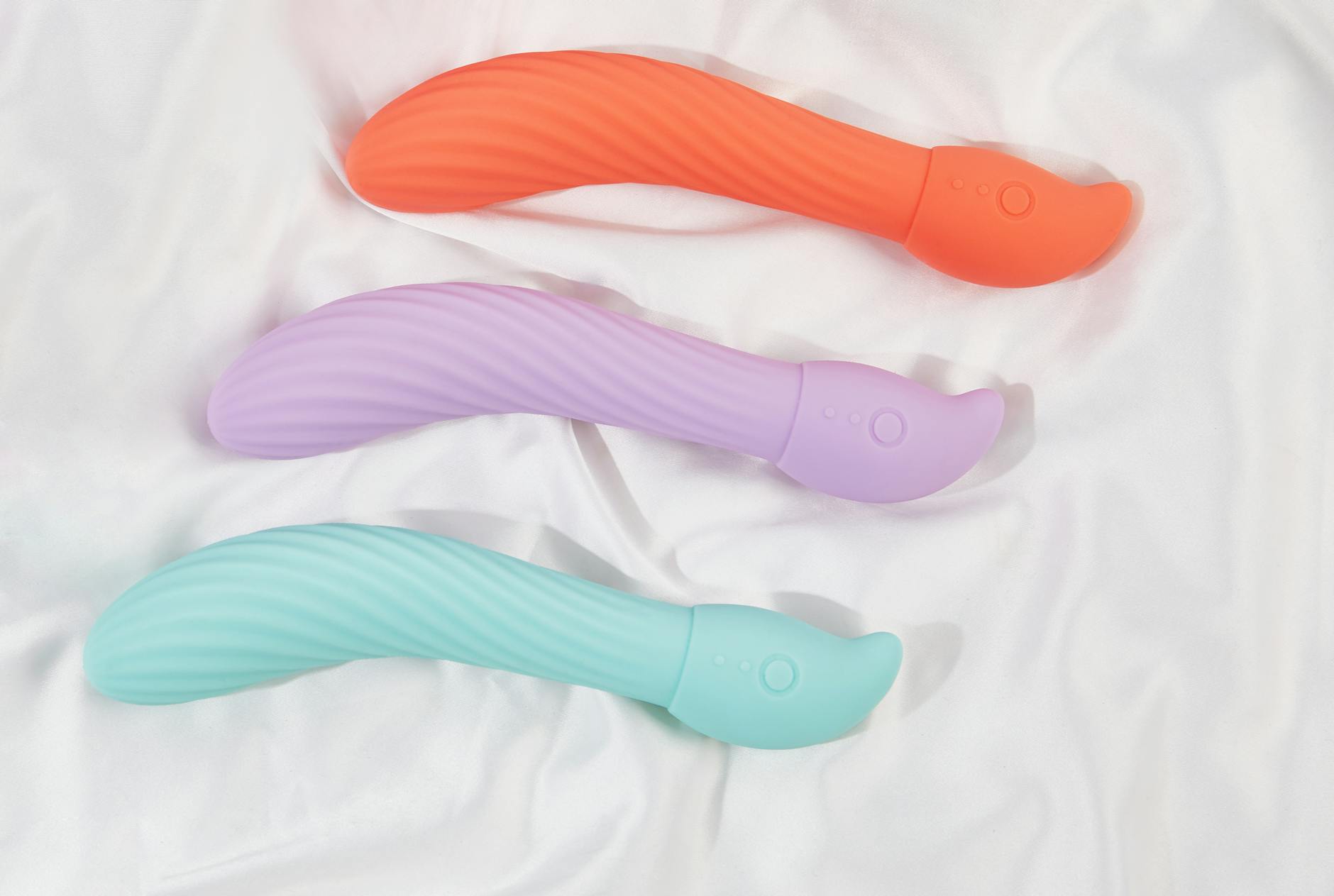
Here's what nobody tells you about perimenopause and pleasure
Perimenopause changes pleasure. Full stop. But here's the part everyone leaves out: it doesn't end it, diminish it, or make it less important. It transforms it. And if you understand what's happening in your body, you can work with those changes instead of feeling blindsided by them.
I've worked with hundreds of people navigating this transition. The ones who fare best aren't the ones who ignore the shifts or pretend nothing's happening. They're the ones who get specific about what actually changes physiologically, and then they adapt their tools and timing accordingly. A lemon vibrator, with its precise suction-based stimulation, turns out to be wildly effective during perimenopause for exactly the reasons we're about to walk through.
What perimenopause actually does to sensation
Let's start with the honest part. Estrogen doesn't disappear overnight, but it fluctuates wildly during perimenopause. Those fluctuations affect blood flow to the clitoris, vaginal tissue thickness, and how quickly your nervous system fires up in response to touch.
Specifically:
- Clitoral tissue becomes thinner, which can make direct vibration feel sharper or more intense than it used to.
- Lubrication decreases and becomes less reliable, especially in the first half of your cycle.
- Arousal takes longer to build because hormonal cues that used to prime your nervous system are now on a dimmer switch.
- The clitoral glans (the external part) can develop increased sensitivity, making some vibration patterns feel almost too much.
But here's what doesn't change: the number of nerve endings in your clitoris, your brain's capacity for pleasure, or your ability to orgasm. None of that is hormonal. Your hardware is intact.
Why a lemon clitoral vibrator works better than you might expect
A lemon vibrator, or lemon sucker, uses air-pulse technology instead of direct vibration. That matters more than you probably realize during hormonal transitions.
When estrogen is low and tissue is thinner, traditional vibration can feel too intense or even uncomfortable because it's creating friction directly on sensitive skin. A lemon clitoral vibrator, by contrast, uses gentle suction waves that stimulate the entire clitoral complex from multiple directions at once. This means:
- You're not relying on friction, so thinner tissue doesn't hurt.
- The stimulation spreads across a broader area instead of concentrating on one spot.
- You can start at lower intensity without losing sensation because the suction technology is inherently more efficient.
- The sensation feels different enough from what your body knew in your 20s that you're not constantly comparing it or grieving the old feeling.
Honestly, many people tell me their most intense orgasms arrive during or after perimenopause, especially once they switch to this kind of tool. That's not romantic mythology. It's because pleasure can actually deepen when you remove the static of hormonal cycling and the anxiety of "am I responding right."
The physical adjustments that actually work
Your lemon vibrator is the same tool, but your protocol changes. Here's what I recommend:
Start with longer foreplay. Arousal takes 15 to 25 minutes now instead of 10. That's not a failure. It's just biology. Give yourself that time. Read something that turns you on. Touch yourself elsewhere first. Let your nervous system warm up before you bring the lemon vibrator into the picture.
Use water-based lubricant, even if you didn't before. Your natural lubrication is less reliable, and there's no shame in that. A good water-based lube isn't a sign something's wrong. It's a tool that makes sensation better. Apply it to the toy and around the external vulva.
Start at pattern 1 or 2, not pattern 5. Perimenopause tissue is more sensitive to intensity. You can always turn it up. You can't un-stimulate once you've overdone it. Many people find they actually prefer lower intensities during this phase because the sensation feels sharper and more defined.
Take breaks between sessions. If you use your lemon vibrator multiple times a week, your clitoris can develop temporary desensitization. That's not permanent, but it's real. Spacing things out or rotating between different sensations helps.
Pay attention to your cycle, if you still have one. During the luteal phase (roughly the two weeks after ovulation), progesterone is higher and can dampen arousal. During the follicular phase, estrogen is rising, and you might notice your clitoris feels less sensitive and more responsive. Track what you notice so you can adjust timing.
The emotional adjustments that matter more than the physical ones
Here's something I see over and over: people blame perimenopause for pleasure changes that aren't actually hormonal. Stress, relationship dynamics, medication side effects, burnout, grief. All of that can flatten desire just as much as fluctuating estrogen.
Before you assume your body isn't working right, check in with yourself on this: Are you actually present when you're trying to use your lemon vibrator? Is there resentment or fatigue underneath? Are you performing pleasure or actually seeking it? Are you angry at your body for changing?
Those feelings are real and valid. And they're also not something a toy can fix. What a toy can do is give you a more efficient, less friction-dependent path to sensation once you've cleared some of that emotional space. If you're stuck in anger or grief about your body changing, talking to someone helps. Then come back to your tools.
When you might need a different approach entirely
Sometimes it's not just sensitivity or timing. Sometimes it's pain, and that's different.
If penetration or any kind of stimulation creates actual pain, that's worth mentioning to a gynecologist, especially one who knows perimenopause. Genitourinary syndrome of menopause (GSM) is real and highly treatable. Topical estrogen creams can make a massive difference in tissue health within weeks, not months.
If you're experiencing vaginal dryness so severe that even with lube and a lemon vibrator the experience isn't pleasurable, low-dose vaginal estrogen is worth trying. It's different from systemic hormone therapy. The absorption is localized, and it works.
If arousal has completely flatlined and you're not interested in anything, including tools you used to love, that might be hormonal, but it might also be depression or another medical issue. Worth checking in with your doctor.
The pleasure you might not expect
I want to loop back to something I said at the top: many people experience their best orgasms during or after perimenopause. Why?
First, the mental fog lifts. When you're not cycling through hormonal fluctuations constantly, your brain has more bandwidth for pleasure. You're not worrying about getting pregnant or managing PMS. That alone changes everything.
Second, you often stop performing. You stop trying to come on someone else's timeline or in someone else's preferred way. You actually figure out what works for you. A lemon vibrator, used on your own terms, at your own pace, without an audience, can be profoundly clarifying.
Third, you probably know your body better than you ever did. You understand what you like. You're less afraid of being weird. That confidence is sexy.
Perimenopause is not a deadline. It's a plot twist. And sometimes plot twists, if you're willing to engage with them, lead somewhere richer than the original story.
FAQ: Lemon vibrators and perimenopause
Does hormonal fluctuation make a lemon vibrator work differently than a traditional vibrator?
Yes, substantially. Because a lemon clitoral vibrator uses suction rather than direct vibration, it creates a broader, more distributed stimulation. During perimenopause, when tissue sensitivity increases, that distribution prevents the localized discomfort or overstimulation that can happen with traditional vibrators. The sensation actually tends to feel more integrated into your whole body rather than concentrated in one spot, which many people find preferable when hormones are shifting.
Can I use my lemon vibrator safely if I'm on hormone therapy?
Absolutely. Hormone therapy, whether systemic or localized vaginal creams, doesn't contraindicate toy use. In fact, if you're using vaginal estrogen cream, wait about 30 minutes after application before using your lemon vibrator to let the cream absorb. The toy itself is completely safe alongside any standard hormonal treatment. If you're uncertain about your specific medication, a quick text to your doctor is never wrong.
How do I know if my decreased arousal during perimenopause is normal versus something I should address medically?
Normal perimenopause arousal changes feel like everything takes longer and requires more deliberate stimulation, but the capacity is still there. You might need 20 minutes instead of 10, and you might need lube where you didn't before. If, however, you've lost all interest in sex or pleasure, your clitoris feels completely numb, or you experience pain, that's worth mentioning to a doctor. Desire changes are part of perimenopause. Complete loss of desire might be thyroid issues, depression, or something else entirely.
Will my lemon vibrator still feel good after perimenopause is complete?
Most likely, yes, though you might notice another shift. Once you're fully post-menopausal and hormones have stabilized at a new baseline, clitoral sensitivity often becomes less sharp and more stable. Many people find they can use higher intensities post-menopause than they could during perimenopause. Your lemon vibrator will still work beautifully, but you might adjust your patterns and settings again.
Can I switch between my lemon vibrator and traditional vibrators during perimenopause, or should I stick with one?
Switching is actually smart. Variety prevents desensitization, and having both tools gives you flexibility on different days or during different times of your cycle. When your clitoris feels extra sensitive, the lemon sucker is your friend. When you want more concentrated, intense stimulation and your tissue feels less reactive, a traditional vibrator might feel better. Treating your pleasure tools like a toolkit rather than a monogamous relationship often makes perimenopause more enjoyable.
Does the lemon sucker technology help if I'm experiencing clitoral numbness from perimenopause?
Often, yes. Numbness during perimenopause usually comes from fluctuating blood flow or the delayed nerve response that hormonal shifts create. Because a lemon vibrator stimulates a larger area with suction waves, it can sometimes trigger sensation in areas that direct vibration misses. That said, if numbness is severe or persistent, that's worth checking with a doctor. It could be a medication side effect or a vascular issue that deserves evaluation.
Here's the real takeaway
Your body is changing. Your lemon vibrator is exactly the kind of tool that changes with you. You don't need to mourn what used to work or feel broken because arousal feels different now. You need specific information about what's actually shifting and how to work with it. That's what you've got now. Use it.
If you want to dig deeper into how your body is changing or what that means for your pleasure and intimacy overall, that's what I'm here for. You can reach out anytime at /contact.