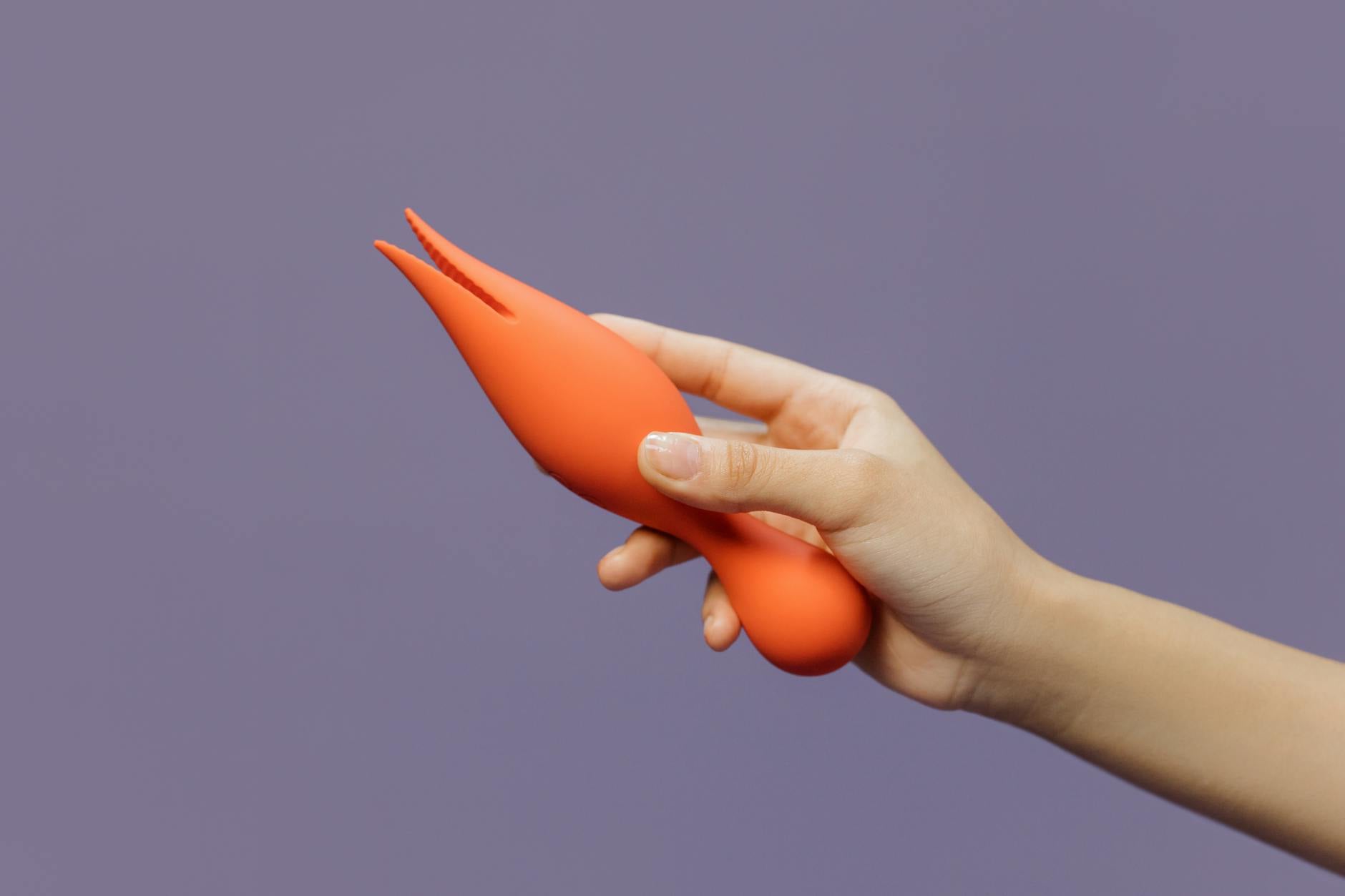
Not all pleasure feels the same
Here's the thing about lemon vibrators: they come with a menu of settings, and the instruction manual assumes they all work the same way for everyone. They don't. Your clitoris is wired differently than someone else's. The patterns that send one person into orbit might feel like static to another. Learning which settings match your actual nerve response is the difference between "this is fine" and "oh, I finally get it."
I work with couples navigating pleasure mismatches in long-term relationships, and what I see over and over is that people skip the solo exploration phase. They get a clitoral vibrator, try setting three because it sounds intense, feel nothing, and assume they're broken. They're not broken. They just haven't found their pattern yet.
Why lemon vibrators have multiple settings in the first place
The clitoris has roughly 8,000 nerve endings concentrated in a space smaller than a pea. But those nerves aren't all the same type. Some respond to steady pressure. Others prefer rhythmic pulses. A few light up only at specific frequencies. A lemon vibrator's different patterns activate these nerve types in different combinations.
When you use air-suction technology, like the Hello Nancy lemon clitoral vibrator offers, you're triggering deeper nerve pathways than traditional vibration alone. The suction creates a gentle seal and rhythmic pressure that works differently on each body. Add in vibration patterns, and you've got a tool that can reach several different pleasure zones if you know how to use it.
This is also why sensitivity matters. If your clitoris is particularly responsive, pattern one on low might be more than enough. If your nerves are less reactive, or if you've experienced years of suppressed sensation, you might need to start at a pattern that feels almost aggressively subtle before building up.
Understanding your actual sensitivity baseline
Before testing patterns, you need to know where you're starting. Most people assume their sensitivity is fixed, but it shifts constantly based on arousal level, hormones, stress, and how long it's been since you last engaged with pleasure.
Spend a few minutes with your hand, with no device, and notice what light touch feels like. Not pressure, not rubbing. Just fingertip contact. That sensation tells you something about your baseline responsiveness. If even that feels muted, you're probably in a lower-sensitivity window. If it's electric, you're in a higher one.
Why this matters: a lemon vibrator starting pattern should feel about 15 to 20 percent more stimulating than that baseline touch. If it feels ten times more intense, you've skipped essential steps and your nervous system might shut down out of overstimulation. If you can barely feel it, you've gone too subtle and you'll spend the whole session chasing sensation instead of finding pleasure.
Pattern one through three: where most people find their answer
Most lemon vibrators, including the Hello Nancy lemon sucker, offer between eight and twelve patterns total. About 75 percent of users find their preferred setting in the first three.
Pattern one is typically the most basic pulse, usually mimicking a heartbeat or gentle throb. It's low frequency, high control. If you're exploring for the first time, this is where you start. Spend three to five minutes here. Don't rush to intensity. The goal isn't to orgasm yet. The goal is to feel the difference between baseline and stimulation.
Pattern two usually adds some variation, maybe a rhythm that speeds up or creates a wave effect. Some people feel almost nothing from pattern one but light up at pattern two because their nerve response kicks in when there's rhythm variation. This is common and totally normal.
Pattern three is where air-suction technology often shows its strength. If the first two felt either flat or too intense, pattern three with suction might create a sweet spot. The rhythm combines steady pressure with gentle pulsing, and it mimics something closer to oral sex than straight vibration does.
Honestly, if you're not finding what you want in the first three patterns, slow down. You're probably not at the right arousal level, your body might be tense, or the device angle needs adjusting. Don't jump to setting eight hoping it will magically work.
Patterns four through six: building intensity with intention
If you've spent real time with patterns one through three and want more, patterns four through six usually offer either higher frequency or more complex rhythms.
Pattern four tends to introduce speed without changing the rhythm structure. If you liked the feel of pattern two but wanted more, pattern four gives you that sensation with higher intensity. This is where many people find their climax pattern, especially if you're someone who needs sustained, rhythmic stimulation to cross the finish line.
Pattern five and six start getting experimental. You might find pulse-and-pause sequences, acceleration patterns, or combinations that shift between suction and vibration intensity. Some people find these patterns absolutely transcendent. Others find them distracting. Your only way to know is to try them during different states of arousal.
One note: if you're exploring with a partner, this is a good moment to pause and check in. Some people feel vulnerable when a partner watches them test patterns, especially if earlier attempts felt underwhelming. That's worth talking about before you're mid-exploration.
The higher settings and when they actually matter
Settings seven and above are usually for one of two reasons: your nerve responsiveness is genuinely lower than average, or you're chasing a specific type of orgasm that requires sustained high intensity.
I work with women across decades of age and experience, and what I notice is that people sometimes use high-intensity settings as a kind of performance standard, like they should be able to handle the "advanced" modes. That's not how pleasure works. Your body isn't grading you. If pattern two is your sweet spot, pattern two is the right answer for you.
That said, sometimes high-intensity patterns are genuinely useful, particularly if you're managing low sensitivity from medications, nerve damage, or other factors. In those cases, exploring higher settings with patience and lubrication support can open doors that lower patterns don't.
The rhythm question: steady versus variable
Some patterns are purely steady (the same rhythm throughout). Others build, pause, or shift. Most people find steady patterns easier to climax with, while variable patterns are better for exploration and building arousal.
If you're someone who gets frustrated during long sessions, you might actually need to split your exploration into phases: ten minutes with a variable pattern to build sensation and arousal, then switch to a steady pattern once you're closer to climax. This isn't a hack or a workaround. This is how many nervous systems are wired.
When you're with a partner, this matters too. Some people think they're taking too long or being high-maintenance if they need to switch patterns mid-session. In reality, you're just reading your own body and adjusting accordingly. That's exactly what self-awareness looks like.
Angle, pressure, and how they change the pattern experience
Here's something almost nobody talks about: the same pattern feels completely different depending on angle and pressure. Firm direct contact onto the clitoral glans is intense. Angling slightly off-center onto the clitoral hood feels muted. Holding the device at a slight distance and letting the suction do most of the work changes the whole sensation profile.
If you've tested pattern three and hated it, before you assume it's not for you, try it three different ways: directly on the clitoris, angled slightly off-center, and held at the edge so the suction pulls tissue gently without direct contact. That same pattern might feel completely different in each position.
This is why I recommend setting aside real time for this exploration. Not rushed. Not performance-oriented. Just curiosity and feedback.
Finding your pattern during different life phases
Your perfect lemon vibrator setting will probably change over time. After menopause, during hormonal shifts, during different relationship phases, or if you're healing from trauma. Your pleasure blueprint isn't locked in place. It evolves.
If you spent years using pattern five as your go-to and suddenly it feels too intense, that's information. Your body's needs have shifted, maybe temporarily, maybe for the long term. The Hello Nancy lemon vibrators flexibility means you can adjust without needing a new device. That's genuinely useful over a decade or more of self-discovery.
For people with partners, this is also worth communicating about. "My favorite setting changed" is a normal sentence. It's not a referendum on your relationship or your partner's skill. It's just biology.
FAQ: Your pattern and setting questions answered
What if I can't feel anything on any setting?
That's usually arousal, tension, or context. Spend 15 to 20 minutes building arousal with your hands before you introduce the device. Make sure your pelvic floor isn't clenched (many of us unconsciously tense when something is new). And consider whether the environment or moment feels truly safe and relaxed. Pleasure requires a bit of nervous system trust.
Is it normal to need the highest setting?
Absolutely. Some nervous systems are wired to need higher-frequency stimulation. You're not broken or numb. You're just someone who responds to intensity. The lemon clitoral vibrator has enough range to work for you, and that's the whole point.
Should my pattern preference match my partner's preference?
No. Your pleasure is yours. Their pleasure is theirs. Two people using the same device during partnered play might be on completely different settings, and that's perfect. Communication matters more than matching.
Why does the same setting feel different each time?
Arousal level, stress, hormones, time of month, how much sleep you've had, whether you're relaxed, and about a hundred other variables. Your body isn't malfunctioning. You're just noticing that pleasure isn't a fixed switch. It's a living, changing thing.
Can I damage my clitoris by using high-intensity settings too often?
The clitoris is more robust than you probably think. High-intensity patterns won't cause lasting damage, but they can cause temporary numbness if you use them every single day for months. Building variety into your practice, and taking occasional breaks, keeps your nerve response fresh.
What if nothing feels good yet?
Give it more time. You're building a new skill and new pathways in your nervous system. Most people need three to five solid exploration sessions before something clicks. If it's been longer than that and you're genuinely not finding anything that lands, consider whether tension, stress, or relationship dynamics might be playing a role. Sometimes the device isn't the issue. Sometimes it's the moment.
Your pleasure matters. The right lemon sucker pattern is the one that feels good to you, not the one that's supposed to work. Take the time to find it. You deserve that exploration.